Drever temperament: living with a determined hound
Explore Drever temperament, scent-focused walks, household sound and the questions that reveal whether this working hound fits your life.
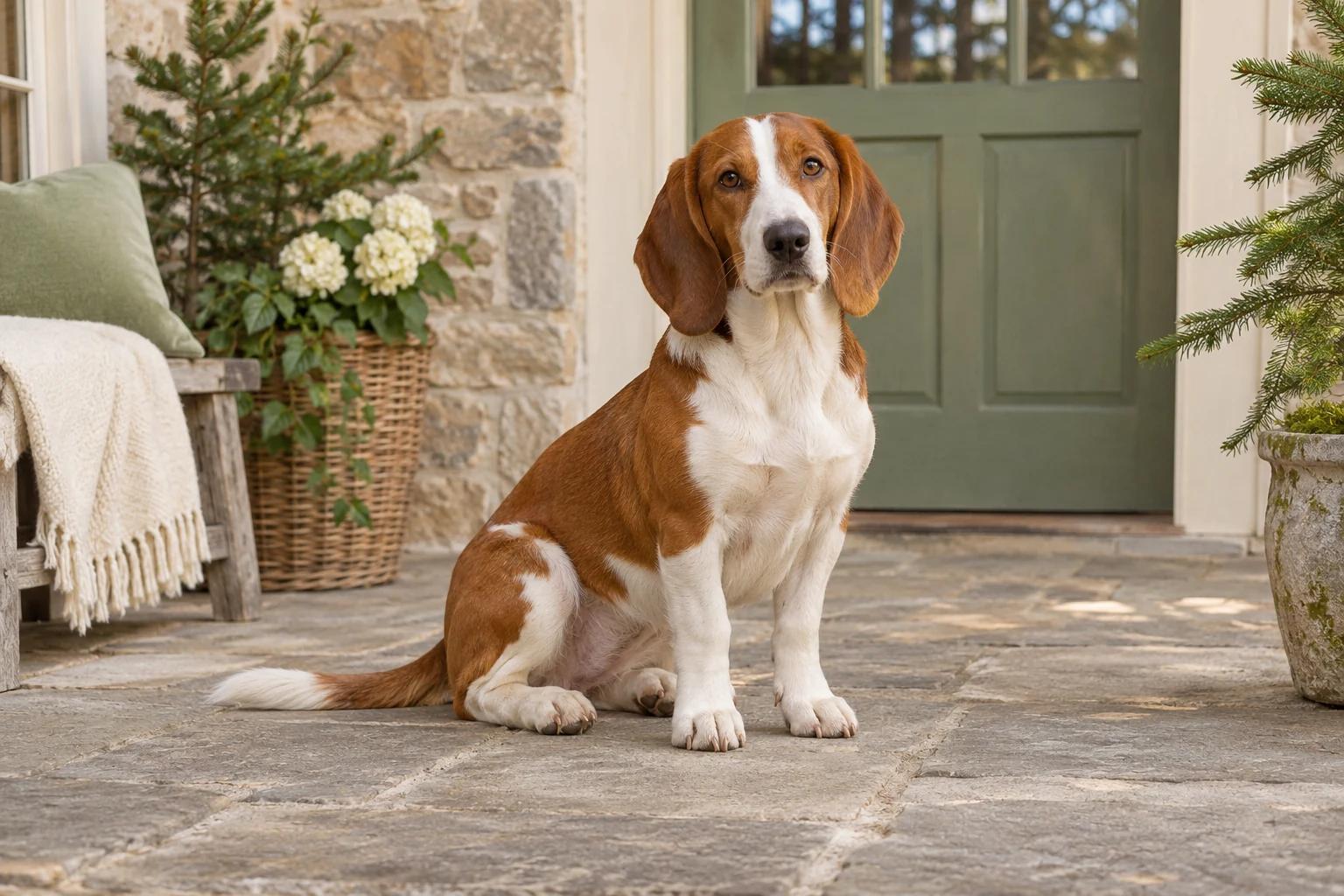
Drever temperament combines a working hound's interests with the possibility of affectionate, playful companionship. The important word is working. A low-built dog with a friendly expression can look like an undemanding household choice, yet size and sociability tell you little about whether you will enjoy arranging life around its nose.
The Drever profile is a useful overview. Before making a commitment, move beyond the profile and discuss the particular dog's background with an experienced breeder or rescue. You need a realistic account of its daily life, not simply reassurance that it is a nice dog.
Drever temperament starts with a serious working identity
The FCI standard describes an eager, even-tempered scenthound and strongly emphasizes its use as a hunting dog rather than solely a companion. That context deserves attention even when your interest is in a dog for home life.
A non-hunting household should ask directly whether its proposed activities suit the individual and its breeding background. Do not assume that a few indoor games replace the work for which a particular line has been selected. Equally, you do not need to invent a hunting role you never wanted. An honest mismatch is a useful discovery before a dog moves home.
For historical context, our article on the Drever's Swedish development explains the breed's past. This guide is about the present-day decisions that follow from meeting one.
Affection and concentration can coexist
The AKC introduction describes an affectionate and playful tendency. That makes shared time worth investigating, but it does not tell you that the dog's attention will remain on you outside.
Imagine a Drever resting beside your chair indoors and then becoming absorbed in a verge on a walk. There is no contradiction. The setting has changed, and something meaningful to the dog is now available. Treating that moment as a personal rejection makes it harder to plan a useful response.
Ask owners how they divide walks between moving along a route and allowing investigation. What cue signals a change? What equipment do they use? Where can the dog explore without access to roads or wildlife? These answers are more useful than calling the whole breed stubborn or obedient.
When assessing drever personality, look for the relationship as well as the activity: whether the dog seeks contact, responds to familiar routines and can rejoin the household after something interesting ends. Meet the dog with the people who know it well enough to explain what you are seeing.
Plan walks around access, not arguments
A practical walk begins before the front door opens. Have the lead attached in a secure area and decide who opens the door. If several people leave together, give one adult responsibility for the dog rather than assuming someone else has checked the clip.
Choose a route with places where you can pause without blocking pedestrians. Let the dog investigate suitable spots while you remain attentive to the surroundings. A walk planned only as a fast march may leave you repeatedly trying to hurry a dog whose main interest is what the ground contains.
Work on a simple change-of-direction cue in an easy setting before relying on it beside a compelling scent. Reward the dog for turning with you, then practice in gradually more interesting places. This is a proposed everyday handling exercise, not a promise of off-lead reliability. Use secure containment and appropriate lead arrangements rather than testing reliability near hazards.
For specialist scent activities, ask an instructor familiar with hounds what is suitable for the dog's experience. A beginner session should help you understand the task and management, not pressure you into a competitive goal.
Take the sound question seriously
The breed profile flags a noticeable vocal tendency. If your housing has thin walls, shared corridors or strict noise rules, investigate this before deciding that the dog's modest height makes it an easy fit.
Ask what prompts the individual dog to vocalize. Is it activity outside a window, the preparation for an outing, another dog or being separated from people? Different situations need different management. Simply describing a dog as noisy does not identify what could be changed.
At home, you might place a resting area away from the busiest window or prepare walking equipment before inviting the dog to join you. These are environmental choices to consider, not guaranteed cures. Keep a record of persistent problems and seek qualified reward-based help; distress or abrupt changes also warrant veterinary discussion.
Do not plan around the idea of preventing every sound. The relevant question is whether the dog's likely communication and your surroundings can coexist without an ongoing conflict.
Social does not mean automatically compatible
Drever characteristics can make a household with other dogs worth exploring, but compatibility belongs to the individual pair. Arrange controlled introductions and give each dog separate places to eat and rest. Do not use an enthusiastic first greeting as proof that shared resources will be easy.
Ask what experience the dog has with animals other than dogs. A social response to a canine companion says nothing conclusive about behavior around a rabbit or cat. Be precise about the animals in your home and the separation arrangements you can maintain.
Children need supervised interactions and clear boundaries around resting and feeding areas. No temperament label can replace an adult's attention. A dog also needs the option to leave a busy family gathering without being followed.
A realistic fit test
Before choosing a Drever, write down three things you would enjoy doing with it and three things you would find difficult. Include scent-led outings, vocalization and arranging care during absences. Discuss the difficult list first with someone experienced in the breed.
Ask for examples of drever behavior on ordinary days: a wet morning, a visiting dog, a delayed meal, a day when the main handler is away. You are looking for information about support and routine rather than a polished description of an ideal animal.
Use the breed match quiz to broaden the decision, then return to the specific dog's needs. If you want a companion whose working interests require little thought, do not let the Drever's appealing appearance talk you out of that preference. Choosing another match can be the most sensible outcome of thorough research.
FAQ
What should a prospective companion home ask first?
Describe the activities, care and containment you can genuinely provide, then ask whether they fit the particular dog. A knowledgeable breeder or rescue should be willing to discuss a mismatch as clearly as a promising match.
Does an even temperament mean little training is needed?
No. An even-tempered Drever still needs practical skills for doors, leads, rest and everyday handling. Work from clear, achievable requests and provide suitable outlets rather than expecting temperament alone to create household manners.
Can a Drever live with another dog?
An individual Drever may enjoy canine company, but introductions, history and resource management matter. Assess the actual dogs together with appropriate help and provide separate resting and feeding arrangements instead of relying on a breed-level social description.
Sources behind this article
Article source checked: November 15, 2026. Source checked 2026-11-15
Keep reading
Drever dog size: short legs, substantial dog
Read article →