Drever dog size: short legs, substantial dog
See what Drever dog size means for adult height, weight, handling, harnesses and travel, without mistaking a low outline for a tiny dog.
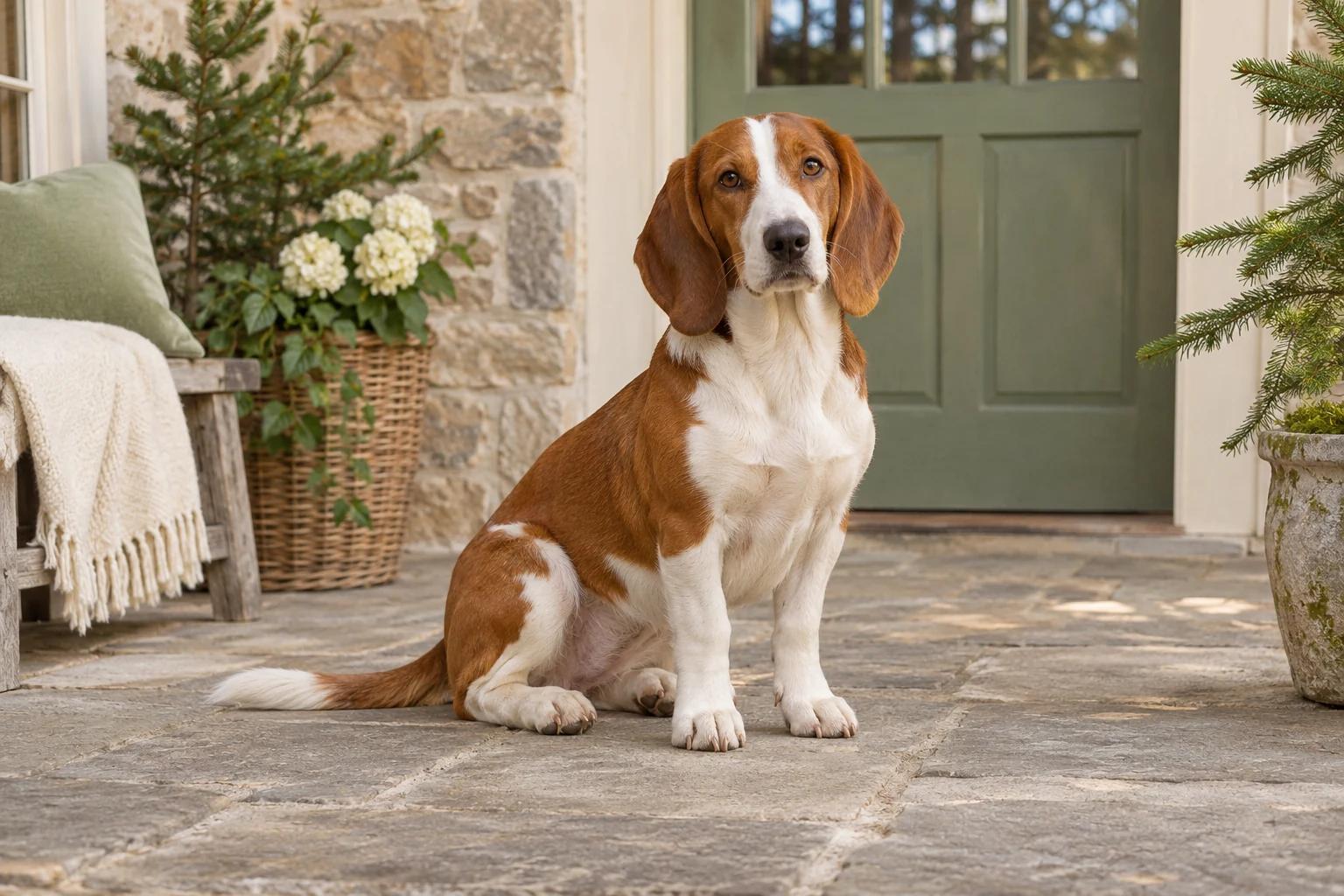
Drever dog size is easy to underestimate from a head-and-shoulders photograph. This is a low-built hound with a substantial body, not a miniature dog whose needs can be judged by its distance from the floor. The practical questions are how it fits your equipment, how you manage it during travel and whether its adult build suits your everyday arrangements.
The Drever profile lists an adult reference height of 12–15 inches and weight of 35–40 pounds. Use those figures for initial planning, then obtain the individual dog's measurements before buying fitted equipment.
Drever dog size: understand the numbers and shape together
The FCI standard specifies shoulder heights: males 32–38 cm, ideally 35 cm; females 30–36 cm, ideally 33 cm. It gives no weight range.
That distinction matters when comparing references. The Drever dog weight figure in the site profile is a breed reference, not a weight requirement taken from the FCI standard. Nor is any breed reference a target to achieve by changing a dog's food without individual assessment.
For drever dog height, measurement is to the withers, at the top of the shoulders, rather than the ears or head. Two dogs with similar shoulder height can still differ in body length, chest dimensions and weight. Those differences can determine whether a harness fits or a travel space is usable.
Start with the job your measurement must do
Someone asking “how big do drevers get” may be planning a different purchase from someone asking whether they can carry one. Separate the decisions instead of trying to solve all of them with one number.
For a harness, follow the manufacturer's chest and neck measurement instructions. For a bed, observe the dog lying on its side as well as curled up. For a carrier or restraint, use both the stated dimensions and any weight limit. A product's breed example is not a substitute for checking these requirements.
The AKC introduction also emphasizes a strong, muscular build. In practical terms, meet an adult before assuming that a small-looking hound will be easy for you to lift. Arrange help if necessary, and ask your veterinarian for advice about safe handling when the dog has mobility or comfort concerns.
The harness problem: chest fit versus leg clearance
A harness can appear suitable around the chest and still sit awkwardly when the dog moves. Have the Drever walk, turn and lower its head during a fitting. Watch whether straps shift into the front legs or whether the dog can back out when tension changes.
Choose a design that fits the individual rather than repeatedly tightening an unsuitable shape. A knowledgeable fitter can help you interpret the product instructions. If a puppy is growing, record the current adjustments and recheck them regularly rather than assuming the original fit will last.
For a low-built dog, looking only down from above can miss contact points underneath. Position yourself where you can see the fit without pulling the dog into an uncomfortable pose. After a walk, check for rubbing or an unexpected change in how the equipment sits.
The aim is not to find the most elaborate harness. It is to find an appropriate, secure fit that you can put on correctly and inspect without difficulty.
Travel planning needs a length test
Before buying a crate, measure the car opening and the available interior space. Then consider how the Drever will stand, turn and lie inside the chosen equipment according to its sizing guidance. A short-legged body still needs sufficient length and width.
Try the arrangement with normal luggage included. The empty boot may look spacious until a weekend's bags occupy the same area. Secure objects separately so that the dog is not sharing a loosely packed pile of belongings.
Loading deserves its own plan. Where will you stand? Can you attach the lead before the dog exits? If the car is high, what appropriate assistance will you use? Avoid discovering on collection day that your entire system relies on lifting an adult dog while balancing bags and holding a door.
Introduce travel equipment gradually and make the parked setup familiar before a long journey. If the dog appears uncomfortable or travel raises medical concerns, ask your veterinarian rather than improvising treatment.
A low outline changes what you notice at home
Walk through the house with attention to floor-level obstacles. Cables, low storage baskets and bags in narrow passages may occupy the routes a Drever uses. Place the bed where the dog can stretch without blocking a doorway or resting beneath a chair that is regularly moved.
Do not turn the breed's proportions into unsupported rules about what every Drever can or cannot do. Instead, look at your actual stairs, thresholds and furniture, and ask about the individual dog's experience. Discuss mobility questions with a veterinarian and use secure, suitable access arrangements where needed.
Gates and boundaries must be assessed as containment, not merely compared with shoulder height. Check gaps, latches and the possibility of slipping through while someone carries shopping inside. A dog does not need to be tall to leave through an open door.
Growth and body condition are separate questions
A puppy's equipment will change as it grows. Keep dated measurements so that you can see when a harness needs adjustment or replacement. Avoid buying an oversized item for future use if it cannot be fitted securely now.
Do not read a reference weight as proof that a dog above or below it needs a particular diet. Frame, age and individual condition need assessment. Bring your measurements and questions to your veterinarian, who can evaluate the dog rather than a breed average.
For prospective owners, meeting adult relatives can provide useful context, but exact adult size cannot be promised from a brief puppy visit. Budget for the grown dog and keep enough flexibility to replace equipment when necessary.
Our Drever development article explains why a compact outline should not be mistaken for a decorative purpose. Pair your size planning with the breed match quiz so that activity, sound and care arrangements receive as much attention as measurements.
FAQ
Is a Drever a very light dog because it is short?
Not necessarily. The Drever profile gives an adult reference weight of 35–40 pounds, and the breed has a substantial body. Meet an adult and assess your own handling arrangements rather than judging weight from height.
Should I choose travel equipment before meeting the dog?
Take measurements first, then check the equipment's dimensions and load limit. Also measure the car opening and try the arrangement with luggage. The dog must have usable space, not merely fit into a product category.
Which measurement matters most for a Drever harness?
Use the measurements required by the particular harness maker, then check the fit while the dog moves. Chest circumference alone may not establish comfortable leg clearance or security, so assess the complete fit rather than only the label size.
Sources behind this article
Article source checked: November 15, 2026. Source checked 2026-11-15
Keep reading
Drever temperament: living with a determined hound
Read article →