Drentsche Patrijshond vs Springer Spaniel
Compare Drentsche Patrijshond vs Springer Spaniel through household routines, introductions, coat care and choosing an individual dog.
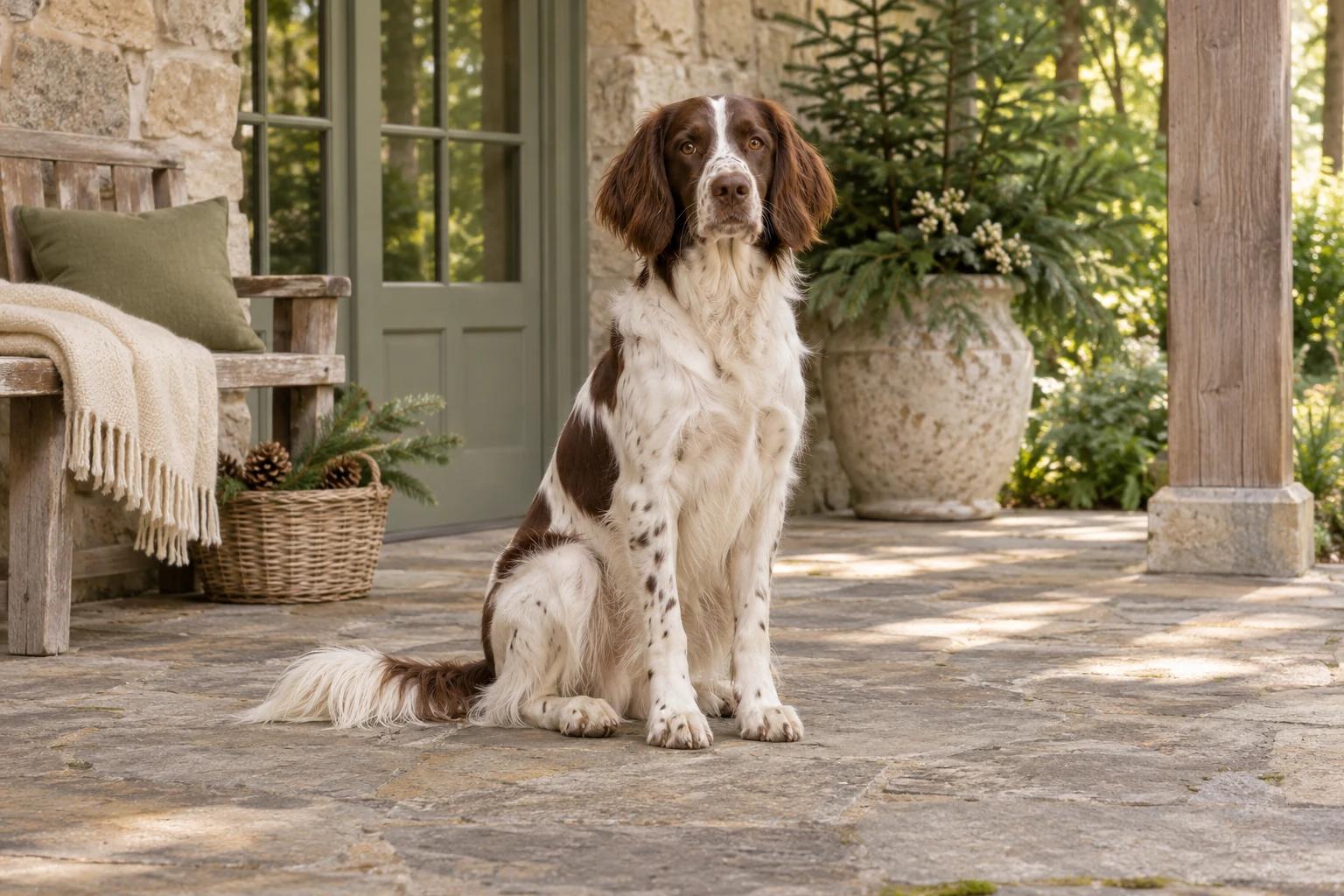
Drentsche Patrijshond vs Springer Spaniel is a useful comparison when you like feathered sporting dogs but want to understand the ownership differences beneath a similar outline. Here, Springer means the English Springer Spaniel. The choice should turn on the dogs you can meet and the routines you want to share, not which breed looks more appealing in a field photograph.
Read the Drentsche Patrijshond profile and English Springer Spaniel profile together. They provide starting points; your next task is to test those starting points against an ordinary week.
Drentsche Patrijshond vs Springer Spaniel: the useful distinctions
The FCI Drent standard identifies a pointing dog and describes gentleness, intelligence and possible initial reserve. The English Springer standard emphasizes a compact sporting build, endurance and agility. These are different breed descriptions, not two grades on a scale of suitability.
For an owner, that means asking about both the dog's working background and its present habits. Do not assume that a Drent is simply a differently colored Springer, or that two Springers from different families will have interchangeable routines. A broad label needs to be followed by a conversation about the actual dog.
The most useful difference between drentsche patrijshond and springer spaniel may be the one that affects your day: how the dog greets unfamiliar people, how it occupies itself after an outing, or how comfortably its adult body fits your transport arrangements. Those are observable questions, not matters of breed loyalty.
Compare greetings in the same setting
A Drent may need a little time before approaching a new person. The Springer profile points toward a more open social tendency, but that is not permission to crowd either dog. Arrange a visit where the owner can explain what is typical and where the dog can move away.
Watch what happens after the first excitement. Can the dog remain near a conversation without repeatedly seeking interaction? Does the owner offer a resting place? Does the dog choose contact or simply tolerate it? The answers tell you how the household supports that particular animal.
Avoid comparing one puppy at a noisy event with an adult met quietly at home. Age, setting and preparation can overwhelm the difference you thought you were measuring. If visitors are central to your life, ask each breeder or rescue to describe a recent busy day and the arrangements that made it manageable.
Your activity plan needs a weekday version
Both choices deserve more thought than a promise of long weekend walks. Write down what you can offer before work, during the day and in the evening. Include training and quiet companionship as well as outdoor time. Then ask whether the individual dog is accustomed to something similar.
For the Drent, consider whether you enjoy inventing small, purposeful tasks without expecting every outing to become specialist field work. For the Springer, ask what sort of activity the dog's family actually does and how it transitions back into home life. Do not infer a precise exercise prescription from either breed name.
Try describing a rainy workday to the person who knows the dog. “We have a short morning window, another adult home at lunchtime, and time for a longer evening outing” is more informative than “We are active.” A good discussion may reveal that your plan is suitable, needs support or would be easier with an adult whose routine is already known.
Coat care belongs in the comparison
Both dogs have feathering that deserves attention after outdoor adventures. The Springer standard describes an outer coat and undercoat, with feathering around several parts of the body. These features matter more to a practical owner than choosing whichever dog looks fluffier in a photograph.
Ask to see the normal grooming setup. How does the owner examine the feet after an outing? Where does the dog stand for brushing? What happens when it comes home damp? The demonstration should show the ordinary maintenance involved, not just the finished appearance before an event.
Make room for washing towels, drying equipment and checking the coat without rushing. If one household member dislikes grooming, agree who will do it and what professional help you might need. Neither option should be selected on the assumption that shedding or routine care disappears because the coat looks tidy.
Space: measure the individual, not the impression
The English Springer standard gives ideal shoulder heights of 20 inches for males and 19 inches for females. For weight, the current My Breed Atlas profile lists males at 45–55 pounds and females at 40–50 pounds. These references are not a promise about a particular puppy.
For either breed, obtain actual measurements before selecting a travel crate, harness or bed. With the Drent especially, do not let a flowing coat stand in for an assessment of the dog's body and usable space. Try the adult travel arrangement, including luggage and access through the car opening.
A house with a garden does not automatically solve the practical questions. You still need a secure entry routine, a place to rest away from traffic and someone able to handle the dog on everyday outings. An apartment does not answer those questions negatively by itself either. Evaluate access and routine, not just the property category.
Choosing between real dogs
When weighing drentsche patrijshond or springer spaniel, ask the same core questions of both sources. What are the adults like when no activity is happening? What experiences has the puppy or adult already had? What ongoing support is offered? Can you discuss the parents' screening records with your veterinarian?
If your search starts with “springer spaniel vs drentsche patrijshond,” resist choosing solely on rarity or familiarity. A nearby dog with well-documented habits may be easier to evaluate than a distant puppy selected from attractive photographs. That does not make one breed better; it makes the evidence different.
Our article on the Drent's search and point sequence covers its field behavior without turning it into a household guarantee. Use the breed match quiz for a separate check on your expectations. Choose the dog whose needs you are prepared to meet on ordinary days, not only on your best outdoor weekends.
FAQ
Does Springer Spaniel here mean English Springer Spaniel?
Yes. This comparison concerns the English Springer Spaniel and Drentsche Patrijshond. Other spaniel breeds should be researched separately rather than assumed to have the same size, background or daily needs.
Is the Drent always more reserved than a Springer?
No. Initial reserve is part of the Drent's standard description, but individuals differ. Meet dogs in comparable settings and ask how they behave with visitors after the first greeting, not just during arrival.
Which breed is easier for a first-time owner?
There is no automatic winner. The more useful comparison is between your available time, support and interests and the specific dog's established habits. A thoughtful introduction to adult dogs can reveal more than a general ease-of-ownership ranking.
Sources behind this article
Article source checked: November 15, 2026. Source checked 2026-11-15
Keep reading

Affenpinscher vs Brussels Griffon: Everyday Differences
Read article →