Devon Rex training: targets, useful habits and simple tricks
Build Devon Rex training around voluntary nose targets, useful everyday habits and simple movement skills, with clear steps rather than obedience labels.
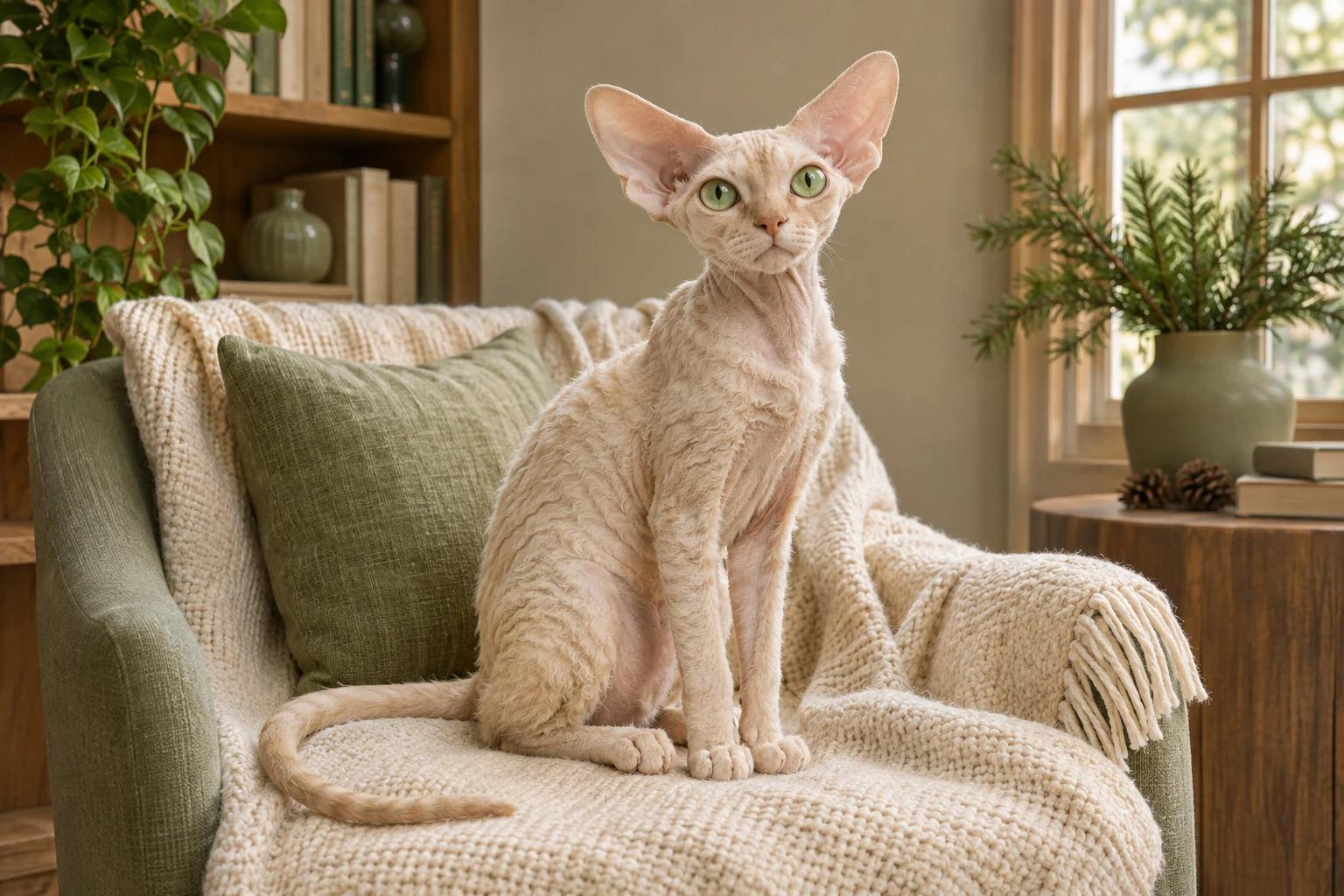
Devon Rex training should give you a clearer way to communicate with the particular cat in front of you. Begin by separating the thing you want to teach from the personality you imagine it requires. A successful lesson produces an observable action, not a certificate that the cat is clever, compliant or ready for every unfamiliar situation.
Devon Rex training: give an interest a defined task
TICA's Devon Rex activity account describes interest in learning tricks, interactive puzzles and returning toys for another throw. These examples suggest several possible ways of engaging the cat rather than one universal exercise that every Devon must enjoy.
For someone asking how to train a Devon Rex, the distinction between a puzzle and a taught action is useful. Working out an object and responding to a human cue are not identical tasks. A cat may be interested in one without already knowing the other. Likewise, bringing back a toy during play does not show that the cat understands a separate request to approach or touch an object.
Choose the interaction you actually want to build instead of treating the breed's reputation as prior instruction. If you want a nose touch, look for a nose touch; if you want a shared retrieving game, recognize that as a different activity. TICA supplies breed context, not a fixed lesson plan or evidence of how many repetitions a Devon needs. Interest gives you a place to begin. It does not eliminate the need to make the task understandable.
Skill one: a nose touch, then a small movement
The Ontario SPCA target game begins by offering a target close to the cat's head. When the cat touches it with its nose, mark that instant with a click or “yes,” then reward it. Repeat the simple touch over separate short sessions before making the task harder.
Once the response is reliable, add “touch” as the nose reaches the target. Move the target only slightly farther away at first. Later it can be positioned so the cat takes a step or two to reach it. Touching a nearby object and following it across space are successive stages, not the same opening requirement.
This gives Devon Rex obedience a concrete meaning: the cat can perform a particular action in response to a particular invitation. It does not mean physically steering its head or expecting it to understand the cue before learning the movement. The SPCA also recommends stopping for breaks before interest fades. A short exchange is a session; you need not turn every touch into a route around the room.
Skill two: notice a useful behavior already happening
The Cat Protection Society of NSW clicker factsheet suggests choosing something the cat already does that you would like repeated, such as sitting quietly nearby. Mark it and offer a reward. The sound gains meaning through its relationship with that outcome; it is not an attention button that arrives already understood.
The factsheet also makes an important distinction about rewards: food is not the only possibility. A valued toy or welcomed attention can matter to an individual cat. What counts is what the cat actually values, rather than what a person has decided should be flattering or exciting.
For a Devon owner, that opens a useful alternative to asking for a new trick whenever the cat is present. Quiet company can itself be worth noticing. You do not have to wait for a spectacular movement before recognizing something you want to encourage. Choose the behavior deliberately, because rewarding it is intended to make it more likely to recur. This is a general feline training principle, not a claim that a Devon will automatically prefer one reward type over another.
Skill three: distinguish walking through from jumping over
VCA's kitten-trick guide introduces a hoop with the opening low enough for the cat to walk through toward a reward. Its progression begins with that simple passage before any elevated version. You can keep the walking version as the activity rather than treating height as the measure of achievement.
This is useful because “through” specifies a route, while “jump” specifies a way of moving. Combining them at the outset asks for two things instead of one. A low opening lets you focus on whether the cat understands the route without turning the lesson into a test of athletic ability.
VCA also distinguishes turning in a circle on the spot from circling around the person. Those are separate paths, even though both might casually be called a spin. Decide which movement you mean so you do not reward one shape while expecting the other. The guide recommends rewarding small steps toward complex behaviors. Its examples are possibilities, not a required repertoire, an assessment of physical capacity or a reason to insist on movement the cat does not choose.
Keep training goals distinct from other ownership questions
The current Devon Rex profile lists adult females at five to seven pounds and males at seven to nine pounds. These are size references, not a scale of learning ability. Seven pounds appears in both intervals, and neither endpoint tells you how quickly an individual will learn a cue.
Devon Rex socialization is also a broader question than knowing a trick. Do not use a completed lesson as a substitute for learning about the individual's experience with people and unfamiliar situations. If you are choosing a cat, the cat match quiz helps organize ownership preferences rather than certifying an individual's behavior.
For procedural care, keep the separate Devon Rex ear-care questions for your vet separate from this training guide. Knowing a cue does not authorize an unfamiliar home-care procedure.
Frequently asked questions
Is the target supposed to touch the cat first?
Offer a Devon Rex's target nearby; let the cat initiate nose contact.
Must a hoop exercise involve jumping?
Devon Rex hoop training can involve walking, not jumping.
Does a larger adult learn faster?
Devon Rex adult weight references do not measure learning speed. Use the individual's actual responses rather than turning a size comparison into a training expectation.
Sources behind this article
- TICA Devon Rex ↗
- Ontario SPCA target game ↗
- Cat Protection Society of NSW clicker training ↗
- VCA kitten tricks ↗
Article source checked: November 16, 2026. Source checked 2026-11-16
Keep reading

Abyssinian Cat Training: Useful Skills for an Active Cat
Read article →