Rough Collie vs Border Collie: which routine fits?
Compare Rough Collies and Border Collies by activity, mental engagement, size and everyday ownership, without intelligence contests or exercise doses.
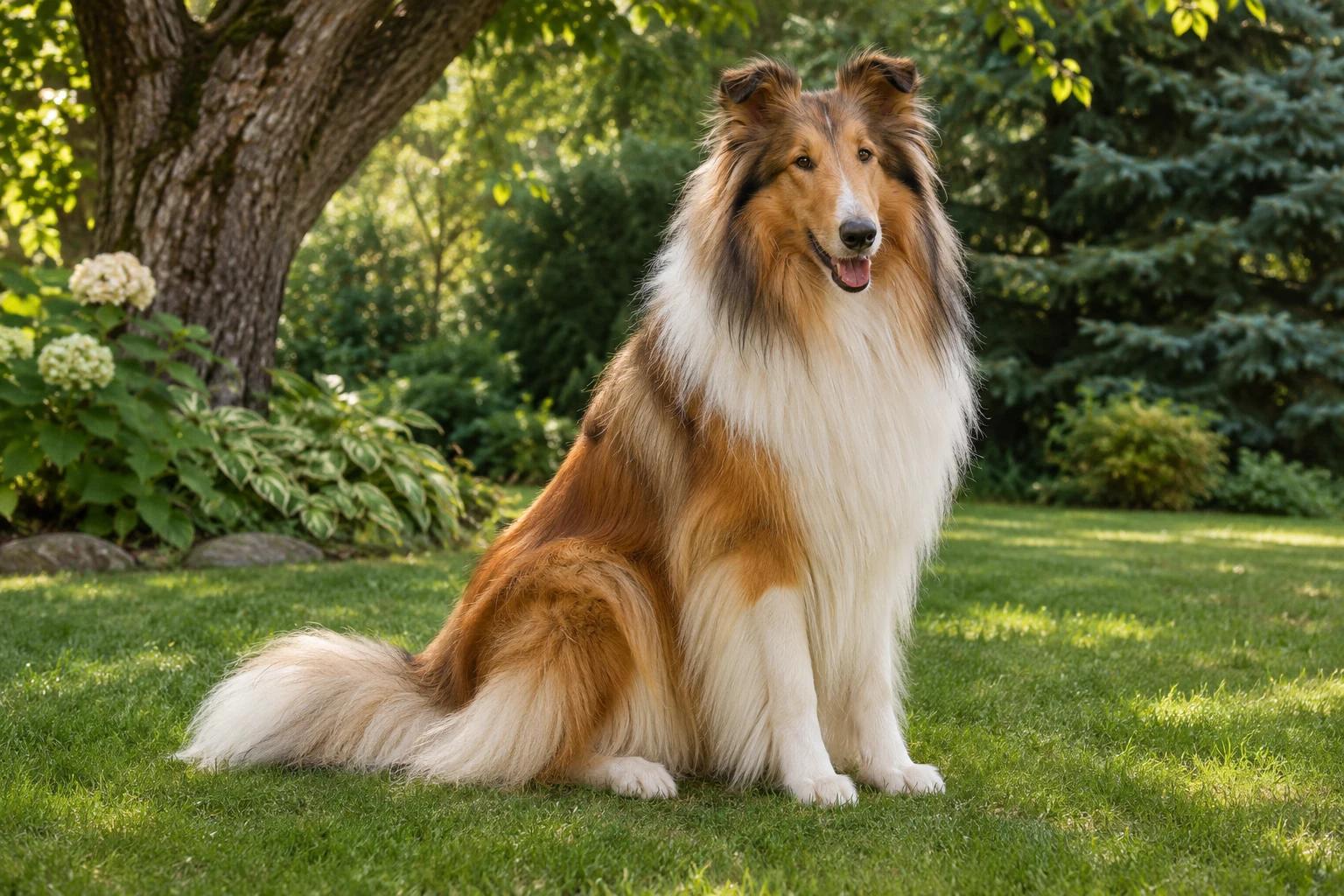
Rough Collie vs Border Collie is not a choice between two haircuts on the same dog. These are distinct breeds, with a noticeable difference in the activity tendencies recorded by My Breed Atlas. The Rough Collie is also the larger dog across much of the listed size range, despite a name that sometimes gets confused with a rough-coated Border Collie.
Compare the Collie profile with the Border Collie profile, then ask how their different demands fit your actual week. The useful question is not which breed is cleverer, but which kind of participation you want to provide consistently.
Rough Collie vs Border Collie: clarify the names
The AKC Collie description identifies Rough and Smooth varieties. In that usage, Rough Collie means the full-coated Collie. The Border Collie has its own breed identity, even when an individual Border Collie also has a rough coat.
That distinction matters when you contact a breeder, rescue or trainer. Ask which breed is being discussed before relying on a size estimate or daily routine. A photograph captioned only “collie” may leave the central question unanswered.
The existing Rough or Smooth Collie coat comparison explains the varieties within the Collie. Here the focus is different: comparing the practical ownership of a Rough Collie with a separate, more activity-intensive breed profile.
The clearest difference is the kind of week you must plan
My Breed Atlas gives the Collie a middle-range activity rating and places the Border Collie at the high end. Both need learning opportunities suited to the individual. Those references support a meaningful contrast, without establishing a fixed daily exercise prescription for either dog.
The AKC Border Collie description emphasizes work focus, energy and the owner's need to keep the dog occupied. If that appeals to you, picture the teaching as well as the movement. You will need interest in explaining tasks, observing responses and changing the challenge, not merely enthusiasm for a long walk.
For the Rough Collie, a balanced pattern of outings, play, learning and company fits the site's more moderate reference picture. Moderate does not mean self-maintaining. It means you should not automatically import the Border Collie's activity expectations simply because both names contain Collie.
A practical comparison is to examine your least flexible day. Can you arrange meaningful engagement before and after work? Do you enjoy working on a skill when the weather prevents the outing you had planned? For either dog, a workable occupation plan matters when the exciting weekend disappears from the calendar.
Learning ability does not erase the owner's job
Both profiles indicate responsiveness to training, with the Border Collie rated higher. That is not an intelligence contest, nor a promise that the more responsive breed is easier for a beginner. A dog can learn an unintended routine just as a person can establish one without noticing.
VCA's Collie guide supports reward-based games and teaching for the Collie. In either household, make the practical goals explicit: waiting while a door opens, walking with manageable lead tension and settling when an activity ends. Choose a reward the dog actually values and make the requested action clear.
If you are deciding between a Rough Collie or Border Collie, think about what you enjoy doing repeatedly. Both dogs need opportunities to learn as well as suitable outings and quieter shared time. Consider the site's activity distinction alongside the actual dog's experience and established routine, rather than treating one breed as an escape from teaching.
Size changes the household footprint
The Collie profile lists males at 24–26 inches and 60–75 pounds, and females at 22–24 inches and 50–65 pounds. Border Collie references are 19–22 inches for males, 18–21 inches for females and 30–45 pounds overall. These listed adult weight ranges do not overlap, which is useful when planning space; individual dogs can still differ from their breed references.
Measure where a bed, travel crate or resting mat would go. Include the space needed to turn and pass, not just the rectangle occupied by the equipment. Check access through doors and into the vehicle. A full Rough Collie coat can make photographs hard to judge, so actual measurements are more useful than visual impressions.
The smaller Border Collie reference size should not be read as a smaller daily commitment. Physical footprint and activity needs are different considerations. A dog can occupy less room while requiring more deliberate participation from its owner.
Coat and noise do not offer simple shortcuts
The Rough Collie's full coat and the Border Collie's listed medium-length coat create different outlines, but both site profiles record shedding. Do not assume the less abundant silhouette means a hair-free home or no regular care.
Ask to see the actual coat routine and the dog's comfort with handling. Where are tools stored? Which areas need the most attention? Who will provide care when the usual person is away? These questions reveal the practical commitment without repeating the separate Rough-versus-Smooth coat discussion.
Noise also needs direct investigation rather than a promise based on the breed name. Ask about specific triggers, the dog's ability to settle afterward and what happens during time apart. Avoid choosing either breed because a brief visit happened to be quiet. An entrance overlooking a busy corridor can produce a different daily experience from a secluded living room.
Use comparisons to choose better questions
The difference between Rough Collie and Border Collie is most useful when it changes your next question. For the Rough Collie, ask how ordinary companionship, care handling and activity fit together. For the Border Collie, examine the teaching and occupation plan alongside the exercise plan.
A Border Collie vs Rough Collie shortlist should include adult dogs where possible, not only appealing puppy images. Ask caregivers to describe a normal workday and a disrupted one. What happens when rain cancels an outing or the household has visitors? The answer helps turn a reference profile into a realistic arrangement.
Use the breed match quiz to organize your priorities, then compare them with those firsthand accounts. Choose the commitment you will enjoy sustaining, rather than the breed whose reputation sounds most impressive.
FAQ
Is a Rough Collie a long-haired Border Collie?
No. Rough Collie identifies the full-coated Collie variety in this comparison. The Border Collie is a separate breed and can itself have different coat presentations. Clarify the breed name before comparing routines or measurements.
Which breed has higher activity needs?
My Breed Atlas places the Border Collie above the Collie for activity. That is a reference tendency, not a universal number of exercise hours. Build an individual routine that includes purposeful learning as well as suitable physical activity.
Is the smaller dog necessarily easier to accommodate?
The Border Collie's reference size is generally smaller, but size does not measure the time needed for activity and teaching. Compare the space available and the daily engagement you can offer as separate decisions. Neither can substitute for the other.
Sources behind this article
Article source checked: November 15, 2026. Source checked 2026-11-15
Keep reading

Affenpinscher vs Brussels Griffon: Everyday Differences
Read article →