Cirneco dell'Etna Temperament in Everyday Life
Understand Cirneco temperament through company, independence, greetings, and practical household routines.
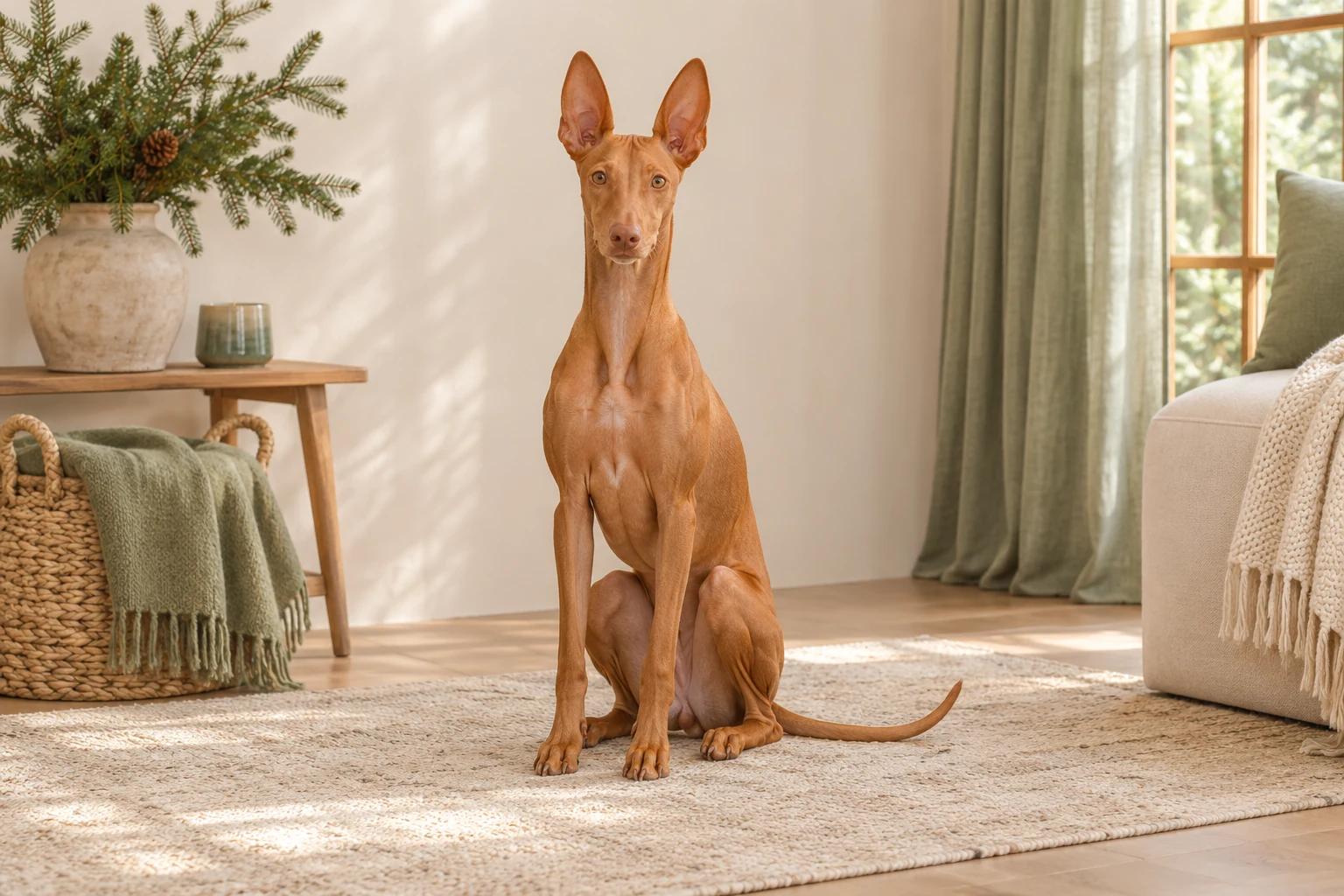
Cirneco dell'Etna temperament makes most sense when you picture an involved companion who still notices opportunities for action. The question is not whether this elegant hound can enjoy a sofa. It is whether your household can provide company, clear routines, and sensible boundaries when something more interesting than the sofa appears. A quiet photograph gives you little information about that combination.
Cirneco dell'Etna temperament: affection with initiative
The American Kennel Club's Cirneco introduction describes a quick, athletic hunter and a gentle, loyal house companion. The UKC standard also brings activity and affection together. These are useful starting points for understanding Cirneco dell'Etna personality, not competing descriptions from which an owner must choose.
In practice, plan for two kinds of participation. One is shared movement and learning: going out together, investigating a new route, or practising a small household skill. The other is ordinary proximity while you read, cook, or work. Neither needs to fill every waking moment. The important question is whether the dog has a place in your routine beyond being exercised and put away.
When meeting an adult, watch a transition rather than asking for a performance. What happens after a walk when the lead comes off? Does the dog look for a person, explore the room, choose a bed, or need help switching activities? Ask the carer whether the scene is typical. A single busy introduction is not a full account of life at home.
Company without constant entertainment
Decide where the dog may settle during the parts of the day you cannot devote to play. A bed beside the desk offers a different arrangement from being shut away elsewhere. A resting place outside the kitchen work zone lets you share a room without having a dog underfoot. Set up these options before arrival, then see which locations the dog actually uses.
Do not turn every glance into a new game. Offer attention deliberately, and give quiet moments room to exist. For example, you might finish a short outing, put equipment away, offer access to the usual resting space, and resume your own task. A predictable ending makes more sense than suddenly expecting the dog to understand that the fun is over.
Time alone needs its own history. Ask how the dog has handled departures, what the carer has observed during absences, and what arrangements have worked. Affection does not tell you how long a particular dog can be left. If your workday has no flexibility, arrange suitable help rather than building the plan around an untested assumption.
Independence is a planning question
Among the useful Cirneco dell'Etna characteristics to consider is the combination of family involvement and self-directed interest described on the breed profile. You can accommodate that combination without treating every choice as a contest.
Give a walk a clear framework. Use a lead where needed, allow investigation in appropriate places, and reward the dog for checking back with you. A request to move on should be something you have practised, not a phrase first shouted when you are late. Select easy moments to teach it, then gradually use it where leaving an interesting spot is harder.
At home, agree on door routines. Who attaches the lead? Where does the dog wait while a visitor enters? Can parcels be received without leaving an open route outdoors? Physical arrangements matter even when training is going well. A latch and a consistent family habit do not depend on the dog choosing correctly every time.
Avoid using the breed's hunting background as a reason to test recall around wildlife. The existing article about the Cirneco's traditional work explores that history. For companion ownership, the immediate issue is providing permitted outlets while preventing unwanted pursuit, not recreating the original job in a public park.
Greetings, visitors, and shared rooms
A friendly breed description does not require a dog to greet everyone. Let visitors begin with space rather than hands reaching overhead. If the dog approaches, keep the exchange easy to leave. You learn more from voluntary interest than from arranging a crowded welcome and hoping for the best.
Have a separate plan for service visits. A repair appointment may involve equipment, open doors, and a person who cannot pay attention to a dog. A prepared resting area behind a secure barrier can be more practical than repeatedly asking the Cirneco to stay beside you. Introduce that arrangement on ordinary days so it is not used only when the house becomes confusing.
If another animal lives with you, ask about experience with that particular kind of animal. General sociability is not evidence of compatibility with a cat, rabbit, or unfamiliar dog. Plan introductions with the people responsible for both animals, and retain separation options. Never use a first meeting to prove that a breed label is correct.
Read behavior in its setting
Cirneco dell'Etna behavior is easier to interpret when you record what happened immediately before it. A dog pacing near the exit after seeing the lead presents a different question from a dog pacing after a sudden household change. Write down the setting, your response, and what happened next instead of attaching a permanent label such as stubborn or needy.
Use those observations to adjust one thing at a time. If departures from the house are chaotic, prepare your shoes and bag before bringing out the dog's equipment. If lessons disappear into excitement, practise an easier version in a quieter room. These are changes to the task, not judgments about the dog's character.
Discuss sudden or concerning behavior changes with a veterinarian. For ongoing teaching difficulties, seek a reward-based professional who will observe the actual situation. You do not need to settle an argument about whether a behavior is typical of the breed before asking for help.
For an initial household comparison, the breed match quiz can organize your preferences. Bring its questions back to real constraints: shared time, secure exits, available walking routes, and care when your plans change.
FAQ
Is the Cirneco dell'Etna affectionate?
Breed descriptions emphasize affection and attachment to people. Ask how a particular dog seeks company and handles everyday separation. Sitting nearby, joining activities, and requesting touch can all be different expressions of companionship.
Does an independent Cirneco need different household rules?
A Cirneco benefits from rules that people can apply consistently, such as a clear exit routine and an agreed resting place. Independence is not a reason to abandon teaching or rely on confrontation. Make the desired action understandable and worth practising.
Can temperament tell me whether a Cirneco suits my apartment?
Temperament alone cannot answer that question. Examine the building's exits, outdoor access, visitor traffic, time-alone arrangements, and the individual dog's experience. A workable daily plan matters more than simply finding enough floor space for a bed.
Sources behind this article
Article source checked: November 15, 2026. Source checked 2026-11-15
Keep reading
Cirneco dell'Etna Size: Height, Weight, and Practical Fit
Read article →