Cirneco dell'Etna Size: Height, Weight, and Practical Fit
Explore Cirneco adult height and weight, plus practical advice on measuring for walking equipment, beds, and transport.
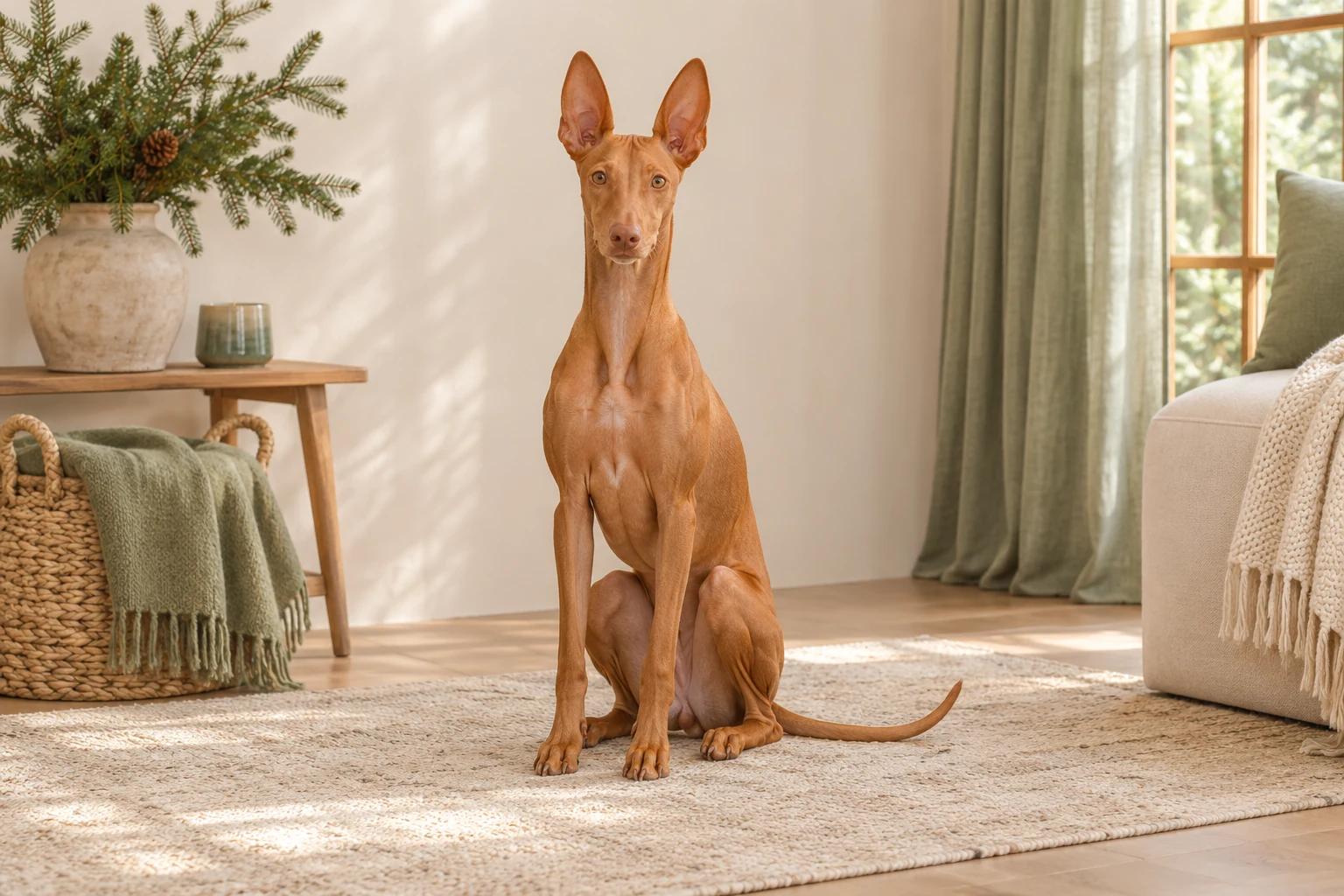
Cirneco dell'Etna size can be deceptive in photographs: the upright ears and long-legged outline may suggest a bigger dog than the weight figures imply. For practical planning, separate height, weight, and body measurements. They answer different questions about beds, transport, walking equipment, and the space a dog uses when standing or turning.
Cirneco dell'Etna size: the adult reference
The My Breed Atlas profile lists adult males at 18–20 inches tall and 22–29 pounds, and females at 17–19 inches and 18–24 pounds. These are reference ranges, not a promised result for a puppy or a target weight for every adult. The male and female ranges overlap, so sex alone will not tell you which of two individual dogs is larger.
When asking how big do Cirneco dell'Etna dogs get, use those figures to establish scale, then ask for actual measurements of the dog you are considering. For an adult, a current weight and measured shoulder height are more useful for fitting equipment than a breed average. For a puppy, expect to revisit purchases rather than treating the first harness as permanent.
The UKC standard describes a lightly built, square outline, with body length matching shoulder height. That helps explain the silhouette, but it does not supply the circumference needed to choose a harness. Likewise, the AKC introduction emphasizes athleticism. A relatively light dog should not be planned for as if it were an inert parcel of the same weight.
What each measurement actually tells you
Cirneco dell'Etna height refers to the shoulder, not the tips of the ears. To record a useful household estimate, have the dog stand naturally on a level surface beside a height reference. Do not pull the head upward or press the dog into position. If the dog is uncomfortable with measuring, ask a knowledgeable handler to help rather than turning it into a struggle.
Cirneco dell'Etna weight is a separate measurement from height. Record the date and use a reliable scale. If you are monitoring change, comparable measurements are more helpful than occasional guesses made while picking up the dog. Questions about whether a particular weight is appropriate belong with a veterinarian who can assess the dog, not with a breed-range calculator.
For equipment, follow the manufacturer's measurement diagram. Chest, neck, and back measurements may be taken at different points for different products. Write down both the number and where it was taken. A note reading only “medium” will tell you very little when another brand uses that label differently.
Fit the walking equipment to the actual outline
The Cirneco's slim appearance makes a close look at adjustment especially worthwhile. Check the available adjustment range before buying, then check the fitted item on the dog. Weight-based shopping filters can narrow a search; they cannot establish whether straps sit where they should.
In a secure setting, watch the dog stand, walk, turn, and lower its head while wearing the equipment. Ask the seller or a qualified fitter to explain the intended fit and how to recognize slipping or restriction. Do not improvise extra tightness because you are worried about escape. The answer may be a different design rather than more pressure.
Keep a fitting record if more than one person handles the dog. Note which item belongs to this dog and where the adjustments were checked. Recheck after changes in growth or body condition, and inspect the item itself for wear. A previously suitable fit is not a permanent certification.
Beds, crates, and car space
A bed needs to accommodate how the dog sleeps, not merely its standing length. Watch whether the dog curls tightly, stretches sideways, or changes position often. Measure the usable sleeping surface, excluding thick bolsters that reduce it. A handsome bed can still provide surprisingly little room inside.
For a crate or transport enclosure, compare the dog's dimensions with the usable interior and the manufacturer's guidance. The dog should be able to stand, turn, and lie comfortably. Account for the head and ears when checking actual clearance rather than using shoulder height as the finished answer. Introduce the enclosure gradually; buying the right dimensions does not teach comfort inside it.
Check the car before ordering. Measure the opening through which the enclosure must pass as well as the space where it will sit. Think about how it will be secured and how you will attach a lead before opening it at the destination. These small logistical checks are often more useful than debating whether the breed should be called small or medium.
If public transport or a travel provider has size restrictions, obtain its current rules directly. A dog's weight does not automatically establish carrier eligibility, and a breed label is not a substitute for the provider's actual limits.
Growing dogs and sensible purchasing
For a puppy, ask for dated growth records and information about the parents without treating either as an exact forecast. Do not multiply a puppy's current weight by a generic number and use the answer to buy everything. Choose adjustable equipment where suitable and leave room in the budget for replacement.
Avoid buying a whole collection in one size before you know the adult dog's measurements. Start with the essential items you can fit properly. Even for an adult, a coat that matches back length may fit poorly around the chest, and a bed that fits the dog may not fit the intended corner of your home.
Do not try to keep a dog within a published range by changing food on your own. A veterinarian can interpret growth, body condition, and unexpected changes. The role of this size guide is household planning, not a feeding or weight-management prescription.
Size is only one part of the commitment
Map the actual route from the sleeping area to the outside door. Can someone pass without stepping over the bed? Where will wet walking equipment go? Is there a secure place for the dog while shopping arrives? The dog's footprint includes the way people move around it.
Then consider time and activity separately from dimensions. The breed match quiz can help put those questions beside size rather than letting a convenient weight range decide everything. Our article on traditional Cirneco work offers background, but that history should not be converted into a fixed domestic exercise requirement.
FAQ
How tall is an adult Cirneco dell'Etna?
My Breed Atlas lists males at 18–20 inches and females at 17–19 inches at the shoulder. Measure the individual dog for practical fitting, and remember that shoulder height excludes the head and upright ears.
How much does a Cirneco dell'Etna weigh?
The site's reference ranges are 22–29 pounds for males and 18–24 pounds for females. They are not individualized weight targets. Ask a veterinarian about the appropriate condition and weight of a particular dog.
Can I choose a harness from weight alone?
Weight alone is not enough. Use the manufacturer's measurement instructions, check the adjustment range, and inspect the fit on the dog while it moves. A size label such as small or medium is not consistent across products.
Sources behind this article
Article source checked: November 15, 2026. Source checked 2026-11-15
Keep reading
Cirneco dell'Etna Temperament in Everyday Life
Read article →