English Bulldog temperament: company without stereotypes
Understand English Bulldog temperament through companionship, play, everyday learning and realistic questions about the individual dog.
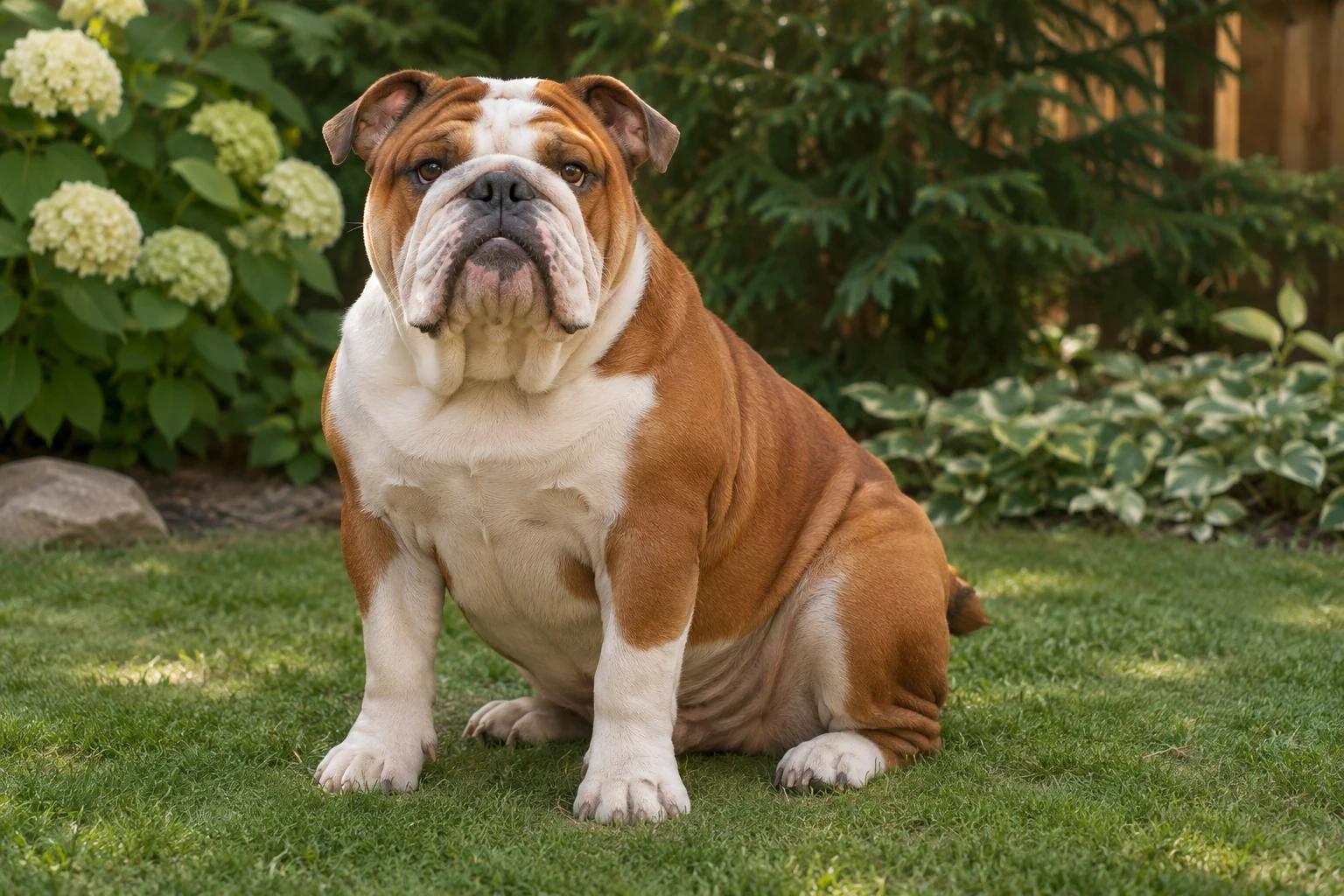
English Bulldog temperament is often reduced to a cartoon: an immovable dog on a sofa, occasionally waking to make everyone laugh. That image is not much help when you need to teach manners, arrange visitors or understand a dog that wants your attention. Start with companionship and everyday behavior rather than a joke about laziness.
The Bulldog profile describes a dog interested in family interaction, with room in its day for play, learning and outings. You are choosing a relationship, not a decorative presence. The best questions concern what that relationship looks like in the home you actually have.
English Bulldog temperament beyond the serious expression
The American Kennel Club describes a friendly, dignified companion. A serious-looking face does not tell you whether a dog is relaxed, curious or worried in a particular moment. Look at the whole interaction and ask the person who knows the dog to explain its familiar behavior.
During a visit, allow ordinary things to happen. Watch while the caregiver sits down, puts away a toy or prepares to leave the room. Ask what usually follows. You will learn more from a normal sequence than from requesting a dramatic demonstration of the dog's affection.
A useful question is, “What does this dog do when you are busy but still at home?” The answer may reveal whether it rests nearby, brings toys or finds the interruption difficult. That gives you something concrete to plan around, without pretending a breed label predicts every individual's response.
Enjoy company without making every request an event
English Bulldog personality can be appealing to people who like a dog close to household life. Decide how that closeness will work. A resting place near your chair may suit you; a dog wedged beneath the chair wheels will not. Arrange the space before the inconvenient habit becomes part of your shared routine.
Think about how you start interaction as well as how you end it. If every nudge leads to a lively game, the dog has no reason to understand that nudging sometimes means you need to finish a task. Teach a clear invitation to play and a calm transition afterward, with help from a reward-based trainer if needed.
Being affectionate does not mean a dog must be touched whenever someone wants to touch it. Give it an undisturbed place to rest and let household members know what that space is for. Companionship works better when participation and quiet time are both available.
Keep play thoughtful rather than dismissing it
Playfulness belongs in the ownership picture. You do not need to create a frantic game to make interaction worthwhile. A familiar toy, a simple search activity or a short learning game can offer a shared task that fits the dog's abilities and interests.
For example, put a favorite toy in an easy, visible location and invite the dog to find it. If that becomes a familiar game, change one small feature rather than hiding it somewhere inaccessible and watching the dog struggle. The point is shared engagement, not proving how persistent the dog can be.
Choose suitable activities with the individual dog in mind. Discuss physical limits and appropriate exercise with your veterinarian. Do not interpret a breed stereotype as permission to skip activity, or enthusiasm in the moment as a reason to keep making the game harder.
Replace “stubborn” with a more useful question
English Bulldog behavior is easier to work with when you describe what happened. “He would not cross the doorway” gives you a starting point. “He is stubborn” does not tell you whether the surface was unfamiliar, the cue unclear or something uncomfortable.
If a familiar task suddenly changes, consider whether professional assessment is needed. For a teaching problem, review what the dog has actually learned. Did you practice the cue in this setting? Is the reward useful here? Have different people been asking for different things with the same word?
Keep ordinary lessons small enough to understand. Moving to a mat, waiting while a door opens and allowing equipment to be fitted are useful skills. Reward the part you asked for rather than extending the task without warning. A calm-looking dog still needs information about what earns success.
Make greeting arrangements before the visitor arrives
Among English Bulldog characteristics, a substantial body deserves as much planning as a sociable disposition. The adult reference is 40–44 pounds for females and 50–55 pounds for males. An enthusiastic greeting can be awkward even when the dog is not tall.
Create space at the entrance. Let visitors put down bags and remove coats before an introduction. If someone does not want a greeting, have an alternative resting area ready rather than asking the guest to negotiate directly with the dog.
Other-dog meetings need their own plan. Ask about the particular dog's history and use individual advice for introductions. A friendly description does not establish that two dogs will enjoy sharing toys, food areas or resting places. Do not use a crowded gathering to find out whether a pairing works.
Treat care cooperation as part of home life
The Bulldog Club of America's maintenance guidance distinguishes coat brushing from attention to facial folds. That means everyday handling deserves a place in your ownership questions, even though this is a short-coated dog.
Ask the caregiver to explain the existing routine and which parts the dog finds comfortable. A dog that enjoys sitting beside you may still dislike a particular grooming action. Affection is not consent to every kind of handling, and forced stillness is not the same as relaxed participation.
Have your veterinarian demonstrate individual care requirements, and ask a trainer or groomer for help building cooperation. The aim is to make ordinary care understandable. Avoid interpreting discomfort as a personality flaw that must be overcome by persistence.
Choose using ordinary evidence
Before committing, write down the parts of ownership you can support: company, training, hands-on care, manageable outings and arrangements when you are unavailable. Then ask about the actual dog against that list. Leave room for what is unknown rather than filling every gap with a flattering breed description.
Health paperwork belongs in a separate conversation, supported by the Bulldog breathing-assessment records article. For broader preferences, use the breed match quiz. Neither replaces meeting a dog, but both can help organize the decision without relying on the sofa stereotype.
FAQ
Are English Bulldogs always lazy?
No. English Bulldogs still need suitable activity, play and learning. Ask how the individual dog spends its day, and discuss an appropriate activity plan with your veterinarian rather than copying a stereotype.
Does a friendly Bulldog automatically enjoy every visitor?
No. A friendly breed description is not a prediction for every meeting. Give arrivals space, respect the dog's response and provide an alternative to greeting when either the dog or visitor needs it.
Is an English Bulldog impossible to train?
No. The breed profile supports making learning part of everyday life. Use clear, reward-based teaching and describe specific difficulties instead of calling the dog stubborn. A trainer can help you adjust the lesson.
Sources behind this article
Article source checked: November 15, 2026. Source checked 2026-11-15
Keep reading

Airedale Terrier Temperament: What Everyday Life Can Feel Like
Read article →