Broholmer temperament: calm company, clear boundaries
Explore Broholmer temperament through everyday companionship, visitor arrangements and the practical manners a large, watchful dog needs.
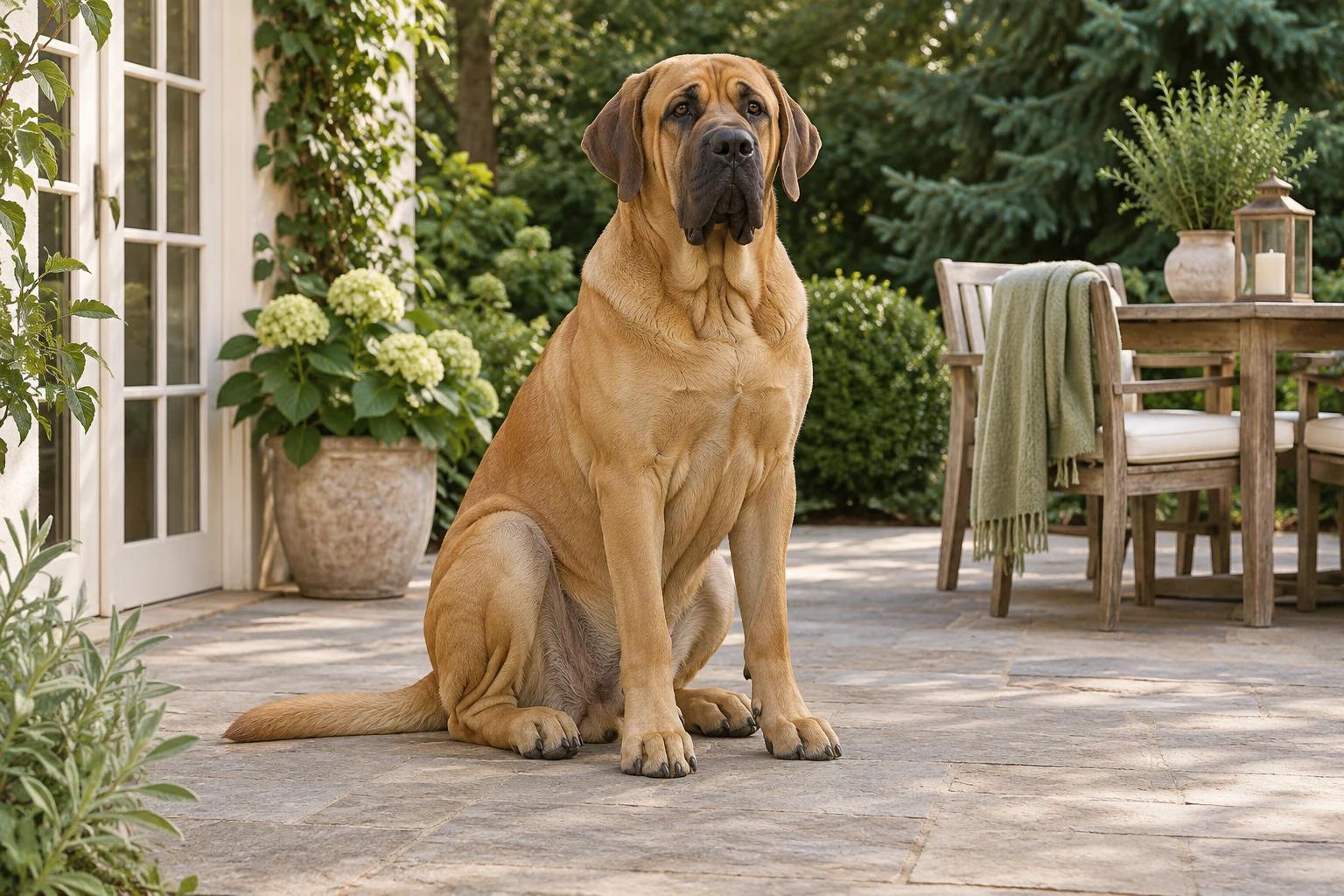
Broholmer temperament is often described with two words that can seem contradictory: calm and watchful. In a household, those qualities can coexist. A dog may rest quietly beside familiar people while still noticing who approaches the gate. The useful question is not whether the breed has one fixed personality, but what daily arrangements help you live comfortably with a substantial, observant companion.
Start with the Broholmer profile, then ask about the particular dog. Its adult size makes ordinary manners especially important. Quiet behavior does not remove the need for teaching, and a composed appearance does not tell you how a dog will respond in every situation.
Broholmer temperament beyond the first impression
The FCI standard describes a calm, friendly, self-confident yet watchful dog. The American Kennel Club gives a similar temperament summary. These are breed descriptions, not substitutes for meeting the dog and learning its routine.
When visiting a breeder or caregiver, allow time beyond the arrival. A greeting tells you something about greetings, but much less about an ordinary afternoon. Ask whether you can observe the dog while people talk, move between rooms or briefly turn their attention elsewhere. Do not manufacture surprises to see what happens.
Useful questions are specific: Where does the dog choose to rest? Does it follow household activity or remain in one place? What happens when a familiar person returns? Which situations need extra management? The answers help turn Broholmer personality from a collection of adjectives into a picture of shared life.
Make room for companionship without crowding
A large dog can be sociable while making a small room feel crowded. Decide where companionship will happen before arrival. A resting place near the household, but outside the main passage between rooms, lets the dog participate without becoming an obstacle everyone must step around.
This is especially relevant when the dog lies beside a dining chair or across a narrow doorway. Instead of repeatedly moving it after people become frustrated, provide a more workable place and teach a clear cue for going there. Keep access to that place available during ordinary quiet periods, not just when visitors arrive.
Talk through furniture rules as well. If resting on the sofa will not work at adult size, do not build a puppy routine around it and expect the change to explain itself later. Everyone in the home should understand the same arrangement. Consistency is easier than negotiating space with a dog that has learned several conflicting rules.
Give watchfulness a household routine
Among Broholmer characteristics, watchfulness deserves practical thought. You do not need to encourage a dog to patrol the entrance or confront visitors. Decide how you want arrivals handled, then arrange the room and the human actions around that plan.
For a delivery, the simplest arrangement may be a closed interior door or suitable barrier while you collect the parcel. For an invited guest, settle bags and coats before considering an introduction. A greeting can wait until there is space and everyone knows what to do.
Do not ask guests to demonstrate bravery by approaching a dog that is avoiding them. Equally, do not make every arrival an exciting ceremony. Ordinary, predictable routines are more useful than turning the front door into a performance. If visitor situations are difficult, a qualified reward-based trainer can help you build a plan; concerns involving fear or aggression belong with your veterinarian and an appropriate behavior professional.
Quiet does not mean trained
The live profile places vocal tendency at the lower end of its reference scale. That is not a promise of silence, and volume is only one part of Broholmer behavior. A silent dog standing in the doorway can still make an arrival difficult. A quiet dog pulling toward something interesting still needs workable lead manners.
Choose skills with a clear household purpose. Moving away from an opening door, waiting while equipment is attached and walking through a narrow space without rushing are useful examples. Teach each in an easy setting before relying on it during a busy moment.
With a dog of this size, the goal is cooperation rather than a contest of strength. Ask a trainer to help you establish manageable handling and reward-based teaching. Do not wait until the dog is physically difficult to redirect before making training part of its ordinary routine.
Plan engagement, not constant entertainment
The Broholmer profile describes lower activity needs, alongside a continuing need for mental engagement. That combination supports a thoughtful routine rather than an assumption that the dog will simply sleep around your schedule. Include walks, opportunities to investigate and small learning tasks suited to the individual.
For example, a quiet outing can include time to sniff as well as a few moments of walking practice. At home, finding a familiar toy or practicing a simple cue can offer interaction without turning the living room into a running track. These are planning ideas, not a fixed exercise prescription.
Ask the current caregiver how the dog's day is organized and what happens when the routine changes. A calm evening may reflect a well-established day, not a dog that needs no attention. For a puppy, older dog or dog with physical limitations, discuss appropriate activity with the veterinarian rather than copying an adult's schedule.
Ask about the situations your home actually contains
A household with frequent visitors has different questions from one with a quiet entrance. Someone living beside a shared corridor needs to understand responses to nearby movement. A home with another dog needs information about that particular pairing, not a general assurance about the breed.
Describe your real circumstances to the breeder or caregiver. Mention access arrangements, other animals and who will handle the dog. Ask what is known, what has not been observed and what support is available after the move. An honest gap in information is more useful than an effortless promise.
The existing guide to reading a Broholmer behavior profile covers a separate assessment topic. For the everyday decision, combine records with ordinary observations and your practical limits. The breed match quiz can help you organize those priorities before committing.
FAQ
Is a Broholmer always calm indoors?
No. Calmness is part of the breed description, but indoor behavior also reflects the individual, its experience and the situation. Ask how the dog spends an ordinary evening and what routines help it rest.
Does a Broholmer need much barking to be watchful?
Not necessarily. Watchfulness and vocal behavior describe different things. My Breed Atlas gives the breed a lower vocal reference, but owners should still plan for arrivals and learn what prompts their own dog to react.
What manners matter most for a Broholmer companion?
Prioritize cooperative lead walking, moving away from doors, comfortable handling and settling in a practical resting place. Those skills make everyday life with a large dog more manageable and should be taught before difficult situations demand them.
Sources behind this article
Article source checked: November 14, 2026. Source checked 2026-11-14
Keep reading
Broholmer size: adult measurements and living space
Read article →