Broholmer size: adult measurements and living space
Understand Broholmer size, adult height and weight, then check resting space, equipment fit and the practical limits of your home.
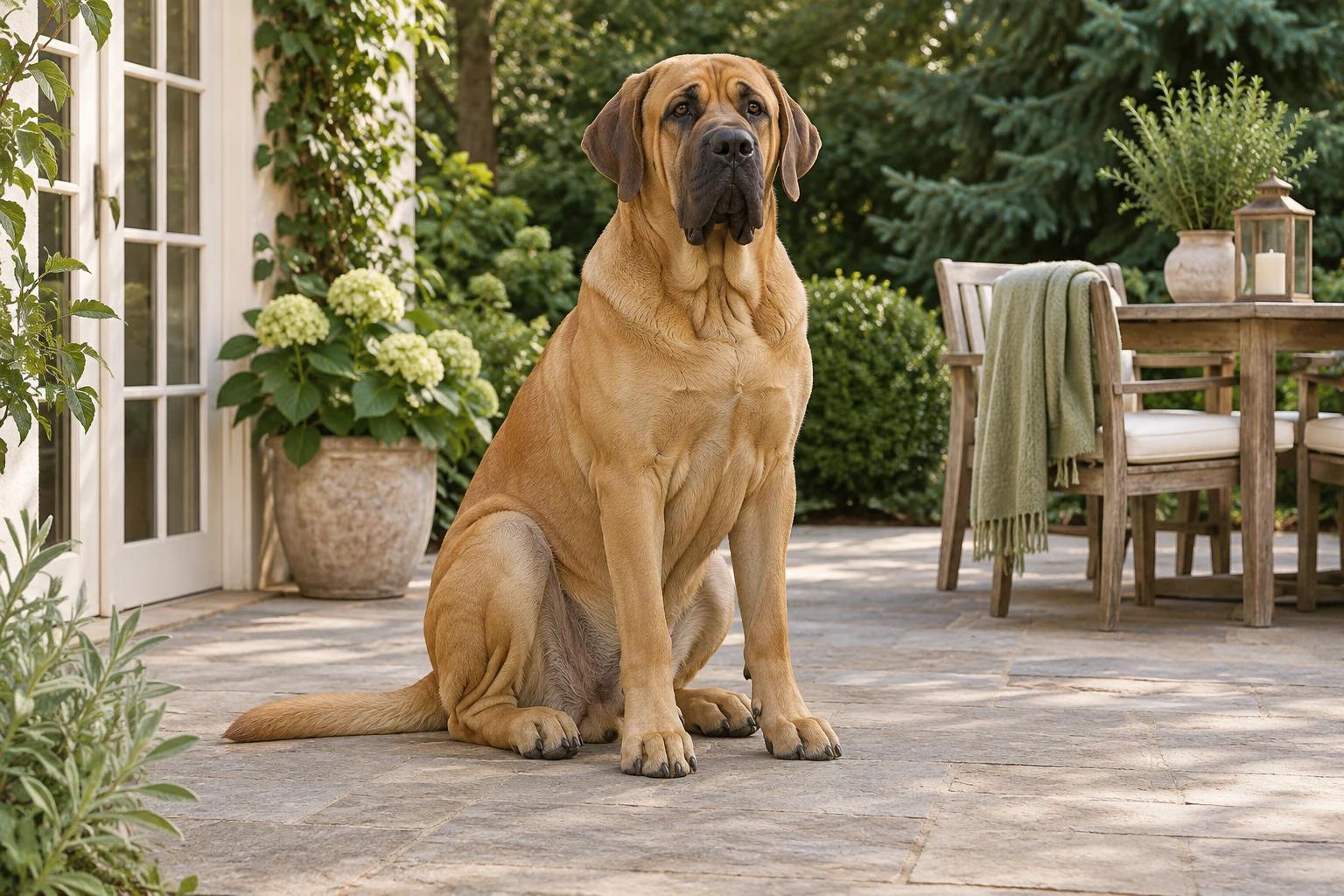
Broholmer size deserves more than a quick comparison with the dog next door. The My Breed Atlas profile lists adults at 27.5–29.5 inches tall and 88–154 pounds. Those figures describe a substantial dog, but they do not tell you whether its bed fits beside your desk, whether it can turn comfortably in your entrance or whether your building accepts it.
Treat the range as a starting point for planning, not a promise about a puppy. The useful next step is to connect measurements with the places and equipment the dog will actually use.
Broholmer size means height, weight and body shape
Broholmer height refers to the shoulder, not the top of the head. A dog can stand within the listed height range and still occupy considerably more room when it stretches out, turns or raises its head. Measuring only the height of a doorway misses much of the space question.
The FCI standard describes a rectangular, strongly built dog with a broad, deep chest. That outline helps explain why length and width matter alongside height. A narrow passage may feel different once a large dog and a person both need to pass through it.
Broholmer weight is another dimension, not a shopping size. Two dogs within the adult range may need different harness adjustments or resting arrangements. Take the measurements requested by the equipment manufacturer and check the actual fit instead of assuming that an item marked “giant” must be appropriate.
How big do Broholmers get in practical terms?
The adult reference of 88–154 pounds spans a considerable range. Do not build every decision around the smallest endpoint simply because it makes the plan easier. If a building restriction or equipment limit falls within that range, investigate the constraint before choosing a puppy.
For a known adult, current measurements are more useful than an imagined breed average. Ask the caregiver for recent height, weight and the dimensions of the equipment already in use. Confirm what has actually been measured and what is only an estimate.
For a puppy, ask about adult relatives and discuss growth with the breeder and veterinarian. That background can inform planning, but it cannot establish an exact future weight. Avoid informal formulas that multiply a puppy's present weight into a confident adult prediction. Leave room for uncertainty rather than buying everything for one guessed endpoint.
Map the resting area before buying the bed
A large bed needs a useful location, not just an empty rectangle on the floor. Mark the intended footprint with removable tape. Then open nearby doors, pull chairs back and walk through the room as you normally would. A spot that looks generous in an empty room may disappear when people use it.
Allow the dog to stretch out without blocking the main route. Think about where it will rest while you work, eat and receive visitors. One practical resting area may be enough in a small home, but it should not depend on everyone repeatedly stepping over the dog.
Look beyond the advertised outer bed dimensions. Raised edges or a thick bolster can reduce the usable surface. For an adult, compare the space with how the dog actually sleeps. For a puppy, plan for replacement or adjustment instead of treating the first bed as a lifelong purchase.
Check openings, turning space and barriers
A Broholmer's path through the home matters as much as the room where it rests. Walk from the outside door to the resting area and identify tight turns, swinging doors and places where two occupants cannot comfortably pass. Notice where a lead could become awkward while you are handling keys.
If you plan to use a barrier, read its intended use, fitting method and limitations. A barrier is not suitable simply because it spans the opening. Consider whether it can be securely installed and used without forcing the dog into a cramped waiting space.
Shared entrances deserve particular attention. You may need somewhere to pause while another person passes, or a way to avoid having two dogs meet in the narrowest point. These are layout questions rather than judgments about whether the breed is friendly. Good arrangements reduce the number of difficult negotiations required each day.
Buy equipment from measurements, not breed labels
For a collar or harness, follow the maker's measuring instructions and check the available adjustment range. Different designs use different measurements. Ask a knowledgeable fitter or trainer to help if you are unsure, especially when choosing equipment for a dog that is still growing.
For containment or travel equipment, check both usable dimensions and the manufacturer's limits. A dog must be able to use the intended space appropriately; exterior dimensions alone can be misleading. Measure the opening through which equipment must pass as well as the area where it will sit.
Avoid buying a complete adult setup solely from an online breed description. A few careful measurements of the individual can prevent expensive mistakes. Keep those measurements with the model details so that replacement parts, covers or later purchases do not depend on remembering what “large” meant in a particular shop.
Size changes the support plan too
Before bringing home a dog in this weight range, think about who can reliably manage it. The answer should include more than the person most enthusiastic about the breed. A backup caregiver needs suitable space, workable equipment and a clear understanding of the dog's handling routine.
Ask local care providers about any size limits and whether their facilities can accommodate the dog. Do not assume that accepting dogs means accepting every adult size. The same applies to accommodation you use regularly and any transport arrangements you expect to rely on.
Discuss an emergency movement plan with your veterinarian rather than assuming you could lift the dog alone. This is a logistical question, not a reason to improvise handling techniques. Knowing whom to call and what access is available is more useful than discovering the difficulty during an urgent situation.
Keep size separate from temperament
The American Kennel Club describes the Broholmer as calm and watchful. Those tendencies do not make its physical requirements disappear. A relaxed dog still needs space to turn, and a cooperative dog still needs equipment that fits.
Equally, a large outline does not tell you how an individual behaves. Read the separate Broholmer behavior-profile article for context on assessing behavior information. Use the breed match quiz to keep size alongside your other priorities rather than allowing it to stand in for the whole decision.
FAQ
What is the adult Broholmer height and weight range?
My Breed Atlas lists adult Broholmers at 27.5–29.5 inches at the shoulder and 88–154 pounds. These are reference ranges, not a prediction that every puppy will mature to a particular measurement.
Can I choose a crate or harness from Broholmer weight alone?
No. Follow the manufacturer's measurement and fit guidance for the particular item. Body length, chest dimensions, usable interior space and adjustment limits can matter even when two dogs have similar weights.
Does a Broholmer need a huge house?
Floor area alone cannot answer that question. Check usable resting space, access, turning room, outdoor arrangements and any building restrictions. A carefully organized layout may work better than a larger home with awkward passages and unsuitable rules.
Sources behind this article
Article source checked: November 14, 2026. Source checked 2026-11-14
Keep reading
Broholmer temperament: calm company, clear boundaries
Read article →