British Longhair vs Persian
Compare British Longhair vs Persian using current adult weights, coat structure, Persian color patterns and realistic expectations for play.
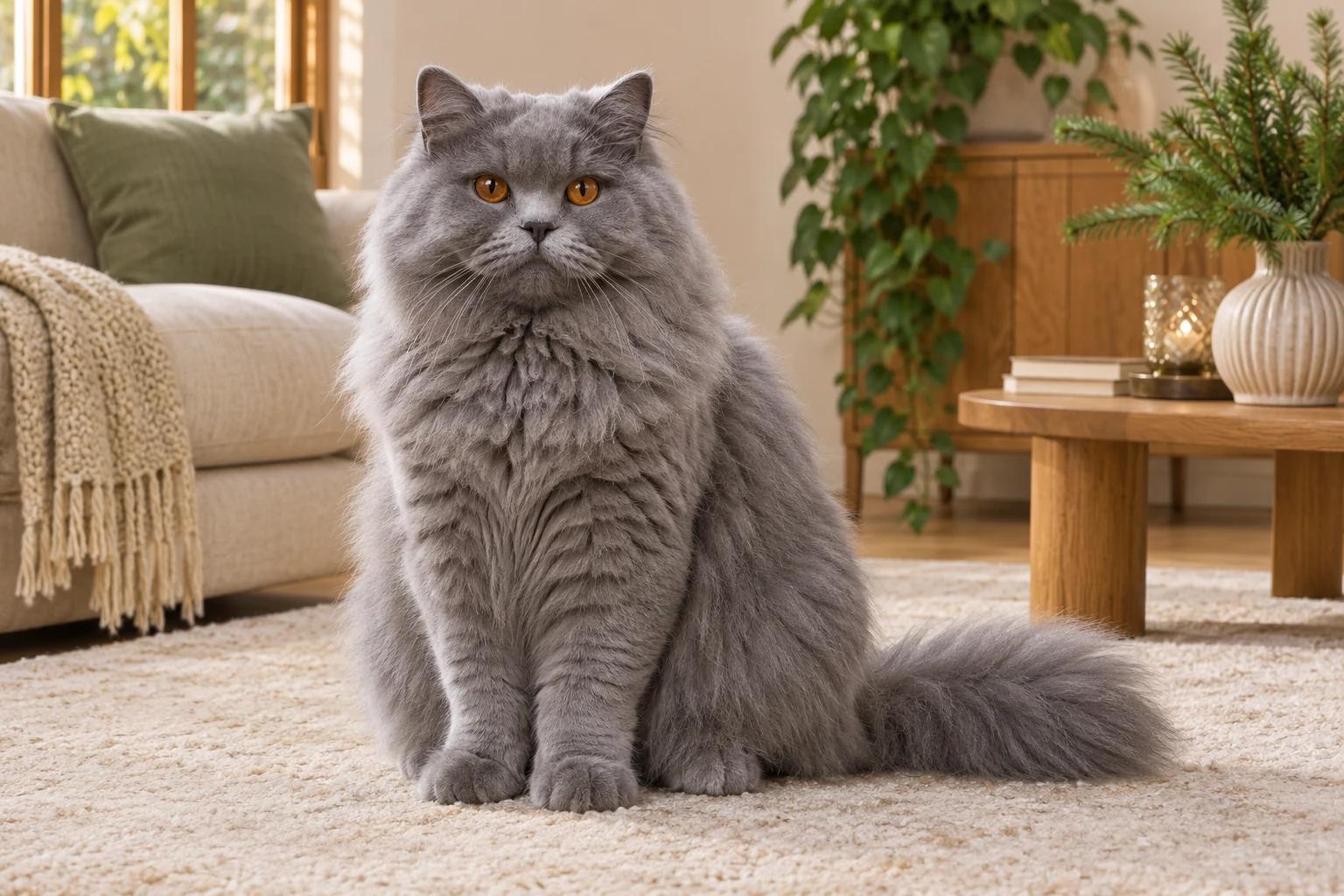
British Longhair vs Persian is a comparison between two distinct breeds, not two interchangeable names. Start with the animal's identity and adult measurements, then look at the features that distinguish the breeds. The current British Longhair profile and Persian profile give the references used here. Neither a photograph nor a breed name supplies a complete description of the individual you might bring home.
British Longhair vs Persian: compare the same measurements
The current British Longhair adult reference is 8–11 pounds for females and 10–16 pounds for males. For Persians, it is 7–11 pounds for females and 9–14 pounds for males. The ranges overlap substantially. A ten-pound adult female fits within both references, so weight alone cannot distinguish the breeds.
Compare female with female or male with male before drawing conclusions. Comparing a male British Longhair with a female Persian changes both breed and sex at once. It cannot demonstrate what every pair of adults will look like. Nor does the upper end of either range establish a desirable goal for a particular cat.
For a Persian vs British Longhair comparison involving kittens, keep their ages explicit. An adult reference is not the weight a young kitten should already have reached. If the question concerns an individual animal's growth or condition, take its own measurements to your veterinarian rather than choosing an endpoint from a breed range.
The British coat stands away from the body
The WCF British Longhair standard describes a long, dense coat with substantial undercoat. It stands away from the body rather than lying flat. A ruff, fuller hair around the hindquarters and a well-furnished bushy tail contribute to the outline. The texture has substance rather than being uniformly silky, and texture can differ with color.
This makes the coat's architecture an important difference between British Longhair and Persian comparisons. Look at where the coat projects outward, especially around the neck and rear legs, instead of describing every longhaired cat as having the same flowing outline.
An abundant coat also makes a side photograph an imperfect guide to the underlying body. The outer edge of the fur is not the same thing as the edge of the chest. When comparing actual cats, distinguish the visible coat from the physical animal beneath it. That distinction is useful even when both photographs were taken at the same distance and in similar light.
A Persian's structure is deliberately rounded
CFA's Persian account emphasizes a broad chest, substantial muscle and a cobby body carried on short, heavily boned legs. The tail is short and fully furnished. Small ears contrast with large, rounded eyes, while the head, muzzle and overall contours reinforce the rounded impression.
These details prevent the Persian from becoming simply “the other fluffy cat” in a comparison. The relationship between the short legs, broad body and short tail matters. A close portrait may show the eyes beautifully while giving almost no information about that relationship. Include a whole-body view when you are learning to recognize the breed's outline.
CFA also treats balance and proportion as important, rather than maximum size. A larger-looking Persian is not automatically a better example of the breed or a more suitable companion. The structural description explains appearance; it does not provide a reason to seek extra body weight. If you prefer the Persian's rounded look, make sure you are responding to the whole animal rather than a single exaggerated feature in an advertisement.
Calm surroundings still need room for games
TICA's Persian description presents a companion that often enjoys a calm environment but can switch from resting to a lively burst of activity. It specifically mentions interactive toys, balls and toy mice. A placid reputation therefore should not become a plan to offer no play at all.
Try to understand how the particular Persian participates: a chase along the floor, a brief game with a moving toy, or a return to resting after a short burst. Those are different patterns, not grades of how successfully the cat performs its breed identity.
When deciding between a British Longhair or Persian, do not assign one the role of permanent entertainer and the other the role of ornament. The Persian's resting photograph does not tell you everything it does during an ordinary day. Ask about activities it actually chooses and give those activities a place in your expectations. An owner who wants only a decorative sleeping companion may overlook the very interactions that make living with that animal rewarding.
Persian colors are more varied than the familiar white image
The GCCF Persian profile describes solid colors, silver varieties, tabbies, tortoiseshell combinations, bicolors and colorpoints. Its tabby descriptions include classic, mackerel and spotted patterns. Colorpoint cats have contrasting color on the mask, legs and tail, together with blue eyes.
This variety matters when searching for an actual companion. A Persian does not have to match the white cat in a familiar photograph, and a pointed coat is not by itself proof that a cat belongs to a different breed. Ask what the listing means by its breed and color labels rather than substituting an image-search resemblance for identity.
Keep the question narrow: color terminology describes appearance, not whether the animal will enjoy your company. A preference for a particular pattern can be part of the search without becoming a claim about personality or quality. Compare the individual cats available to you, not imaginary temperaments assigned to different colors.
The British Longhair groomer-questions guide covers professional grooming arrangements separately. The cat quiz helps you consider broader ownership preferences.
FAQ
Can a ten-pound female belong to either adult range?
A ten-pound female fits current British Longhair and Persian adult weight references. Weight does not establish breed identity.
Does the larger male reference mean every British Longhair outweighs every Persian?
Not every British Longhair outweighs every Persian: adult male ranges overlap, so compare individuals directly.
Can I use an adult range to predict a kitten's exact final weight?
British Longhair and Persian adult weight ranges cannot predict a particular kitten’s exact final weight. Discuss individual development with your veterinarian.
Sources behind this article
Article source checked: November 16, 2026. Source checked 2026-11-16
Keep reading

Abyssinian vs Somali: Coat, Size and Everyday Company
Read article →