Bouvier des Ardennes Size: Planning for the Adult Dog
See Bouvier des Ardennes size references and turn adult height, weight, and build into practical plans for transport, equipment, and home life.
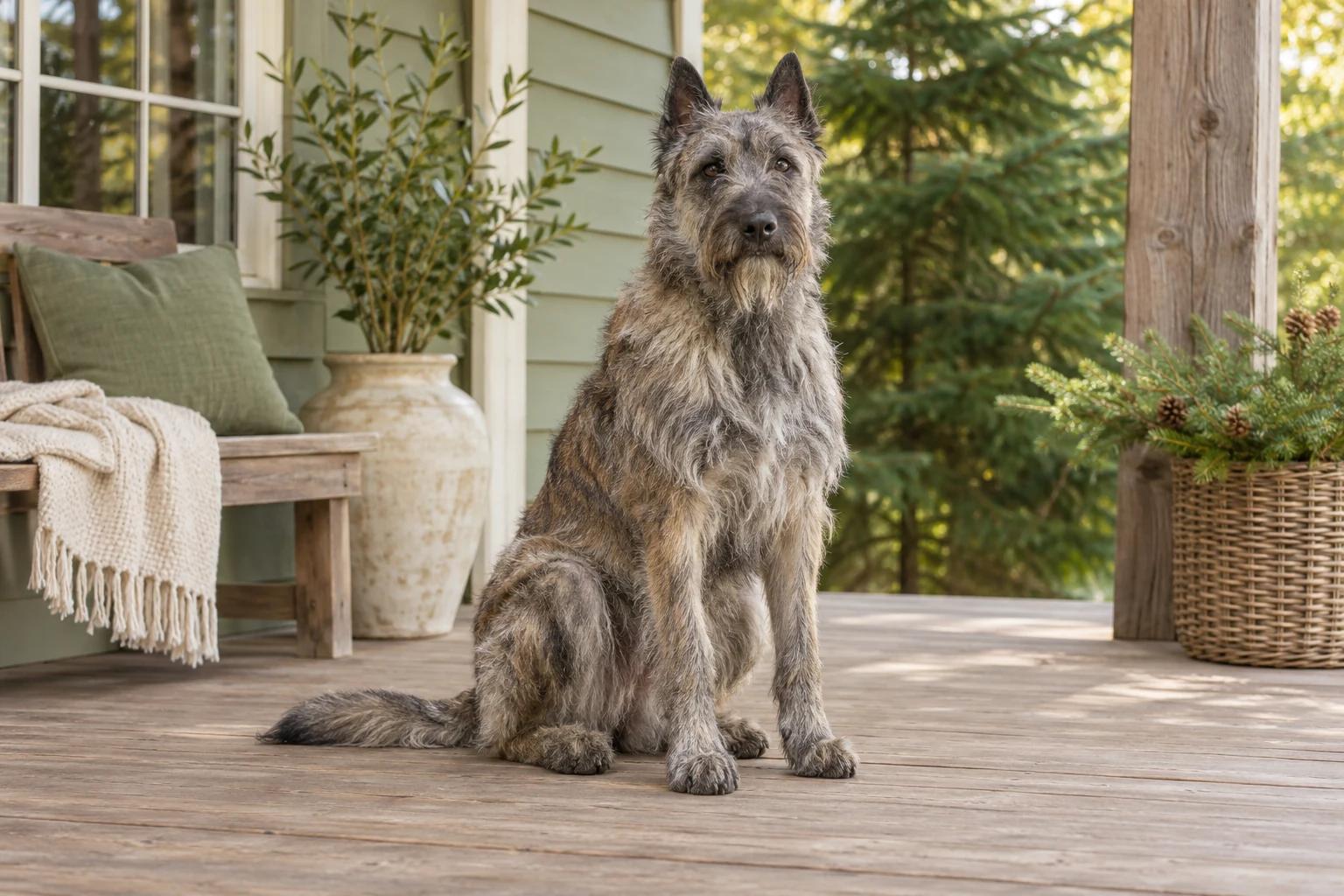
Bouvier des Ardennes size is easiest to understand through three separate questions: how tall the adult may be, how much it may weigh, and how its build affects everyday handling. A single label such as medium-sized cannot answer all three.
The Bouvier des Ardennes profile gives sex-specific adult reference ranges. Use those figures to begin planning, then measure the individual dog when choosing equipment. A puppy's present size and a photograph of an adult are not substitutes for a practical long-term arrangement.
Bouvier des Ardennes size: the reference ranges
My Breed Atlas lists males at 22–24.5 inches in height and 62–77 pounds. Females are listed at 20.5–22 inches and 49–62 pounds. These are adult reference figures, not a guarantee for a particular puppy or a target to achieve through feeding.
The FCI standard gives male height as 56–62 centimetres and female height as 52–56 centimetres. Keep units consistent when comparing height information, and use the current breed-page weight figures above for this site’s planning reference.
Record whether a number describes an actual measurement or a published range. That simple distinction prevents a forecast from becoming an apparent fact as it passes between the breeder, household, and equipment supplier.
What does medium-sized mean here?
The UKC standard describes a compact, strongly built dog with roughly square proportions. This helps explain why height alone may not convey the handling commitment.
Do not equate a lower shoulder height with a lightweight dog. Consider the full adult build when planning transport, walking arrangements, and who can assist if the dog needs help. An appealingly compact outline still occupies real space.
Bouvier des Ardennes height and your home
Bouvier des Ardennes height is measured at the withers, around the top of the shoulders, rather than at the ears. That makes it useful for comparing references, but it is not the same measurement you need for every item of equipment.
Follow each manufacturer's instructions for a crate, carrier, harness, or other restraint. You may need length, girth, or standing clearance as well as shoulder height. Measure calmly and ask for help if you are unsure where the required points are.
Look at movement through the home too. Can the adult turn comfortably where you plan to put its bed? Does the chosen spot block a door? Will people repeatedly step over the dog to reach a cupboard or desk?
A simple floor plan can reveal these problems before you buy anything. Mark the resting area, feeding location, and main walking routes. Leave room for the household to function while the dog is settled, not only while the bed is empty.
Bouvier des Ardennes weight is not a feeding target
Bouvier des Ardennes weight references describe a population or breed standard. They do not tell you the appropriate body condition of your own dog. Two adults within the same range may have different frames and individual needs.
Ask your veterinarian to assess growth and body condition. Bring the dog's actual measurements and feeding history rather than trying to interpret every change through a generic online chart. Avoid feeding toward the top of the range because it sounds more impressive.
Keep weight records with dates and the source of each measurement. A clinic scale and an estimate made at home are not equally precise. If a result seems unexpected, confirm it rather than immediately changing food or activity.
For a puppy, ask what information is available about the parents and previous adult relatives. That context may help planning, but it cannot turn a growth estimate into a promise. Leave room in your budget for equipment changes.
Separate size from health judgments
Being inside a published range does not by itself establish health, and being outside it is not a diagnosis. Discuss unexpected changes with your veterinarian instead of making a conclusion from a breed table.
The useful outcome is a plan for this dog's condition and development. It is not a contest to produce the largest adult or to keep the dog small enough for equipment bought too early.
How big do Bouvier des Ardennes get in everyday terms?
People asking how big do Bouvier des Ardennes get often need to know whether the dog will fit their life rather than simply learn another set of numbers. Translate the ranges into a few practical checks.
First, review transport. Check the vehicle opening, the usable interior space, and the proposed restraint arrangement. Include other passengers and belongings in the assessment; an empty vehicle can make a solution look easier than it will be on an ordinary trip.
Second, consider handling. Who will take the dog to appointments, manage equipment, and help if usual movement becomes difficult? Ask your veterinary team about planning for assistance rather than assuming lifting will always be straightforward.
Third, consider routine care. Is there enough space to check the coat and handle the dog comfortably? The grooming area should work for both the dog and the person doing the job, without an awkward position or unstable surface.
Growth changes logistics before it changes your affection
A puppy may initially fit into arrangements that will not serve an adult. Review equipment regularly and follow fit guidance rather than waiting for an obvious problem. Keep the instructions and measurements with your care records.
Teach everyday cooperation while the tasks are manageable. Entering an appropriate travel setup, waiting while equipment is prepared, and moving to a resting area are useful skills regardless of exact adult weight.
Do not confuse training goals with physical exercise goals. Ask your veterinarian what movement is suitable during development; an adult-looking body does not automatically supply permission for demanding activity.
If your household cannot accommodate the expected adult, do not rely on the hope of receiving the smallest puppy. It is better to reconsider the match than build the care plan around an uncertain size prediction.
Use size as one part of the decision
The breed's farm-dog rediscovery article provides a separate historical perspective. Size planning, however, belongs beside present-day activity, company, training, and care needs.
Use the breed quiz to organize those wider priorities. Then revisit the measurements with the caregiver of the actual dog. A realistic plan combines reference ranges with evidence, not just the label on a breed page.
FAQ
What is the adult Bouvier des Ardennes weight range?
The site lists males at 62–77 pounds and females at 49–62 pounds. These are reference ranges, not feeding targets or guaranteed adult outcomes for puppies.
How tall is a Bouvier des Ardennes?
The site's adult height reference is 22–24.5 inches for males and 20.5–22 inches for females, measured at the shoulders. Use actual measurements for equipment fitting.
Can I predict adult size from a puppy's paws?
Paw appearance is not a dependable substitute for documented growth and family information. Ask the caregiver and veterinarian about available evidence, while allowing for uncertainty in the adult prediction.
Does a medium-sized label mean easy handling?
No. The breed has a substantial, compact build. Consider adult weight, equipment, transport, and your household's ability to assist the dog rather than relying on the size label alone.
Sources behind this article
Article source checked: November 14, 2026. Source checked 2026-11-14
Keep reading
Bouvier des Ardennes Temperament: An Involved Companion
Read article →