Bloodhound Temperament: What Everyday Life Can Feel Like
Understand Bloodhound temperament through daily routines, scent interest, training, company, and practical questions to ask before choosing a dog.
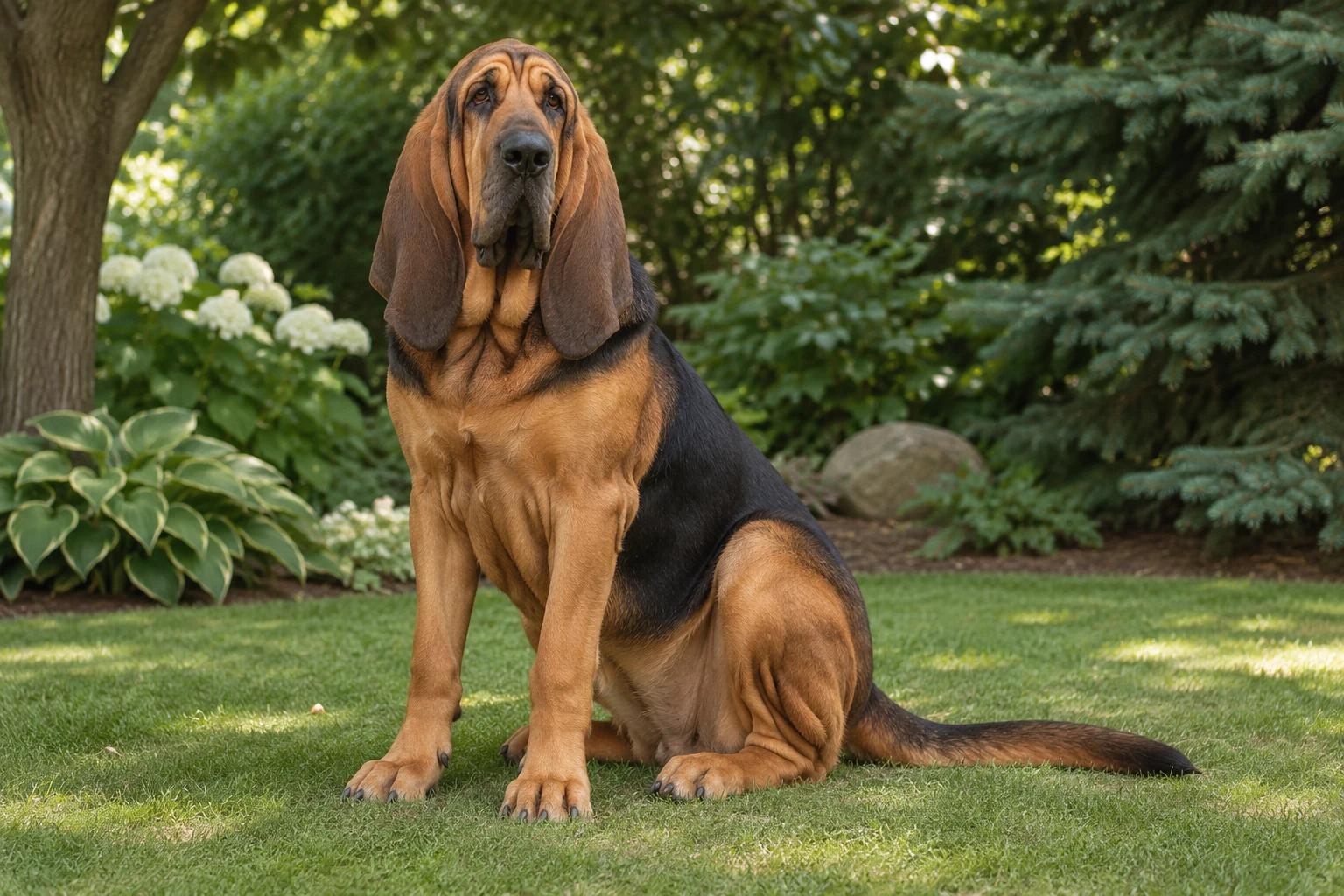
Bloodhound temperament makes more sense when you picture an ordinary day than when you rely on a photograph of a sleepy hound. An individual dog may enjoy quiet company at home while becoming deeply interested in a smell outside. Those different moments belong to the same animal, and your routine needs room for both.
The Bloodhound breed profile describes an independent, friendly, inquisitive dog. These are starting points for meeting the breed, not a script that every Bloodhound follows in every situation.
Bloodhound temperament combines company and independence
A useful way to assess the Bloodhound personality is to ask how the dog spends time near people. Does the dog settle nearby, request interaction, move between rooms, or prefer a particular resting place? The site's everyday notes describe many enjoying the same room without constant contact.
That picture may suit someone who likes companionship without expecting continuous engagement. It does not answer how a particular dog responds to an empty house, visitors, or a change in routine. Those questions need their own observations.
The AKC's Bloodhound introduction contrasts a generally relaxed off-duty manner with persistent interest in scent. This helps explain why a quiet afternoon on the rug tells you little about how a walk will unfold.
Look at transitions, not just settled moments
When meeting a dog, notice what happens between activities. Watch the move from a resting area to the door, from a walk back inside, or from familiar company to a visitor's arrival.
Ask the caregiver to describe those transitions on an ordinary weekday. A staged greeting offers one small view. A description of breakfast, departures, outings, and evening routines gives you more practical information about living together.
Scent interest changes the shape of a walk
Some Bloodhound behavior that looks like ignoring a person is easier to understand in context. Your dog may be attending to an interesting patch of ground while you are thinking about reaching the end of the street. You are sharing a route but not necessarily sharing the same immediate goal.
Plan walks with that difference in mind. Decide where you can pause and where you need a clear, practiced movement cue. A route with room to step aside may be more useful for learning than a narrow pavement at its busiest time.
The American Bloodhound Club emphasizes secure physical boundaries and leash use outside fenced areas. Treat those as routine arrangements rather than tests of how strongly your dog likes you.
Before opening a door, check that the equipment you need is ready. Before entering a yard, check the gate. Simple household procedures reduce the number of moments in which you have to improvise while a large dog is already moving.
Activity needs belong in the personality conversation
A relaxed expression does not make this a low-commitment exercise choice. My Breed Atlas's newer everyday notes describe a substantial activity day alongside daily learning games. Consider whether that kind of routine matches your real schedule rather than your ideal weekend.
Write down the opportunities you have before work, during the day, and in the evening. Identify who will participate and what happens when one person is unavailable. An honest calendar is more useful than promising one impressive outing whenever time allows.
Avoid making every activity about covering distance. The ownership question is how to provide a workable combination of outings, engagement, and settling time. For an individual exercise plan or a concern about physical comfort, talk with your veterinarian.
Keep a realistic bad-weather version
A routine should have a version for inconvenient days. Think about accessible locations, clothing, transport, and household cover before those days arrive. This is not a demand for a complicated sporting schedule; it is a way to avoid having the whole plan depend on perfect conditions.
If you want to explore a structured scent activity, our Bloodhound mantrailing and tracking article explains those separate options. The decision to pursue a sport can come later than the decision about everyday companionship.
Training is communication, not a personality contest
The most useful Bloodhound characteristics to notice during learning are specific. What reward interests the dog? How long does attention last in this setting? Can the dog repeat a familiar task when one small distraction is added?
Those observations lead to adjustments. Labels such as stubborn or obedient often lead only to arguments about the dog's character. If a lesson repeatedly fails at the doorway, practice its first step in a less distracting place.
The breed club recommends positive classes and basic everyday skills. Look for instruction that helps you practice manageable tasks rather than promising to replace a dog's personality. Agree on common cues with everyone who handles the dog.
A simple training record can help. Note what you asked, where you practiced, and what made the task easier. The goal is not to grade the dog; it is to remember a successful starting point for tomorrow.
Voice and household space deserve attention
My Breed Atlas describes a frequent vocal tendency. Discuss sound honestly if you share walls, work from home, or need quiet during particular hours. Do not assume that a calm-looking dog will also be quiet in every setting.
Ask about actual situations: arrivals, activity outside windows, being separated from familiar people, and anticipation before an outing. Different situations may call for different management, so a general answer that the dog “sometimes makes noise” is not especially useful.
Arrange the home around the dog's physical presence as well. A resting place should not block the only route between rooms. Guests should know where to leave bags and how the household handles entrances. These small decisions make daily interactions clearer without turning the home into a training course.
Decide with the individual in front of you
Use the dog breed quiz to organize your preferences, then take those preferences into conversations with a breeder or current caregiver. Ask which parts of your routine resemble the dog's existing experience and which will be new.
Meet more than one Bloodhound when possible. Differences in age, experience, and individual preference are part of the picture. You are choosing a daily relationship, not buying a guaranteed collection of adjectives.
FAQ
Are Bloodhounds always sleepy and low-energy?
No. A Bloodhound may rest quietly while still needing substantial activity and engagement during the day. Consider the full routine, including outings and learning, rather than judging energy needs from a relaxed photograph or one calm meeting.
Does independence mean a Bloodhound cannot learn?
No. Independence is not an inability to learn. Clear cues, worthwhile rewards, and practice in manageable settings help you understand how the individual dog learns. Ask a qualified trainer for help with specific difficulties rather than treating them as fixed character flaws.
Will a Bloodhound want constant physical attention?
Not necessarily. My Breed Atlas describes many Bloodhounds enjoying shared space without constant contact. Ask about the individual dog's preferred interaction and observe how it chooses to spend time around familiar people.
How can I assess whether the personality fits my home?
Compare your normal schedule with the dog's actual routine. Ask about walks, settling, voice, visitors, and departures, and observe transitions between activities. Breed descriptions help frame questions, but individual experience is essential to the decision.
Sources behind this article
Article source checked: November 14, 2026. Source checked 2026-11-14
Keep reading

Airedale Terrier Temperament: What Everyday Life Can Feel Like
Read article →