The working-dog project behind the Black Russian Terrier
Red Star’s breeding program drew on several breeds to build a manageable working guardian. Its history explains why the Terrier name tells only part of the story.
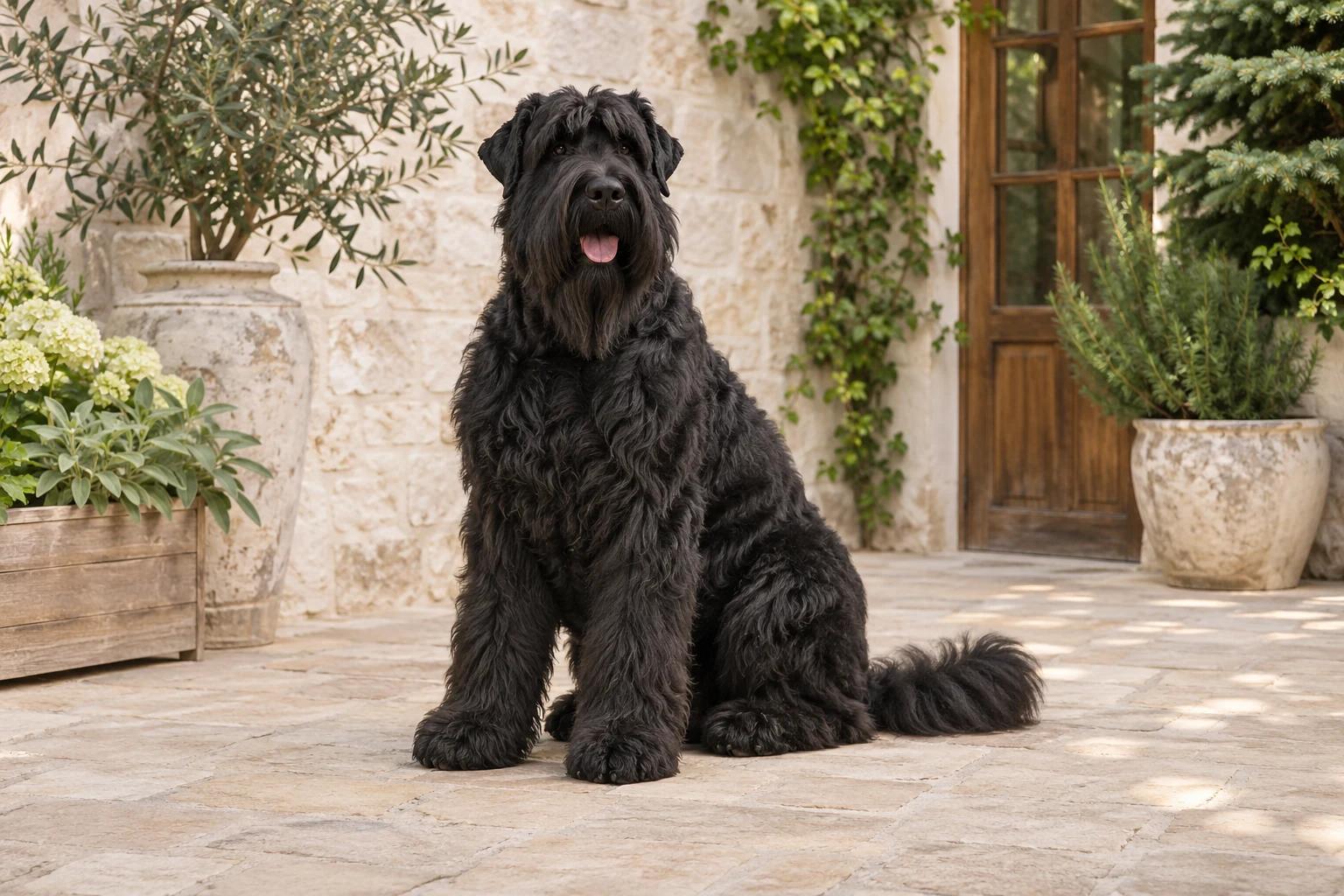
A deliberately developed working dog
The FCI’s historical account places the Black Russian Terrier’s development in the late 1940s and early 1950s. A military dog school outside Moscow supervised the early breeding at its Red Star kennels. The objective combined size, strength and guarding ability with manageability and usefulness in varied climates. Manageability belongs in that account just as much as physical power.
Several ancestors, a separate result
The standard names Rottweiler, Giant Schnauzer, Airedale Terrier and Newfoundland among the breeds involved, and identifies the Giant Schnauzer as the principal ancestor. That helps explain why a bearded silhouette may bring another breed to mind. It does not turn a modern Black Russian Terrier into an oversized copy of that ancestor or assign a fixed percentage of each breed to every dog.
The FCI places the breed in Group 2, in its Pinscher and Schnauzer section, rather than its terrier group. The word Terrier in the name is therefore a poor shortcut for guessing its classification or original assignment. The documented project was a versatile working guardian.
The intended temperament included control
The AKC standard also emphasizes a stable, confident temperament and treats excessive excitability or shyness as serious faults. The goal was not a dog that stayed in a heightened state simply because guarding was part of its history.
When reading a description built entirely around intimidation, compare it with the original combination of working strength and manageability. Breed history explains the selection goals; an individual dog’s behavior, training and suitability for a household still need to be considered on their own evidence.
Sources behind this article
Article source checked: October 20, 2026. Source checked 2026-10-20
Keep reading
Black Russian Terrier Grooming: Make the Coat Manageable
Read article →