Bernedoodle vs Bernese Mountain Dog: comparing daily care
Compare Bernedoodle and Bernese Mountain Dog size planning, coats, grooming and everyday routines without assuming a cross is simply a smaller Berner.
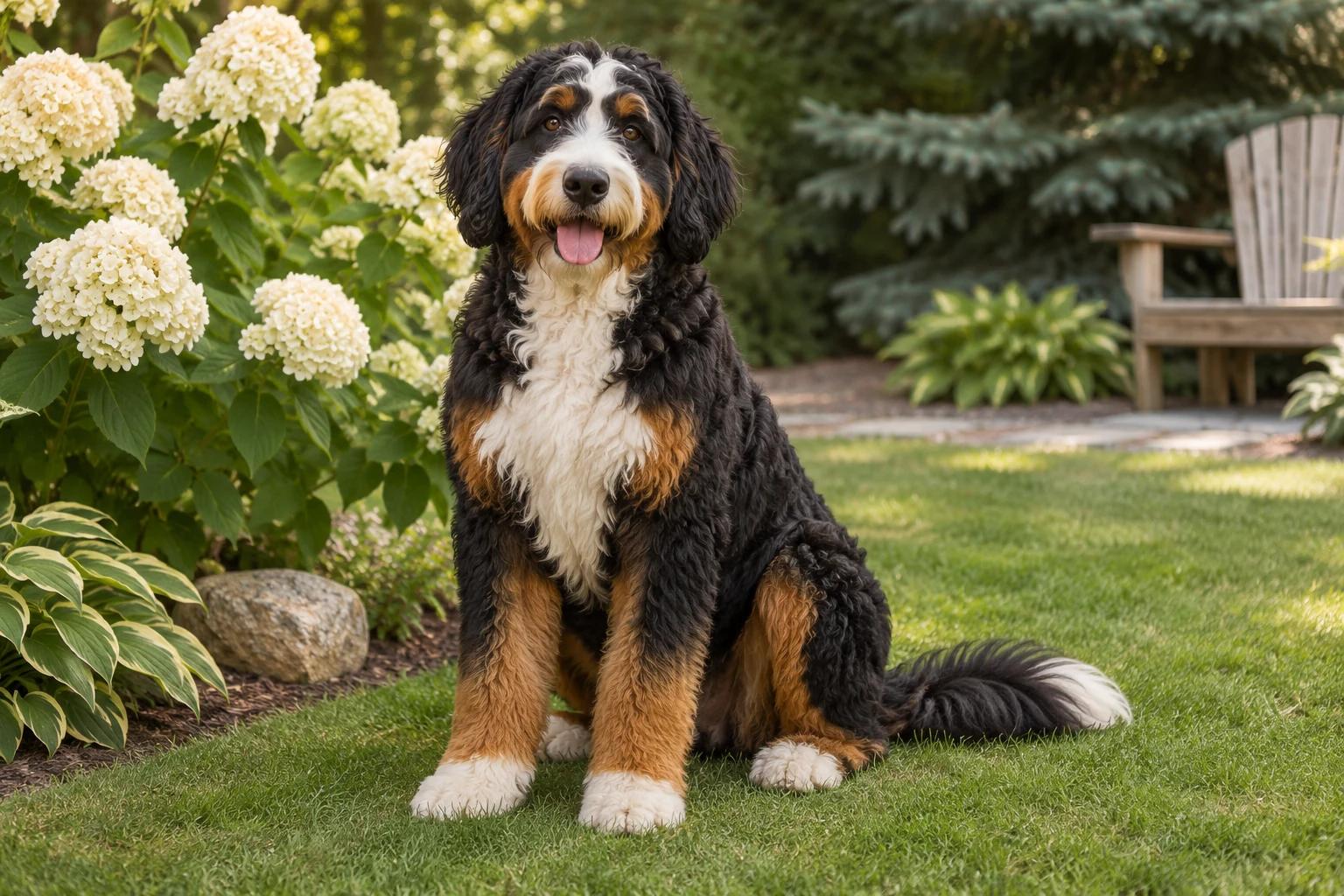
Bernedoodle vs Bernese Mountain Dog is not simply a choice between a fluffy dog and the same dog with curls. The Bernese Mountain Dog is an established breed. The Bernedoodle combines Bernese Mountain Dog and Poodle ancestry, with individual variation that matters when planning size, coat care and daily life.
Start with the Bernedoodle profile and Bernese Mountain Dog profile. Both can appeal to people seeking an involved companion, but your decision needs more detail than a shared color pattern or a friendly photograph.
Bernedoodle vs Bernese Mountain Dog: what are you comparing?
My Breed Atlas identifies Bernese Mountain Dog and Poodle ancestry for the cross. The AKC Bernese Mountain Dog overview describes a large working dog with an interest in companionship; its Poodle overview identifies Standard, Miniature and Toy varieties. These parent-breed descriptions provide context, not a formula predicting a cross's size or personality.
A Bernedoodle is not a precise halfway point between two parents. Ask about the actual family rather than imagining a fixed combination of your favorite traits. For a Bernese Mountain Dog, the breed profile gives a more established reference, but the individual still has its own size, experience and preferences.
When comparing advertisements, keep a separate record for each dog or litter. Include parent identities, measured size where available, current coat and familiar routines. That prevents a general description from quietly replacing information about the dog you are considering.
Size planning follows different questions
My Breed Atlas lists Bernese Mountain Dog males at 25–27.5 inches and 80–115 pounds, and females at 23–26 inches and 70–95 pounds. Those figures describe a substantial adult dog with transport and equipment needs worth planning before a puppy comes home.
For a Bernedoodle, begin with the parent variety and actual adult family measurements. Ask what any size label means for that litter and how the estimate was reached. Do not assume every Bernedoodle will be smaller than every Bernese Mountain Dog.
Compare the space you can provide
Measure the places the adult would use: transport, resting space and the area for routine coat care. Check product limits and usable dimensions rather than relying on labels such as medium or large.
If a strict size ceiling applies to your circumstances, an estimated puppy size may not answer the question. Discuss that constraint directly. The amount of uncertainty you can accommodate is part of choosing a dog, not something to postpone until it becomes inconvenient.
The coat-care difference is not simply more hair versus less
The Bernese Mountain Dog profile lists a medium double coat, substantial shedding and daily brushing in its everyday-care notes. The Bernedoodle profile describes frequent brushing and professional grooming, with the routine tied to the individual coat.
That creates different questions. For a Bernese Mountain Dog, ask about managing loose hair, reaching through the coat and keeping cleaning manageable. For a Bernedoodle, ask about the current texture, desired length, tangles and the work expected between professional appointments.
Neither plan is completed by choosing an appealing photograph. See a care demonstration and ask which tools you will use at home. Discuss the time you can maintain consistently, including when someone else is caring for the dog.
Put the whole grooming arrangement on paper
List home-care tasks, professional help, transport and equipment. A lower amount of visible hair on a particular floor does not tell you the total grooming commitment. Likewise, a dog that sheds noticeably does not necessarily need the same clipping schedule as another coat type.
Make decisions around the individual dog's actual needs. Do not infer a guaranteed shedding outcome from a cross label or a parent photograph. The useful comparison is between workable care routines, not between slogans about convenience.
Companionship needs a household plan
Both profiles describe dogs that can enjoy close involvement. Think about what that means in your home. Who provides outings, learning opportunities and ordinary company? Where can the dog rest when the household is busy?
Ask caregivers about current experience with time apart, visitors and travel. Request examples from normal days rather than a universal claim that a dog fits any household. A social tendency does not supply a complete history or predict every future interaction.
An adult visit can help you understand scale and communication. Watch what happens when people stop engaging as well as when they offer attention. A brief meeting cannot settle every question, but it can guide the next conversation toward the individual instead of the label.
Training and activity belong in both plans
A Bernedoodle or Bernese Mountain Dog still needs practical skills: moving with a person, participating in handling and understanding household routines. Neither ancestry nor an affectionate description replaces teaching.
Choose activities you genuinely want to share. Daily outings, play and manageable learning can take different forms depending on the dog. If you are considering demanding exercise, talk with your veterinarian about what suits the individual rather than deciding from a breed comparison alone.
Consider access to instruction and backup care. Can another caregiver follow the same cues and handling routine? Is there a suitable trainer nearby if you need help? Those resources make a more useful comparison than ranking which dog is supposedly easier in every situation.
Choose the commitment, not a shortcut
The difference between Bernedoodle and Bernese Mountain Dog includes ancestry, the way you investigate adult size and the coat-care questions you need to ask. It does not establish a universal winner for temperament, ease or household fit.
For a Bernese Mountain Dog vs Bernedoodle decision, identify your practical limits first. Then compare the particular dogs and the support available. The dog breed quiz can help organize those priorities. Our article on reading Bernedoodle parent records covers a separate preparation task without replacing this everyday-care comparison.
A clear decision may favor either option. What matters is understanding the work behind the choice and leaving room for the individual dog, rather than expecting a name to deliver a complete package of preferred traits.
FAQ
Is a Bernedoodle the same as a Bernese Mountain Dog?
No. A Bernedoodle has Bernese Mountain Dog and Poodle ancestry, while the Bernese Mountain Dog is a distinct established breed. Similar colors or expressions do not make their size expectations, coat care or individual behavior identical.
Are Bernedoodles always smaller?
No. Bernedoodle size depends on the particular family and parent varieties. Ask for actual parent measurements and the basis of an adult estimate. Do not assume the cross label guarantees a smaller dog than every Bernese Mountain Dog.
Which one needs more grooming?
They need different care plans. The Bernese profile emphasizes brushing and managing shedding; the Bernedoodle profile includes frequent brushing and professional grooming. Compare the actual coat, desired length and work required between appointments.
Which is the better choice for me?
Choose according to the size you can manage, the grooming you can maintain and the individual dog's fit with your daily life. Neither is universally better. Review the particular dog's history and the support available before deciding.
Sources behind this article
- AKC Poodle overview ↗
- AKC Bernese Mountain Dog ↗
- Dogzone envelope across its three size references — adult-weight reference ↗
- PetMD toy size reference — adult-weight reference ↗
Article source checked: November 14, 2026. Source checked 2026-11-14Article source checked: November 18, 2026. Source checked 2026-11-18
Keep reading

Affenpinscher vs Brussels Griffon: Everyday Differences
Read article →