Reading a Bernedoodle parent's CHIC number beyond the badge
Learn what an OFA CHIC number does and does not mean, inspect the underlying parent health results, and keep Bernedoodle family records separate from a puppy health guarantee.
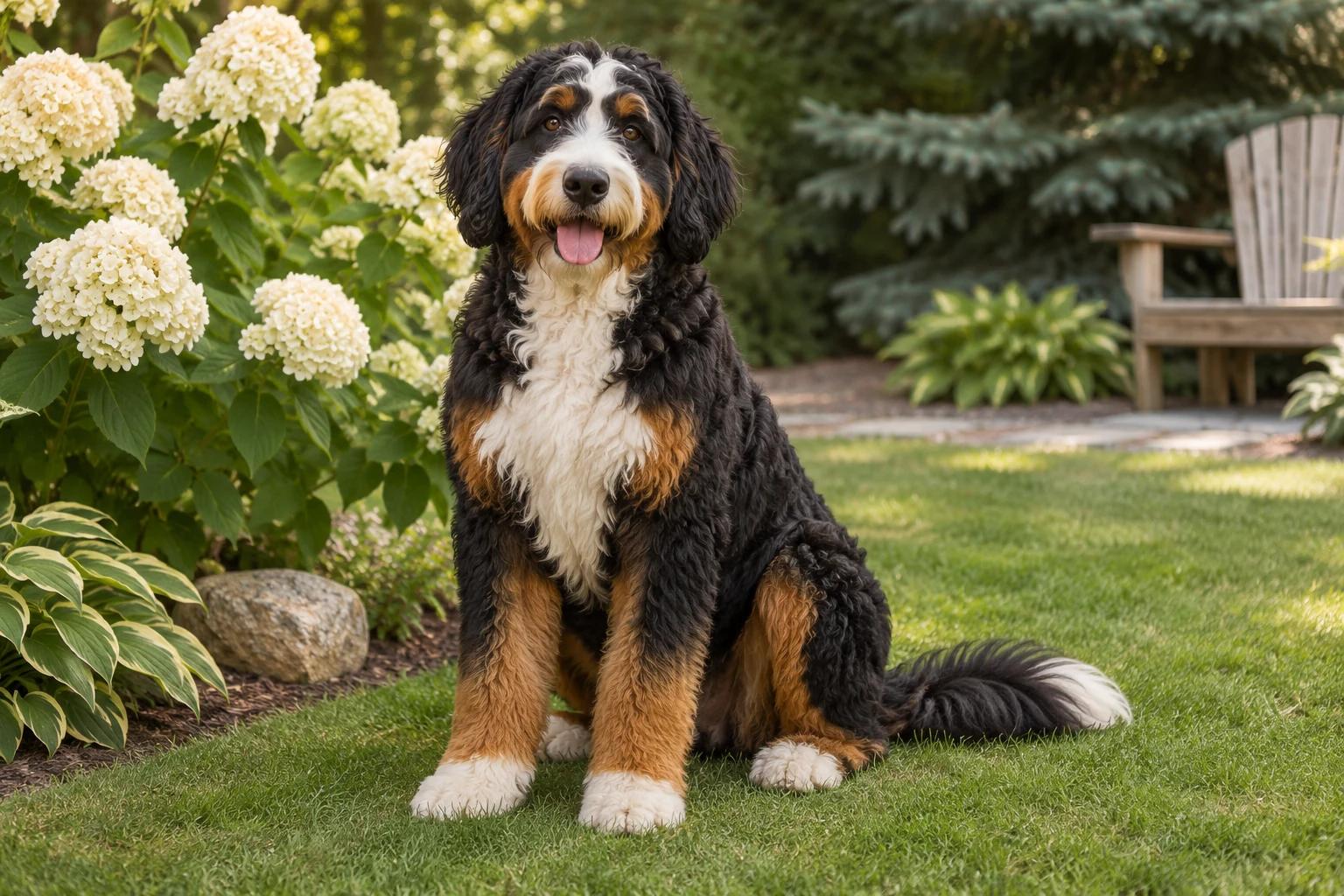
Both sides of the family deserve questions
A Bernedoodle brings together Bernese Mountain Dog and Poodle ancestry. PetMD's veterinary-reviewed breed guide notes that health conditions can come from either parent breed and recommends obtaining family health information. A listing that highlights only one parent's attractive health badge leaves the other side of that conversation unfinished.
Begin by asking which dogs are the puppy's parents and what records are available for each. If their ancestry is more complicated than a first cross, ask for that explanation too. Do not assume that a label, generation abbreviation or photograph identifies the exact dogs whose results you are being shown.
CHIC documents participation and disclosure
OFA explains that a CHIC number means the dog has completed the breed-specific required tests and the owner has authorized public release of the results. It explicitly does not mean that every result was normal. The number is therefore a route into the record, not an all-clear stamp that makes reading the record unnecessary.
Check the actual tests, results and ages at examination. OFA also notes that requirements can change without revoking numbers already issued under earlier requirements. Ask which requirements applied when the number was obtained and whether newer results are available. A badge copied into an advertisement may leave out the details that make the health information useful.
Keep the parent, puppy and program separate
This does not establish that Bernedoodles have their own CHIC testing program or that every Bernedoodle parent is eligible for a number. The relevant question is what reliable information exists for the particular parent and its breed background. A veterinarian can help interpret that information and identify questions that remain unanswered.
For example, imagine receiving two parent names but a single screenshot without a date or identifying details. Request the complete record rather than filling in the missing connection yourself. Keep each document under the correct dog's name, and keep the puppy's own veterinary records separately. Family testing can inform a decision, but it cannot guarantee an individual puppy's future health or replace ongoing care. Reading beyond the badge gives you specific questions to discuss instead of a reassurance that says more than the evidence supports.
Sources behind this article
Article source checked: October 20, 2026. Source checked 2026-10-20
Keep reading
Bernedoodle grooming: choosing a coat routine and style
Read article →