Bernedoodle sizes: understanding labels and adult estimates
Understand Bernedoodle sizes, what tiny, mini and standard labels can tell you, and which measurements to request before planning for an adult dog.
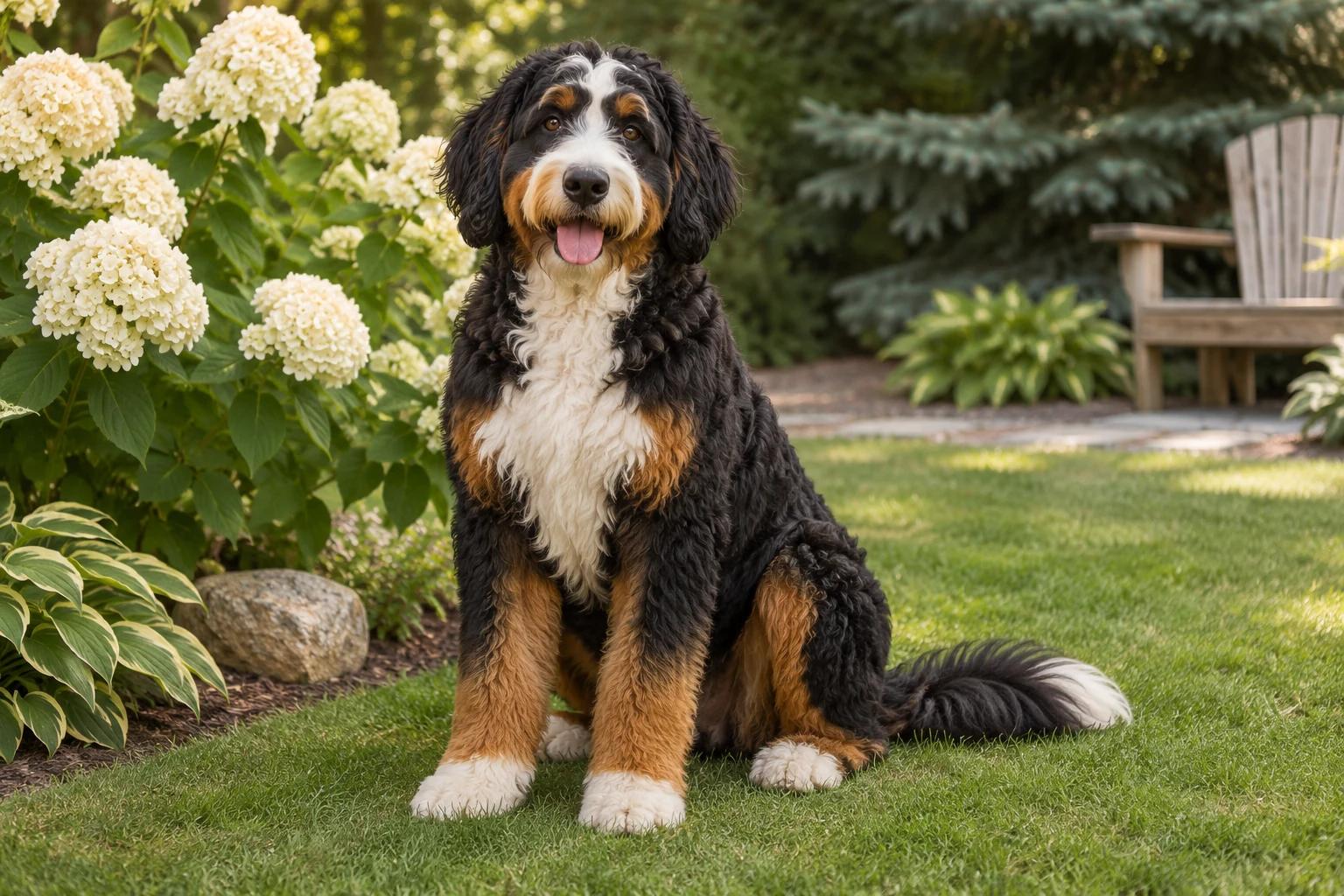
Bernedoodle sizes are best understood through the individual dog's family information and actual measurements, not a label alone. Words such as tiny, mini and standard help organize a conversation, but they do not replace knowing which dogs are the parents or how an adult estimate was made.
The Bernedoodle profile identifies the cross as Bernese Mountain Dog and Poodle ancestry. That background is the place to start. If adult size is a major deciding factor for you, ask detailed questions before letting an appealing puppy photograph settle the choice.
Bernedoodle sizes: what the labels mean for your search
The AKC Poodle overview distinguishes Standard, Miniature and Toy Poodles, while its Bernese Mountain Dog introduction describes a large working dog. These are parent-breed descriptions, not standardized size categories for their crosses. The important question is which parent variety and individual family are involved in the puppy you are considering.
Do not assume that a category name answers every practical question. Ask the person using it to explain the expected adult measurements and the information supporting that expectation. An estimate should be identified as an estimate, not treated as a completed measurement of a dog that has not grown yet.
A useful Bernedoodle size chart is a question chart
| Label you encounter | Information to request |
|---|---|
| Tiny or toy | What adult height and weight does this label mean in this litter? |
| Mini or miniature | Which parent dogs and Poodle variety are involved? |
| Standard | What are the actual adult measurements of the parents? |
| Any size label | Is the stated figure measured, estimated or a broad category? |
This chart is designed to help you compare answers rather than assign a universal number to a marketing word. Keep the information for each litter separate. Two advertisements with the same label may not be describing the same expected adult dog.
Ask for measurements, not only descriptions
For each parent, request adult weight and shoulder height, along with the date or context of the measurement. A photograph with no scale is less useful than those figures. If the family includes more than a first cross, ask for that explanation in plain language too.
Ask whether previous adult offspring from the same pairing are known and what information is available about them. Such information may provide context, but it does not turn a new puppy into a guaranteed copy. Keep observations about existing adults separate from predictions about a future adult.
When someone offers a narrow estimate, ask how it was reached. You do not need to challenge every answer; you need enough clarity to know which parts are documented and which are expectations. That distinction helps you make a practical decision without pretending uncertainty has disappeared.
Weight and height answer different questions
Bernedoodle sizes and weights are often discussed together, but they are not interchangeable. Weight matters for equipment limits and transport arrangements. Height and body dimensions help you assess available space and fit. Neither figure alone describes everything you need to know.
For a harness, follow the manufacturer's requested measurements. For a travel setup, check usable interior dimensions as well as any stated weight limit. A product described as suitable for a certain size category still needs to fit the actual dog.
Keep a dated measurement record as the puppy grows. That record helps with purchases and conversations about care. If you have concerns about growth or body condition, talk with your veterinarian rather than trying to make the puppy conform to a particular label.
Plan around your real limits
If a building or travel service has a size limit, read its actual requirements before choosing a puppy. Work out whether it uses weight, measurements, breed rules or a combination. A reassuring size label is not the same as meeting a written rule.
When a strict maximum would make a larger adult impossible for your circumstances, discuss that openly with the breeder or caregiver. Consider whether choosing an already-grown dog would give you more useful information than relying on a puppy estimate.
Avoid solving the uncertainty by buying everything far too large or by assuming you can adjust later without cost. Some arrangements, such as vehicle space or housing rules, are harder to change than a collar. Identify those constraints first.
Turn the estimate into a practical home plan
Imagine the dog moving through the spaces it will use daily. Where will it rest? Can people pass without stepping around it? Is there room for coat care and storage of equipment? The answer depends on layout as well as total floor area.
Mark potential bed or crate dimensions on the floor before purchasing. Open doors, move chairs and follow your usual route through the room. That simple test can reveal awkward placement that a product photograph does not show.
Do the same with transport. Check how equipment enters the vehicle, how doors close and how the dog will get in and out. If assistance might be needed, ask your veterinarian about appropriate options rather than improvising a lifting method.
Keep appearance separate from size expectations
A fluffy coat can make a puppy look larger, while camera angles can make adults look smaller. Do not use those impressions as your main evidence. Ask for measurements and observe the dog in ordinary surroundings when possible.
Likewise, a preferred coat pattern or face shape does not tell you how much space the adult will occupy. If your search began with “tiny mini standard Bernedoodle,” keep your size questions consistent across those categories rather than giving the most appealing photograph a different standard of evidence.
The dog breed quiz helps organize size alongside grooming, activity and learning preferences. Our related article on Bernedoodle parent records addresses a different set of documents. Together, these preparations help you ask clearer questions without treating any single label as a complete description of a dog.
FAQ
What are the main Bernedoodle size labels?
You may encounter standard, mini, miniature, toy or tiny wording while searching. These labels are not used here as standardized Bernedoodle categories. Ask what the label means for the particular litter and request the actual parent measurements and adult estimate.
Can a Bernedoodle size label guarantee adult weight?
No. A category name is not a measurement of a future adult. Ask how the estimate was made, which parents are involved and whether information about related adults is available. Keep measured facts separate from predictions.
Should I choose equipment using the size label?
Use the individual dog's measurements and the equipment manufacturer's instructions. Weight, shoulder height and other dimensions serve different purposes. Recheck fitted items as a puppy grows rather than assuming a category label provides a lasting fit.
What if I have a strict adult size limit?
Confirm the exact rule and explain it before choosing a dog. A puppy estimate may not provide enough certainty for an inflexible limit. An already-grown dog can offer more direct information about actual size.
Sources behind this article
Article source checked: November 14, 2026. Source checked 2026-11-14
Keep reading

Airedale Terrier Temperament: What Everyday Life Can Feel Like
Read article →