Bengal cat training
Build Bengal cat training around clear rewards, a voluntary sit, mat contact and a nearby recall rather than demanding instant obedience.
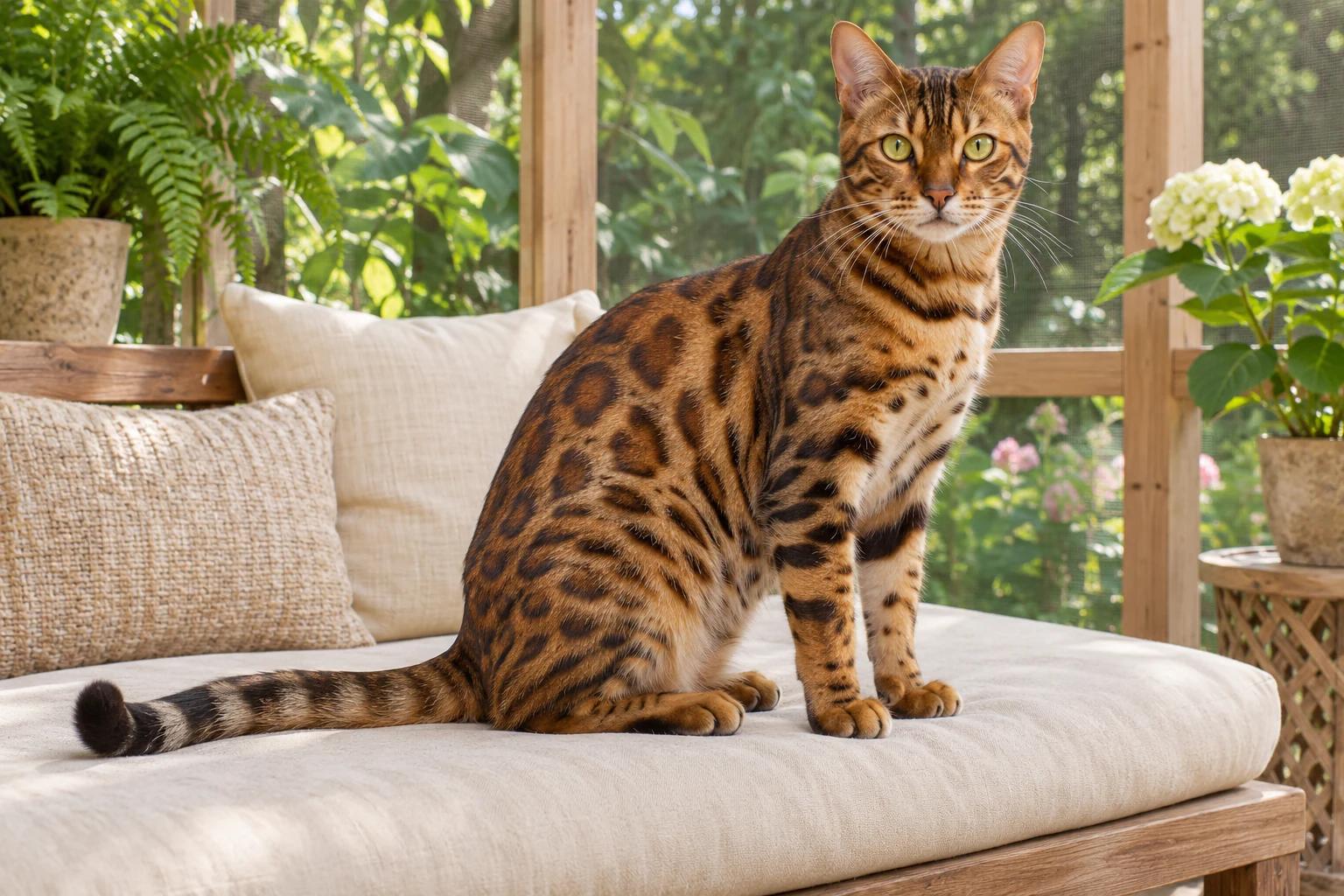
Bengal cat training should give the individual a clear way to participate, not ask it to prove a reputation for intelligence. The current Bengal profile is a breed introduction, not a lesson record. Practical skills can make shared life easier, but the breed name does not tell you which task this particular cat already understands.
Bengal cat training begins with a clear reward signal
Cats Protection's clicker guide recommends first associating the click with an immediate treat. Use the sound at a comfortable distance, muffling it if necessary rather than startling the cat. Once the animal anticipates the reward, the marker can identify the precise action being reinforced.
Timing matters: a click after the cat has moved on may identify a different action from the one you intended. Practice your timing before adding a demanding task. If you click accidentally, still follow it with the reward so that the sound retains its meaning.
This is useful when learning how to train a Bengal cat because quick movement can make the target moment easy to miss. Start with an action you can recognize clearly, rather than an elaborate sequence with several possible endpoints. Keep the message simple enough that both participants know what just happened. A consistent marker helps communication; it is not a command to make the cat perform.
Teach a voluntary sit without pushing the body
Cats Protection's sitting lesson is intended for a confident, physically able cat in a quiet setting. With a suitable treat near the nose, gradually move it upward and a little toward the tail. Following it can bring the cat naturally into a seated position. Mark and reward the sit when it happens.
The lesson then moves toward a hand signal and, after that is understood, a spoken cue given before the signal. The reward still follows even when the guiding hand no longer contains food. That distinction prevents the visible treat from remaining the only reason the cat responds.
Do not physically push the cat into position. Keep the attempt brief and allow it to stop. A Bengal that does not sit immediately has not failed an intelligence test. Adjusting the task or taking a break is more useful than holding the body still and calling the resulting posture obedience. The movement should remain voluntary throughout.
Start mat work with contact
A mat can provide a visible place to work. In Karen Pryor Academy's written mat-training lesson, the first task is contact with the mat, not a prolonged stay. Place it between you and the cat, mark a paw touching it, and deliver the reward away from the mat so the cat can reset.
As the cat approaches again, another contact can earn the next reward. This creates a repeatable action without placing the animal onto the material. Once contact is reliable, the mat can be presented in different positions.
For Bengal cat obedience, identify one observable behavior rather than expecting general stillness. Paw contact and settling are different stages; reward the agreed action rather than unexpectedly demanding a longer stay.
Build a nearby recall before adding distance
RSPCA Australia's home-training guidance recommends a short, consistent cue associated with a reward while the animal is already close. Once that association is established, start calling from a short distance and reward the approach. Practice can later extend to other familiar, safe locations.
For a Bengal, begin with a return you can make straightforward rather than calling across the entire home while something more interesting is happening elsewhere. The change in distance should be gradual. A response in one room is useful, but it is not proof that the same cue is established in every setting.
Keep outdoor security separate from this lesson. Practicing an approach inside the home is not a guarantee of control around an open exterior door. The training opportunity should remain within a safe arrangement, so a missed response does not become a dangerous experiment. You are building a skill, not testing the limits of the cat's freedom.
Working space
Reference weights are 6–12 pounds for females and 9–15 pounds for males. Those figures do not specify a training mat's dimensions. Choose enough surface for the animal, and distinguish a decorative border from the area available for its paws and body.
The Bengal play-rotation guide covers organizing games, a separate task from teaching a specific response. The cat quiz can help you reflect on broader ownership expectations.
Bengal cat socialization is not a trick demonstration
The current profile recommends allowing a cat to control its distance and introducing resident animals gradually. A newly learned behavior does not establish comfort with unfamiliar people or animals. Keep a lesson separate from a social meeting rather than asking the cat to demonstrate a skill as evidence that it is ready for more contact.
An individual may know a cue with one familiar person without having experience of the audience you propose. That is a difference in circumstances, not a reason to stage a more demanding performance. Learn what the cat has actually encountered and preserve the distinction between a rehearsed action and a broader social history.
FAQ
Does the breed name tell me which cues a Bengal already knows?
A Bengal’s breed name cannot identify learned cues; ask about its experience. A breed description is not a record of its previous lessons.
Can adult weight determine the correct mat dimensions?
A Bengal’s weight describes load, not a mat’s usable area. Check the cat’s dimensions and the available surface.
Does performing a familiar trick prove readiness to meet another animal?
A Bengal’s familiar trick does not establish readiness for another animal; a learned response and a new social encounter differ. Treat introductions as their own process.
Sources behind this article
- Cats Protection clicker training ↗
- Cats Protection sitting ↗
- Karen Pryor Academy mat training ↗
- RSPCA Australia home training ↗
Article source checked: November 16, 2026. Source checked 2026-11-16
Keep reading

Abyssinian Cat Training: Useful Skills for an Active Cat
Read article →