Bearded Collie vs Old English Sheepdog: Daily Life
Compare Bearded Collie vs Old English Sheepdog size, coat commitments, handling, and everyday fit beyond their similar shaggy appearance.
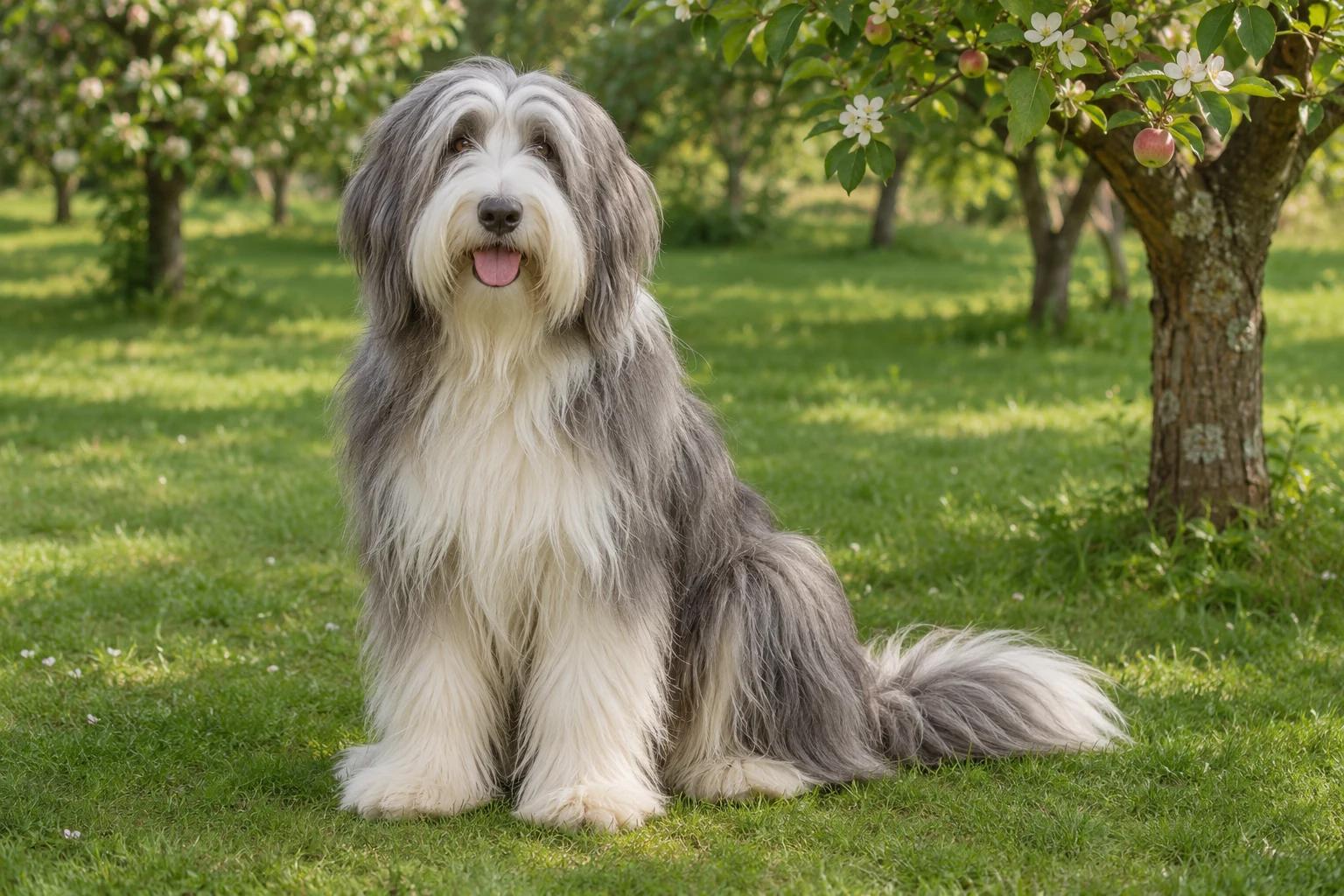
Bearded Collie vs Old English Sheepdog is an easy comparison to make from photographs: two shaggy dogs, expressive faces, and plenty of coat. Living with them calls for a more practical comparison. Adult size changes the space and equipment you need, while long-coat maintenance remains a meaningful commitment whichever breed you choose.
Start with the Bearded Collie profile and Old English Sheepdog profile. Breed tendencies can narrow your questions, but the individual dog still matters more than a tidy list of labels.
Bearded Collie vs Old English Sheepdog at a glance
The current My Breed Atlas records give you a useful size comparison:
| Feature | Bearded Collie | Old English Sheepdog |
|---|---|---|
| Typical adult weight | 45–60 pounds | 60–90 pounds |
| Listed male height | 21–22 inches | 22 inches and up |
| Listed female height | 20–21 inches | 21 inches and up |
| Coat length | Long | Long |
| Home coat-care expectation | Brushing most days | Brushing most days |
The weight difference is more informative than trying to judge size through a full coat. Height alone does not describe how much room a dog takes up when turning, resting, or traveling.
These are the site’s reference ranges, not a prediction of a particular puppy’s adult measurements. For an adult dog, use actual measurements when choosing equipment. For a puppy, discuss the parents and the individual’s development without treating a family example as a guarantee.
The difference between Bearded Collie and Old English Sheepdog size
Imagine the same everyday task with each dog: getting into the car, passing through a narrow hallway, or settling beside your chair. A larger dog does not automatically need a larger house in every respect, but you need to understand the available usable space.
Measure the area where a travel setup would go rather than assuming it fits because the vehicle looks spacious. Check the opening, not just the interior. Think about how you would manage luggage and passengers at the same time.
Do the same for resting space at home. A dog bed that fits a corner on paper may obstruct a doorway in practice. Mark its proposed footprint temporarily and walk around it during an ordinary evening.
Handling matters too. Consider who will hold the lead and manage routine movement. Do not select a dog assuming one particular person will always be available for every demanding moment. Everyone involved should understand the practical responsibilities before the dog arrives.
Two long coats, not a low-maintenance alternative
If you are choosing a Bearded Collie or Old English Sheepdog to avoid grooming, neither profile supports that plan. Both call for frequent brushing. A breed photograph shows the result, not the work between photographs.
Arrange to watch each breed being groomed. Ask the groomer to describe what an owner does at home and which tasks require an appointment. Request a realistic explanation of maintenance during an ordinary month, including what happens when work is postponed.
The Bearded Collie Club of America specifically encourages a grooming demonstration on an adult. Apply the same practical approach when evaluating either dog: watch the process, ask questions, and consider whether you want to learn it.
Do not compare only the quoted price of a single appointment. Find out what that price includes and what coat condition it assumes. Home time, travel, appointment availability, and someone to handle care while you are away all belong in the comparison.
A shorter maintenance arrangement, if discussed with a groomer, is a separate decision from choosing a breed. Do not assume it removes every coat-care responsibility or makes the two dogs interchangeable.
Look beyond matching shaggy silhouettes
The American Kennel Club’s Bearded Collie introduction emphasizes an enthusiastic outdoor-loving droving dog. Its Old English Sheepdog introduction describes a large, agile dog with a substantial coat. Neither description should be reduced to “lively one” and “sofa one.”
Observe adult dogs away from a posed photograph. Ask to see how a particular dog moves through a familiar environment and responds to its usual handler. If possible, see more than one adult from each breed so that a single impression does not become your entire definition.
Take notes about the individual rather than assigning a winner immediately. You might prefer one dog’s way of engaging while finding another dog’s physical size easier to accommodate. Those are useful distinctions; “they both look friendly” does not tell you enough.
Questions worth asking in person
Ask what the dog actually does on a workday, what training is currently being practiced, and what happens when plans change. Ask for examples rather than adjectives such as easy, busy, or calm.
For example, “What was yesterday’s main outing?” gives you something concrete to consider. “Is the breed active?” may produce an answer that means something different to each person in the conversation.
Compare your commitments before choosing your favorite
An Old English Sheepdog vs Bearded Collie decision should include three separate checks: physical handling, coat maintenance, and shared activity. Being comfortable with one does not automatically resolve the other two.
Perhaps you have ample room but dislike grooming. Perhaps you enjoy coat care but cannot accommodate the larger travel setup. Perhaps the physical arrangements work for both, but your day has little space for active involvement. Be clear about which issue is actually deciding the comparison.
Keep appearance on the list, too. Enjoying how a dog looks is understandable. It simply should not be the only item you investigate. Meet the dog, understand the care, and compare the ordinary tasks with your real preferences.
The dog breed quiz can help organize those preferences. For a closer look at one distinct Beardie topic, read when the Bearded Collie’s bark belongs in herding work. It explains a working context rather than offering a shortcut for predicting household behavior.
FAQ
Which is bigger, a Bearded Collie or Old English Sheepdog?
My Breed Atlas lists Bearded Collies at 45–60 pounds and Old English Sheepdogs at 60–90 pounds. The Old English Sheepdog therefore has the larger listed weight range. Use individual measurements for travel equipment and resting space.
Which breed needs less grooming?
Both site profiles list brushing most days. Do not choose either as a low-maintenance coat option. Watch a grooming demonstration and discuss the individual coat before estimating home time, appointments, and cost.
Are Bearded Collies and Old English Sheepdogs the same breed?
No. Bearded Collies and Old English Sheepdogs are distinct breeds with separate profiles and adult-size records. Their long coats can create a superficial resemblance, but appearance alone is not a reliable guide to everyday fit.
How should I choose between the two breeds?
Compare adult size, your ability to handle the dog, coat-care responsibilities, and available shared activity. Meet individual adults and ask about concrete daily routines. Choose the fit you can support consistently rather than relying on a photograph or broad personality label.
Sources behind this article
- Bearded Collie Club of America: About Beardies ↗
- American Kennel Club: Bearded Collie ↗
- American Kennel Club: Old English Sheepdog ↗
- Association for Pet Obesity Prevention reference — adult-weight reference ↗
- Dogzone adult reference — adult-weight reference ↗
Article source checked: November 14, 2026. Source checked 2026-11-14Article source checked: November 18, 2026. Source checked 2026-11-18
Keep reading

Affenpinscher vs Brussels Griffon: Everyday Differences
Read article →