Basset Hound vs Beagle: compare more than the ears
Compare Basset Hound and Beagle size, activity, coat care and voice, with practical questions to help you choose an individual dog.
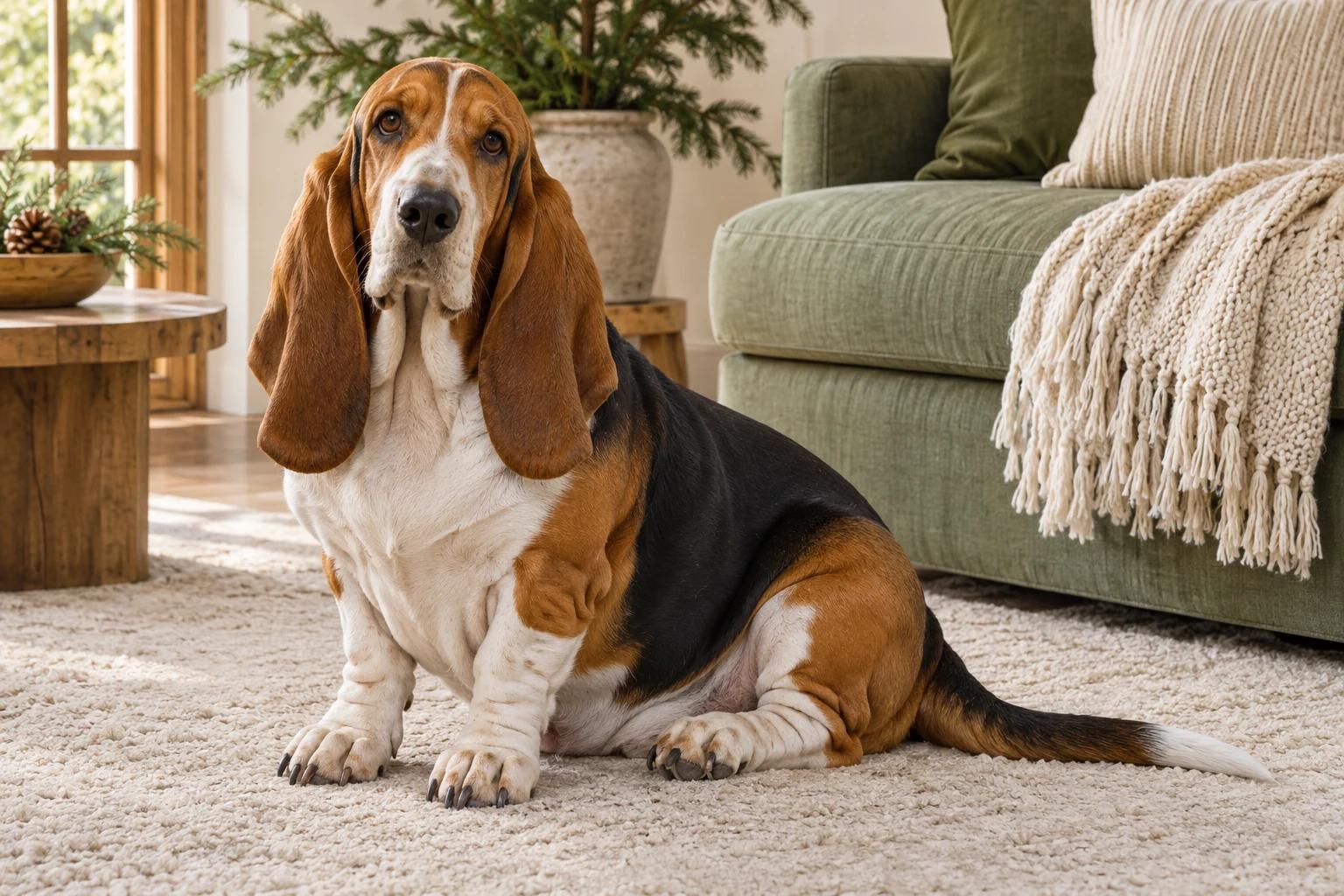
A Basset Hound vs Beagle choice can begin with a familiar hound face and end with quite different practical commitments. Both breeds have hunting backgrounds and short coats, but their weight ranges and activity profiles are not interchangeable.
Read the Basset Hound profile and Beagle profile alongside this comparison. The aim is not to name a universal winner. It is to identify which differences affect your home, your outings and the care you can provide.
Basset Hound vs Beagle: the size difference matters
The current site profiles give these adult reference figures:
| Breed or variety | Height | Weight |
|---|---|---|
| Basset Hound | Up to 15 inches | 53–77 pounds |
| Beagle, smaller variety | 13 inches and under | 15–30 pounds overall; not variety-specific |
| Beagle, taller variety | 13–15 inches | 15–30 pounds overall; not variety-specific |
The striking point is weight, not just shoulder height. A Basset and a taller Beagle may fall near a similar height, yet the Basset's reference weight is substantially greater. Low to the ground does not mean easy to carry.
If your plan involves steps, travel equipment or lifting, investigate those arrangements before choosing. Measure the available space and consider how the actual dog will use it. A carrier selected by height alone may be unsuitable for its other dimensions or weight.
For an adult dog, individual measurements are more useful than a breed average. For a puppy, reference figures help you prepare but cannot predict its exact adult size. Avoid making a decision that depends on a puppy stopping at one precise number.
Their hound backgrounds create common questions
The American Kennel Club's Basset overview describes a generally low-key hound with an independent streak. Its Beagle overview describes a hunting background that includes pack work and an interest in company.
Those broad descriptions are context, not instructions to expect identical behavior from every dog. Ask about the individual you are considering: what holds its attention, what it already knows and what its normal outings look like.
Both choices deserve a plan for controlled exploration. Interesting surroundings are part of an enjoyable outing, but they can also compete with your instructions. Learn how the caregiver currently manages that balance instead of assuming either breed will naturally remain beside you.
Activity: lower does not mean none
My Breed Atlas places the Basset Hound lower on its activity scale and the Beagle higher. This is one of the more useful differences to consider, provided you do not turn it into an absolute rule.
A Basset still needs suitable movement, engagement and opportunities to explore. A Beagle's higher rating does not mean every outing must be strenuous or that rest is unimportant. The individual dog's age and condition affect the plan.
When comparing Beagle vs Basset Hound, think about the kind of participation you enjoy. Would you like regular varied outings and daily learning? Can you adapt the arrangement to the dog rather than expecting it to match a fixed picture of your ideal walk?
Talk with your veterinarian about suitable activity for the individual. Neither the breed's history nor a numerical rating should become a medical or exercise prescription.
Include the practical work around an outing
Where will equipment be stored? How will the dog get into a vehicle? What happens if you need another person to provide the walk? These questions become more concrete when you consider the Basset's greater reference weight.
A lighter Beagle may be easier for some people to accommodate physically, but that does not remove the time needed for activity and teaching. Convenience in one category should not hide the commitment in another.
Coat care and cleanup are different from haircut needs
Both profiles list short, smooth coats. That can simplify some aspects of care, but neither dog is maintenance-free. Their everyday notes describe ongoing loose hair, so plan routine brushing and household cleaning rather than expecting bare floors indefinitely.
The Basset's profile records more drooling than the Beagle's. That may affect where you keep towels and how you manage bedding or upholstery. Ask what the particular dog is like instead of assuming an exact amount from a rating.
The Basset Hound Club of America's owner flier includes ear and nail care as ordinary responsibilities. For either breed, get an individual care plan and professional instruction where needed. Similar ears in a photograph are not a reason to copy another dog's treatment or cleaning schedule.
Ask to see the care setup during a visit. A demonstration of ordinary brushing or preparation can be more informative than a claim that grooming takes almost no time.
Voice and companionship deserve direct questions
Both site profiles record relatively high vocal tendencies. If nearby neighbors are an important consideration, do not treat the choice as a straightforward quiet-versus-noisy decision.
Ask when the dog vocalizes and what happens around it. Greetings, waiting, outdoor distractions and time alone are different situations. A person who knows the dog can explain patterns that you may not see in a short visit.
The Beagle's newer profile notes emphasize wanting to be involved with people. The Basset's notes describe a mild household manner. Neither description tells you how long a particular dog can be left or how it will respond to a changed routine.
If you are choosing Basset Hound or Beagle for a home with existing animals, gather specific history and plan introductions. Breed-level sociability is not an assurance about a particular pairing.
Learning style: compare what the dog already understands
Both profiles emphasize motivation and practice. Instead of deciding which breed is smarter, ask which skills the individual has learned and where those skills work.
A dog may understand a request in one room but not in a busy new setting. That is useful information for planning training. It is not a reason to attach a permanent label such as hopeless or effortless.
The dog match quiz can help organize your priorities around activity, care and companionship. Our existing article about Basset Hound Scent Work partnership explores one structured activity without suggesting that every Basset must pursue it.
The main difference between Basset Hound and Beagle ownership is a combination of size, activity and the individual dog, not a single defining feature. Compare those parts separately, then decide whether the whole arrangement fits your life.
FAQ
Is a Basset Hound bigger than a Beagle?
The Basset Hound is substantially heavier in the site's reference figures: 53–77 pounds compared with the Beagle profile’s overall 15–30-pound range. The current Beagle weight reference is not divided by height variety. Their shoulder heights can overlap, so height alone is misleading.
Which breed is more active?
My Breed Atlas records a higher activity tendency for the Beagle and a lower one for the Basset Hound. Both need suitable activity and engagement. Plan around the individual rather than treating those ratings as fixed workouts.
Is either breed a guaranteed quiet companion?
No. Both site profiles record relatively high vocal tendencies. Ask about an individual dog's sounds and the situations that trigger them. A quiet visit does not establish how the dog behaves throughout an ordinary day.
Do Basset Hounds and Beagles need similar grooming?
Both have short, smooth coats and need routine care, but individual handling and care requirements vary. The Basset profile records more drooling. Ask for practical demonstrations and appropriate professional guidance rather than assuming short coats require no maintenance.
Sources behind this article
- American Kennel Club: Basset Hound ↗
- American Kennel Club: Beagle ↗
- Basset Hound Club of America: Owner Flier ↗
- SKK judges’ guide average reference — adult-weight reference ↗
Article source checked: November 14, 2026. Source checked 2026-11-14Article source checked: November 18, 2026. Source checked 2026-11-18
Keep reading

Affenpinscher vs Brussels Griffon: Everyday Differences
Read article →