Basset Fauve de Bretagne vs Petit Basset Griffon Vendeen
Compare these French hounds by size, coat, voice and everyday care, then decide which individual dog fits your plans.
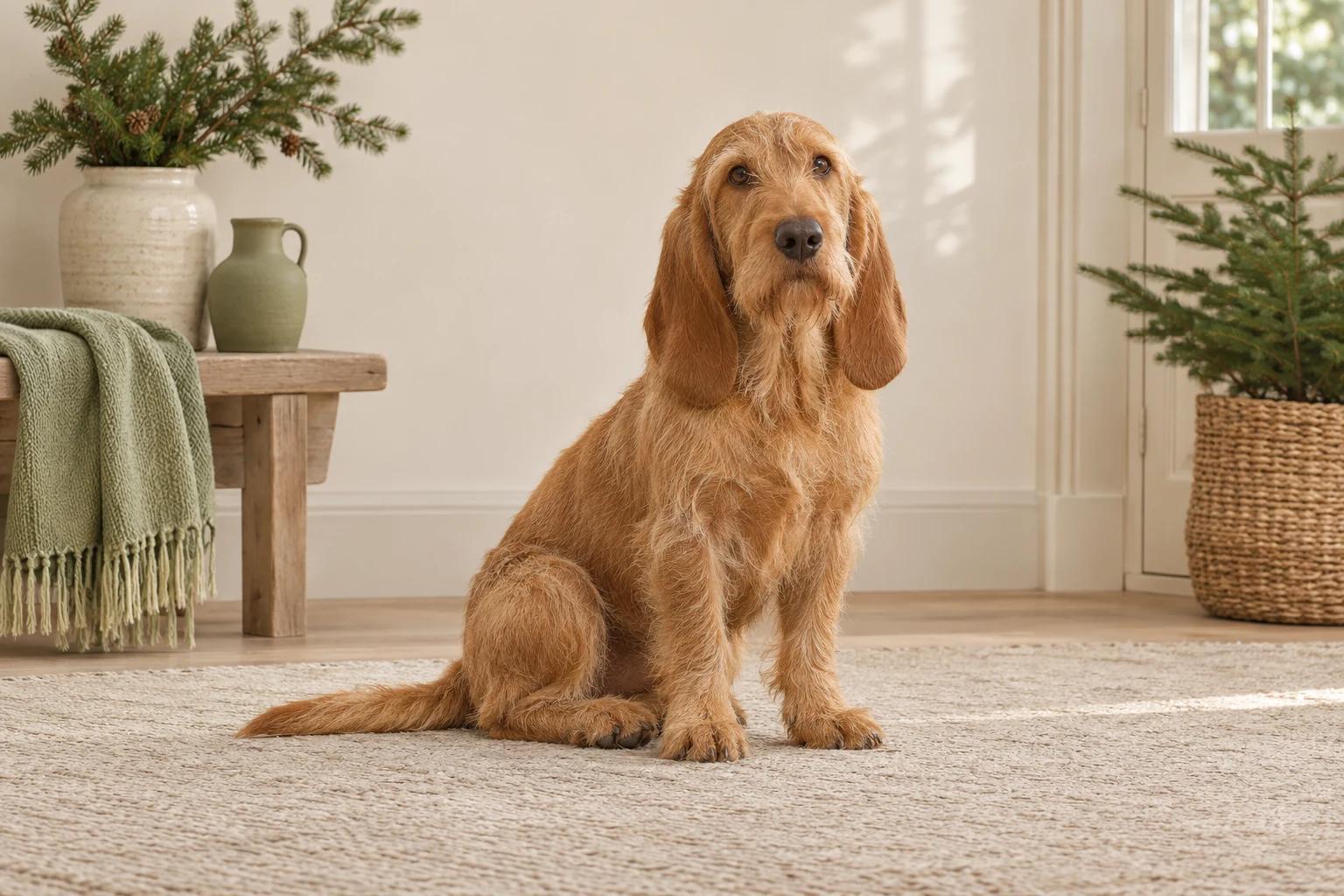
Explore the
Basset Fauve de Bretagne
Background, care, and everyday considerations.
View breed profile →Basset Fauve de Bretagne vs Petit Basset Griffon Vendeen is a comparison between two distinct French hounds, not two hairstyles for the same dog. Their size ranges overlap and both have a rough-coated appearance, but the practical details deserve a closer look.
Start with the Basset Fauve de Bretagne profile and Petit Basset Griffon Vendéen profile. The latter is often shortened to PBGV. That abbreviation makes conversation easier, but it should not obscure which breed a source is describing.
Basset Fauve de Bretagne vs Petit Basset Griffon Vendeen: key details
The following figures come from the current My Breed Atlas profiles. They are breed reference ranges, not predicted measurements for every individual.
| Detail | Basset Fauve de Bretagne | Petit Basset Griffon Vendéen |
|---|---|---|
| Height | 12.5–15.5 inches | 13–15 inches |
| Weight | 23–39 pounds | 25–40 pounds |
| Coat listing | Medium, double and wiry | Long, double and rough |
| Typical colors listed | Fawn and wheaten shades | White with various colored areas |
| Vocal tendency | Moderate | Higher |
| Activity tendency | Higher | Higher |
These figures show why a size filter may return both breeds. A narrow difference at the end of a range does not make one reliably lighter than the other. If lifting, travel equipment or a housing limit matters, learn the actual dog's measurements.
The coat listings are more visibly different. Even then, photographs can mislead: presentation, lighting and the individual coat affect what you see. Ask about maintenance rather than deciding entirely from the amount of hair in a picture.
Two hunting backgrounds, not identical routines
The American Kennel Club's Fauve overview describes a determined hunter. Its PBGV overview identifies a French hunting hound with a pack-working background. Both histories help explain why these are more than small ornamental companions.
Those descriptions do not tell you exactly how an individual will behave in your home. A dog's experience, preferences and current routine still matter. Ask how the dog explores, what activities engage it and what its caregiver does when distractions arise.
When weighing Basset Fauve de Bretagne or PBGV, consider whether you enjoy the process of providing activity and learning. Choosing between two active breeds is not the same as choosing between an active and an inactive lifestyle.
Compare the available day, not a weekend ideal
Look at where suitable outings could happen during a normal working week. Include travel and preparation, not just time spent on a path. A nearby route you can use consistently may matter more than a wonderful destination you visit occasionally.
Neither breed should be assigned a fixed workout from this comparison. The site's detailed activity notes differ, and the individual dog's age and condition also matter. Talk with your veterinarian about appropriate exercise rather than treating the shared higher rating as an identical prescription.
Coat and cleanup: look beyond scruffy charm
The Fauve's medium wiry coat and the PBGV's longer rough coat lead to different appearances. My Breed Atlas records some shedding for the Fauve and a lower shedding tendency for the PBGV. Neither description means there will be no hair or no maintenance.
The Fauve breed club describes regular combing and brushing, while noting that coat amount varies among individuals. Ask the caregiver to demonstrate the current routine and explain which parts are handled at home or by a groomer.
For either breed, consider what happens after a normal outing. Where will you check the coat? Where will equipment and towels live? Can you comfortably carry out the routine with the actual dog, rather than just accepting a short written estimate?
A neat photograph does not show how cooperative a dog is during care. Ask about that separately. Handling experience is useful information whether the coat looks relatively short or notably shaggy.
Voice may be a meaningful difference
The site's vocal tendency is higher for the PBGV than for the Fauve. That is a reason to investigate communication carefully, not to declare the Fauve a quiet alternative or predict the noise from a particular PBGV.
Ask about situations: arrivals, other dogs passing, waiting and time at home. Does the caregiver hear brief alerts or longer episodes? What is happening around the dog at those times? A description tied to circumstances is more useful than “not very noisy.”
If you live close to neighbors, think about the layout as well as the breed. Shared corridors and a window facing constant foot traffic create different situations from a quieter entrance. You need information about the dog and a workable arrangement for the space.
Do not choose solely from a silent meeting. A dog may be quiet in one setting and communicate differently elsewhere. Combine what you observe with the history provided by someone who knows it.
Compare learning and companionship fairly
The Fauve's profile emphasizes a particularly independent approach to learning. The PBGV's profile also calls for motivation and consistent practice. Neither description should be translated into a competition over intelligence.
Ask what the individual already understands and where the skill works. A response in a familiar room is different from the same response outdoors. That distinction helps you plan the next step without assigning a permanent label to the dog.
Both profiles include a sociable tendency, but that does not establish compatibility with a particular person or animal. Discuss previous living arrangements and introductions. Do not turn shared hound ancestry into a promise about a new household.
If your search began with Petit Basset Griffon Vendeen vs Basset Fauve de Bretagne, keep a short comparison sheet with questions rather than scores. Record what you have observed, what the caregiver reports and what remains unknown. It is easier to make a grounded choice when those categories are separate.
Choose the differences that actually matter
The main difference between Basset Fauve de Bretagne and Petit Basset Griffon Vendeen ownership may be a specific dog's habits, not the small gap between reference weights. Coat care, vocal behavior and the activities you can share are useful areas to investigate first.
Use the dog match quiz to sort your priorities. Our existing article on the Fauve's compact outline adds context about appearance without substituting it for an ownership decision.
A fair comparison does not need a winner. It should leave you better prepared to meet dogs, ask precise questions and recognize which commitments fit your life.
FAQ
Which breed is bigger, the Fauve or the PBGV?
Their reference ranges overlap substantially. My Breed Atlas lists the Fauve at 23–39 pounds and the PBGV at 25–40 pounds. Learn an individual dog's measurements instead of assuming one breed will always be smaller.
Are both breeds active?
Yes. Both site profiles record higher activity tendencies and a need for mental engagement. Their detailed routines are not interchangeable, and an appropriate plan should reflect the individual dog's age, condition and interests.
Which breed has the longer coat?
My Breed Atlas lists the PBGV's coat as long and rough, and the Fauve's as medium and wiry. Individual presentation varies. Ask to see the care routine rather than estimating maintenance from a photograph alone.
Is the Basset Fauve de Bretagne quieter than the PBGV?
The site records a lower vocal tendency for the Fauve than the PBGV, but that does not promise a quiet individual. Ask about actual sounds, triggers and everyday behavior before making a housing decision.
Sources behind this article
- American Kennel Club: Basset Fauve de Bretagne ↗
- American Kennel Club: Petit Basset Griffon Vendeen ↗
- Basset Fauve de Bretagne Club of America: About Fauves ↗
Article source checked: November 14, 2026. Source checked 2026-11-14
Keep reading

Affenpinscher vs Brussels Griffon: Everyday Differences
Read article →