Reading the Basset Fauve de Bretagne’s compact outline
A short back for a basset does not mean a square dog. The French breed commentary explains the Fauve’s proportions, legs and smooth movement.
Explore the
Basset Fauve de Bretagne
Background, care, and everyday considerations.
View breed profile →Two comparisons, two different answers
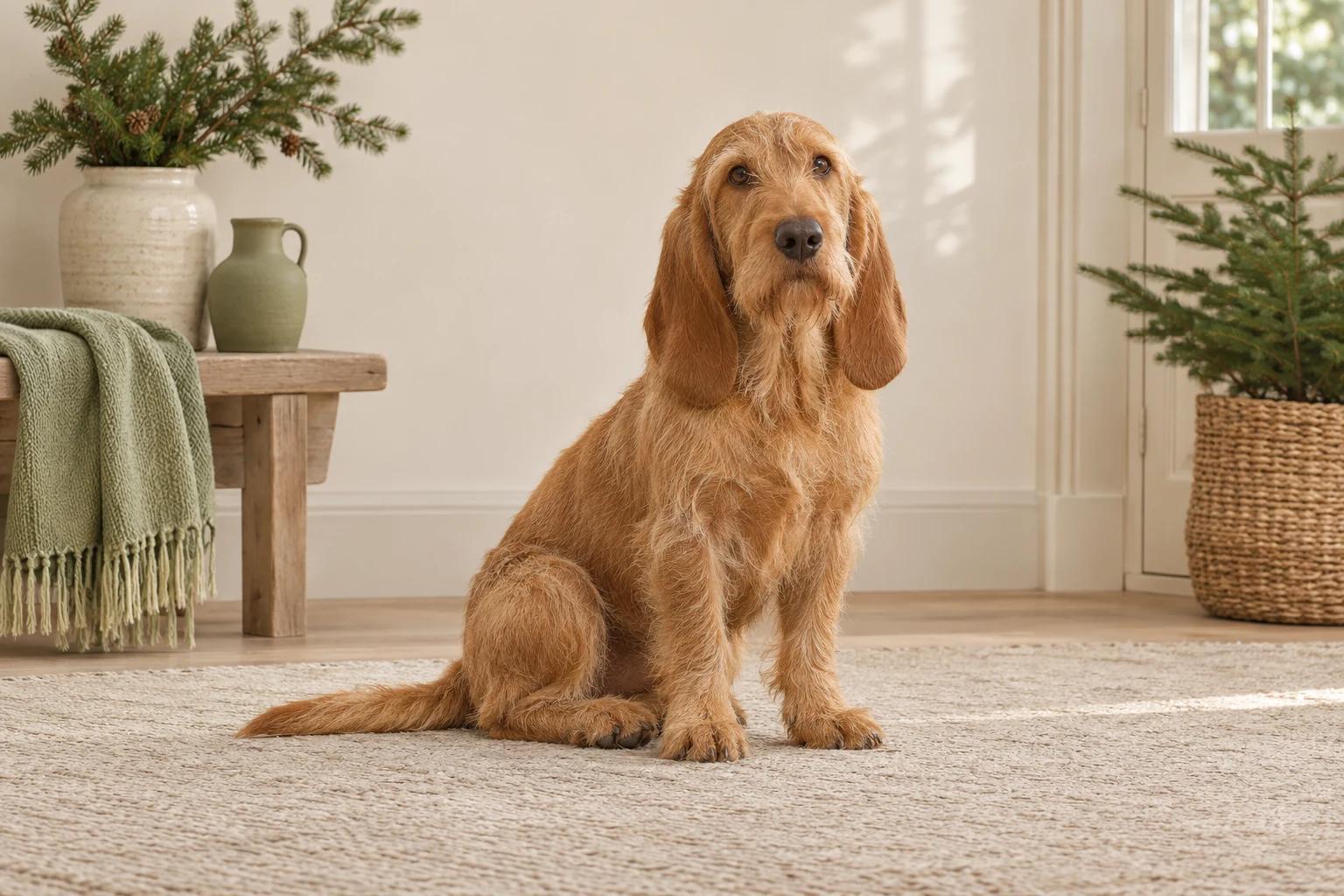
The Basset Fauve de Bretagne is described as short-backed for a basset, yet it should still be longer than tall. The Société Centrale Canine’s educational commentary makes both points and recalls square-looking examples that did not fit the standard. “Short” is a comparison with other bassets, not an instruction to erase the breed’s length.
Look below the outline
The commentary connects a relatively short back and straighter, comparatively longer limbs with the Fauve’s ability to move briskly for its size. It describes a chest reaching the elbows and explains that increasing straightness of the forelegs has been a selection goal. Slight inward curvature may be tolerated, but is not something to seek. The intended gait is even and supple rather than bouncing.
That gives a spectator a useful sequence: look at the body’s length relative to height, then the direction of the legs, then the moving dog. A compact outline alone cannot tell you whether the movement matches the description. Nor does a dramatic low-to-the-ground silhouette automatically represent a better basset.
A comparison, not a race prediction
The French commentary is explaining a breeding ideal and its working context. It is not reporting a speed trial or promising that one household’s Fauve will outrun another dog. Use it to understand why the breed can look different from the basset you first pictured, without turning a visual comparison into an individual performance claim.
Sources behind this article
Article source checked: October 20, 2026. Source checked 2026-10-20
Keep reading
Basset Fauve de Bretagne exercise needs: a nose-led day
Read article →