Australian Cattle Dog vs Australian Shepherd
Compare Cattle Dog and Australian Shepherd size, coat care, activity, learning, and daily fit beyond intelligence rankings.
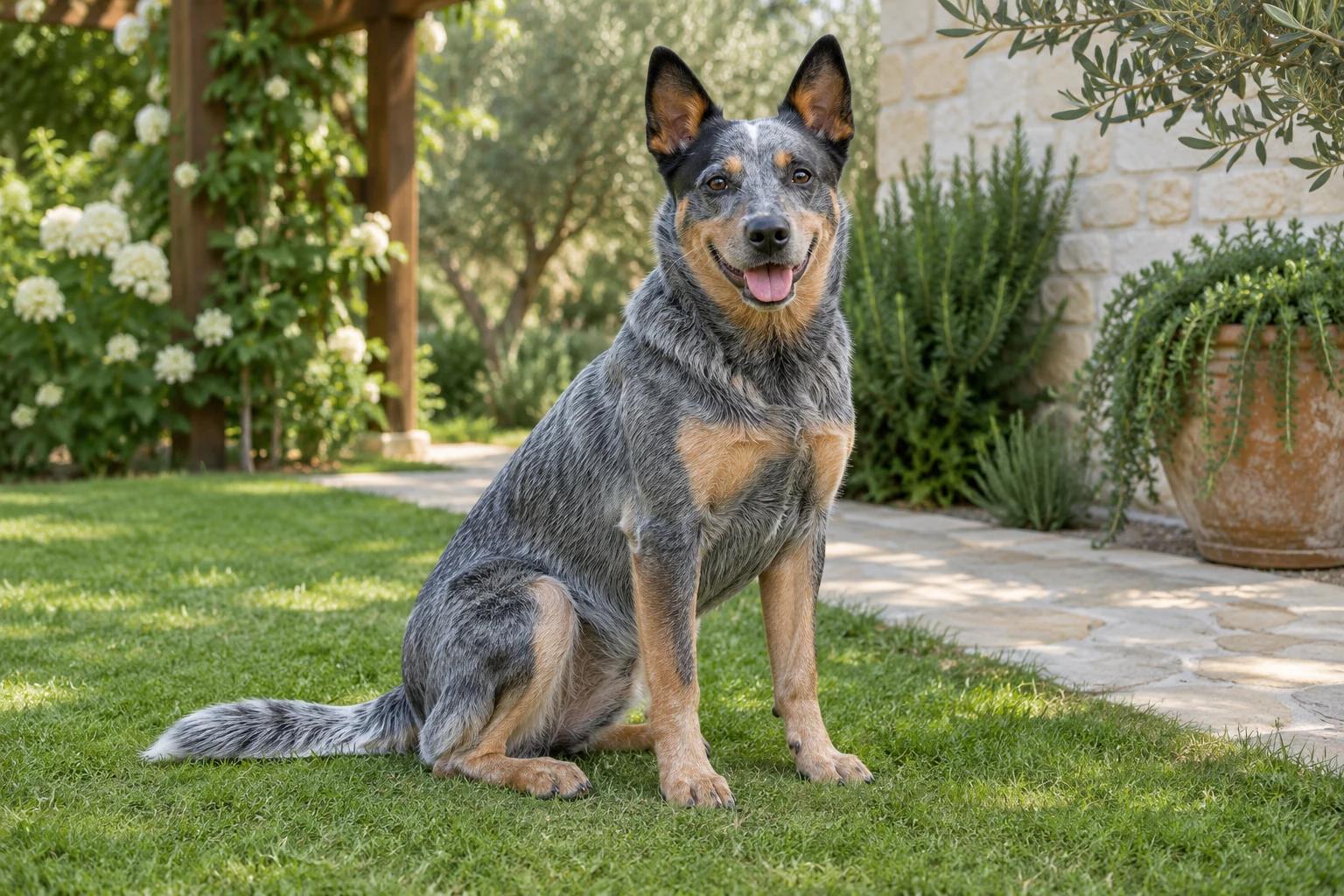
Australian Cattle Dog vs Australian Shepherd is a comparison between two active herding breeds, not a choice between a working dog and a low-effort alternative. Both site profiles emphasize substantial activity and learning. The useful differences are in size, coat, everyday style, and the individual experience behind the dog you meet.
Read the Australian Cattle Dog profile alongside the Australian Shepherd profile. Then compare the life you want to share, rather than choosing from coat color or a general ranking of intelligence.
Australian Cattle Dog vs Australian Shepherd: body and coat
The site's Australian Cattle Dog range is 35–50 pounds, with males at 18–20 inches and females at 17–19 inches. Australian Shepherds are listed at 50–65 pounds for males and 40–55 pounds for females, with males at 20–23 inches and females at 18–21 inches.
The Cattle Dog standard describes a compact worker. The Australian Shepherd standard describes a somewhat longer outline and a moderate-length coat. There is size overlap, but the typical visual presentation is different.
For practical decisions, measure the individual. Coat volume can affect how large a dog appears, while actual dimensions determine whether equipment fits. Ask for current information rather than estimating weight from a photograph.
Blue Heeler vs Australian Shepherd coat routines
A Blue Heeler vs Australian Shepherd comparison often starts with the obvious coat difference. The Cattle Dog has a short double coat; the Australian Shepherd's coat is longer, with more visible feathering. Both site profiles include regular shedding and brushing.
Think about the return from an outing. What debris does the coat collect? Which areas need attention? What care is already familiar to the dog? Answers to those questions are more useful than describing either coat simply as easy.
If you prefer a simpler-looking coat, do not assume that removes all routine care. If you prefer the Australian Shepherd's fuller outline, make room for the maintenance that comes with it. Ask a groomer to demonstrate unfamiliar tasks rather than purchasing tools without a plan.
Compare the busy care periods
An ordinary week and a heavier shedding period can feel different. Ask what changes during those periods and how the caregiver manages them. Consider the time, cleaning, and professional support involved.
You do not need to predict an exact amount of loose hair to make a useful decision. You need to understand whether the actual routine is one you can maintain comfortably. Appearance is only the visible result of that routine.
Activity is a commitment for both
The site's profiles describe substantial daily activity for both breeds. Choosing between them should not be a search for the one that needs almost nothing. Instead, compare the types of engagement you enjoy and the actual dog's experience.
ASCA's character discussion emphasizes purposeful activity for Australian Shepherds while acknowledging individual variation. That is useful context, not a reason to assume every Aussie wants the same hobby or every Cattle Dog needs a contrasting one.
Ask about familiar outings, classes, games, and quiet periods. Discuss appropriate physical activity with your veterinarian. A breed's working reputation cannot prescribe a particular distance or intensity for an individual dog.
Difference between Australian Cattle Dog and Australian Shepherd learning
A difference between Australian Cattle Dog and Australian Shepherd learning styles should be established from the individuals, not a simplistic intelligence contest. Both profiles support mental engagement and training. Neither implies that the dog arrives knowing household routines.
Choose the skills you want in everyday life. Comfortable walking, participation in care, and clear transitions between activities may matter more than a performance trick. Ask what the dog already understands and how it has been taught.
If you enjoy a particular sport, discuss that goal with an instructor and the dog's caregiver. Learn the foundations needed for the individual. A possible breed interest is a starting point for exploration, not a guarantee of performance or enjoyment.
Do not equate quick learning with easy ownership
A dog can learn a task quickly while still requiring substantial attention to its environment and routine. Training interest does not remove the need for suitable activity, boundaries, and thoughtful introductions.
Consider whether you enjoy the ongoing process of teaching and observing. If you want a dog mainly because it is described as smart, ask what you expect that intelligence to do for you. The relationship still involves work from the person.
Voice and company: compare ordinary days
The site's newer Cattle Dog notes describe alert barking, while the Australian Shepherd notes allow for some barking through the day. These are tendencies to investigate, not guarantees about noise in your home.
Ask when vocal behavior occurs and what surroundings the dog currently knows. A busy shared entrance, a nearby path, or frequent visitors may create a different day from a quiet property. Explain your setting so the comparison is relevant.
The companionship notes also leave room for individual style. Cattle Dogs may enjoy closeness, while Australian Shepherds can combine affection with independence. Learn how the actual dog spends time with familiar people instead of interpreting a breed label as a promise of constant contact.
Movement and management deserve attention
Both are herding breeds, so think carefully about ordinary moving activity in your surroundings. Do not use children, traffic, or unfamiliar animals as a way to test a dog's interests. Choose suitable management and professional guidance for any difficulty.
ASCA discusses the relevance of leashes and boundaries for its breed. The broader practical point is to plan the environment rather than relying on a cue to work perfectly in every unexpected situation. Everyone handling the dog should understand the arrangement.
Our article on Cattle Dog herding assessments covers organized working questions separately. A household comparison should focus on the routines you actually need, not imagined trial performance.
Make an Australian Shepherd vs Australian Cattle Dog choice
An Australian Shepherd vs Australian Cattle Dog decision is strongest when it compares known information on both sides. Use the dog match quiz to organize preferences, then ask the same practical questions about each dog.
Look at care, activity, learning, company, and surroundings together. The better fit may be an individual whose existing routine aligns especially well with yours. Neither breed needs to win a universal ranking for that decision to be clear.
FAQ
Is an Australian Cattle Dog smaller than an Australian Shepherd?
Typically the Cattle Dog is more compact, but size ranges overlap. The site's overall weight ranges are 35–50 pounds and 40–65 pounds respectively. Use individual measurements for equipment and travel decisions.
Which breed needs less exercise?
Both site profiles describe substantial activity and learning needs. Do not choose either as a minimal-exercise alternative. Compare the individual dog's routine with what you can sustain and discuss appropriate physical activity with your veterinarian.
Which coat is shorter?
The Australian Cattle Dog has the shorter coat. The Australian Shepherd has a moderate-length coat with more feathering. Both still require regular care and shed, so ask about the actual maintenance routine rather than judging from length alone.
Is one breed automatically easier to train?
No. Both profiles support learning, but experience, teaching, and the setting matter. Ask what the individual dog knows and how it responds to practice. Intelligence labels do not replace clear household training.
Sources behind this article
- AKC Australian Cattle Dog standard ↗
- AKC Australian Shepherd standard ↗
- ASCA Personality and Character ↗
Article source checked: November 14, 2026. Source checked 2026-11-14
Keep reading

Affenpinscher vs Brussels Griffon: Everyday Differences
Read article →