Australian Cattle Dog Exercise Needs: Purpose and Balance
Plan Australian Cattle Dog activity with purposeful outings, mental work, and predictable rest rather than endless intensity.
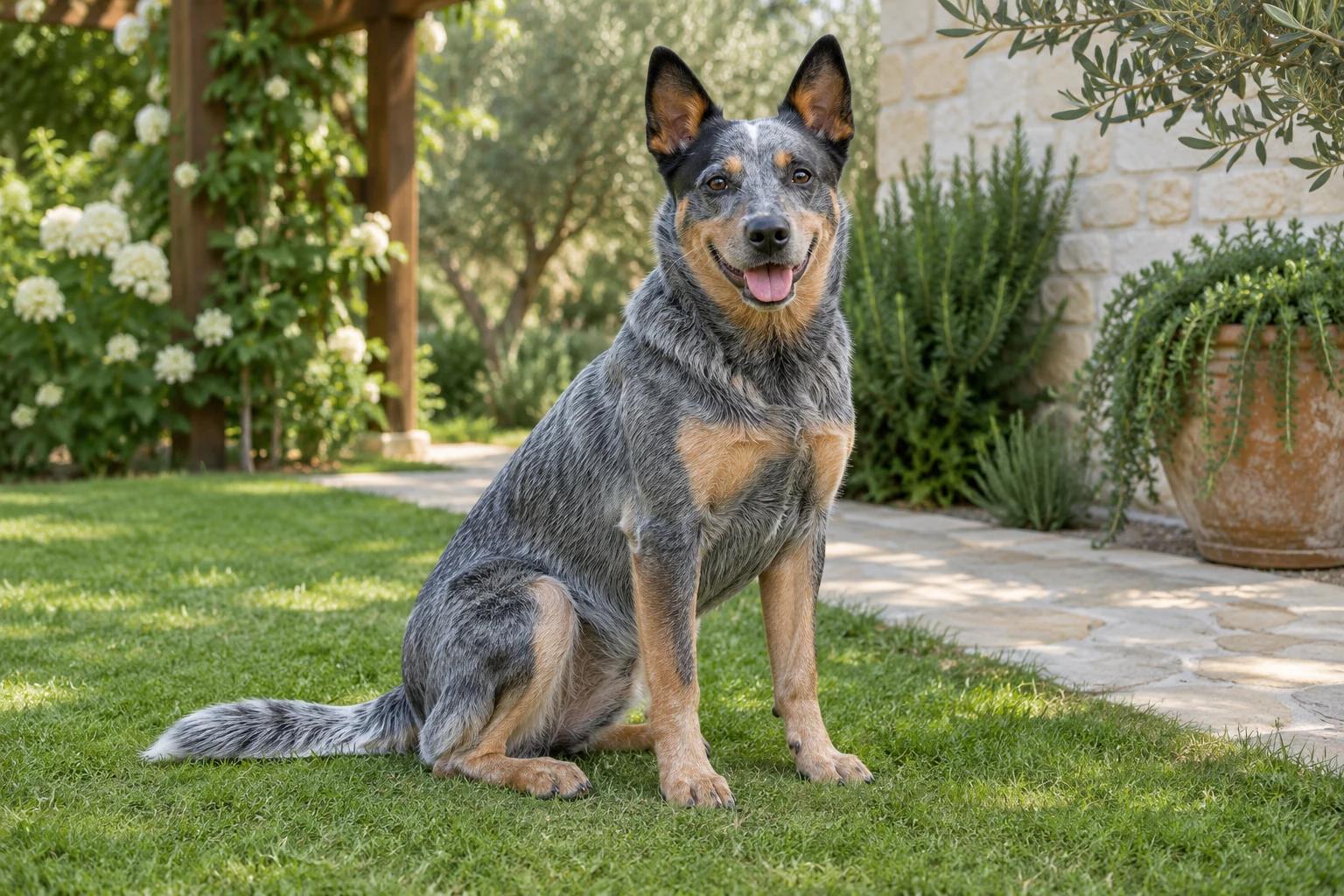
Australian Cattle Dog exercise needs involve more than finding a way to make the dog tired. The site's profile describes substantial activity alongside training games, puzzles, or a sport. A useful plan provides movement and engagement while also making room for predictable downtime.
The Australian Cattle Dog profile gives the broader ownership picture. This guide focuses on organizing an active day that is realistic for you and appropriate for the individual, rather than prescribing one workout for every dog carrying the breed name.
Australian Cattle Dog exercise needs reflect an active background
The AKC standard describes a working dog with agility and endurance. That helps explain the breed's active profile, but it does not tell you which distance, pace, or sport is suitable for your dog today.
Ask about the individual's existing experience before building a new routine. Familiar activities, age, and physical circumstances all matter. Talk with your veterinarian about appropriate exercise, especially when considering a substantial change or unfamiliar physical activity.
Start by identifying what the day already includes. Record actual outings and learning rather than counting every hour spent in an outdoor space as exercise. This simple distinction can reveal whether a plan is active in practice or only in theory.
How much exercise does an Australian Cattle Dog need?
The question how much exercise does an Australian Cattle Dog need is understandable, but a single number cannot describe every appropriate day. The site's profile calls for a substantial commitment, not a minimal routine. Use that expectation when considering fit, then personalize the plan.
Do not make the goal “more than yesterday” indefinitely. Increasing distance or intensity is not the only way to provide a useful activity. A familiar route with a clear purpose, an appropriate learning task, and a comfortable period of rest can be a more thoughtful arrangement.
If the dog seems persistently unsettled, review the whole routine with suitable professional help. More physical activity is not automatically the answer to every behavioral difficulty. Describe what happens and when rather than using tiredness as the only measure.
Blue Heeler exercise: choose the job of the outing
For Blue Heeler exercise, decide what a particular outing is for. Is it a familiar walk, exploration of a new setting, or practice of a learned skill? One outing can include several elements, but trying to accomplish everything at once makes it harder to understand the dog's response.
A familiar route is useful because you know where to pause, turn, or leave if needed. A new route offers different information but may also add demands. Choose deliberately instead of assuming unfamiliar is always better.
Consider your own participation. If an activity requires concentration and instruction, make sure you have time and attention available. A hurried outing with several competing tasks may not be the setting for introducing something new.
Keep an easy version available
Every favorite activity should have a simpler alternative. If the usual venue is closed, can you use another familiar route? If travel is impractical, is there a manageable learning task available at home?
An alternative does not need to replicate the original outing exactly. It needs to be something you can provide responsibly without improvising an unsuitable challenge. Having it ready reduces the temptation to force a plan that no longer fits the day.
Australian Cattle Dog activity level includes mental work
The Australian Cattle Dog activity level on the site includes purposeful learning. VCA's enrichment guidance discusses combining suitable activities with predictable routines and clear alternatives to unwanted behavior. Engagement should reflect the individual dog's interests.
A practical learning project might involve a familiar search game, identifying an object, or rehearsing a useful movement between designated places. Select an achievable starting point and make the finish clear. You do not need to transform the home into a complicated obstacle course.
If you prefer a class, ask about beginner foundations and the amount of practice expected between sessions. The class is only part of the commitment. Choose an activity you enjoy enough to keep learning about it after the first few visits.
Avoid filling every quiet moment
Mental work does not mean constant entertainment. Leave predictable periods when no new task is being presented. Think about where the dog can rest without being repeatedly drawn back into the busiest household activity.
If you are unsure how to establish that rhythm, describe your day to a trainer. A useful discussion looks at the sequence of events, not just a list of toys or the total duration of walks.
Plan the transition home
An outing includes the return journey and the shift back into household life. Decide what happens to equipment, where the dog goes, and what ordinary care follows. A clear sequence can make the end of activity easier to understand.
Do not keep restarting a game while expecting the dog to recognize that the active period is over. Make the next part of the day reasonably predictable. Consistency gives you a better basis for noticing when the routine works or needs adjustment.
Include the people who share care. If one person runs a long game and another immediately begins a lesson, the day may be more stimulating than either realizes. A simple handoff helps everyone understand what has already happened.
Review the individual rather than a reputation
The breed's athletic image should not prevent you from noticing discomfort or a change in participation. Talk with your veterinarian about physical concerns. A dog that needs an adjusted routine has not failed to live up to a breed description.
Likewise, an individual preference matters. One activity may be enjoyable while another is not. The aim is a sustainable active life, not proving that the dog can participate in every hobby associated with working breeds.
Use the dog match quiz to compare the commitment with your preferences. Our article about herding instinct assessments and trials covers the separate organized-work topic. Everyday exercise can be purposeful without reproducing that activity.
FAQ
Is a yard enough exercise for an Australian Cattle Dog?
A yard provides space but does not define an activity. Plan actual outings, learning, and suitable play rather than counting outdoor access alone. The site's profile describes a substantial daily commitment, which should be tailored to the individual.
Should I keep increasing exercise until my dog is tired?
Not automatically. More intensity is not the answer to every difficulty. Review movement, learning, environment, and rest together, and seek appropriate professional guidance. Discuss physical suitability or changes in participation with your veterinarian.
Can mental games replace all physical activity?
No. Mental games are part of engagement, not a universal substitute for suitable movement. Build a routine that includes both, along with rest. Choose activities around the individual dog's experience and interests.
Does an Australian Cattle Dog need livestock work?
Not every owner needs to pursue livestock work. Suitable outings and learning can provide purposeful activity. If you do want to explore herding, use experienced instruction rather than treating ordinary exercise as a substitute for working preparation.
Sources behind this article
Article source checked: November 14, 2026. Source checked 2026-11-14
Keep reading

Afghan Hound Exercise Needs: Build a Workable Active Day
Read article →