Aussiedoodle vs Goldendoodle: Compare the Individual
Compare Aussiedoodle and Goldendoodle activity, care, company, and individual background without relying on crossbreed promises.
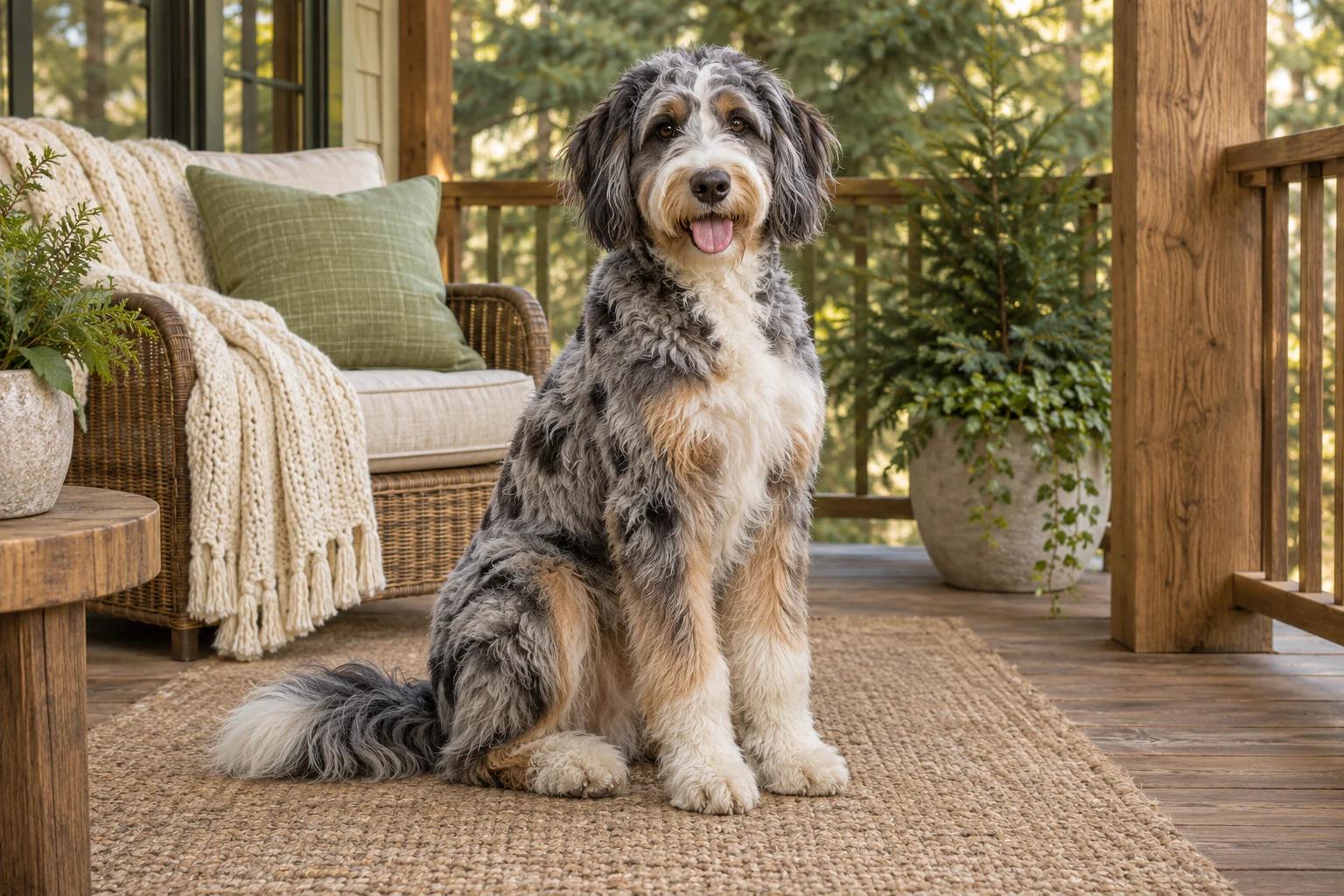
Aussiedoodle vs Goldendoodle is not a reliable shortcut to choosing a fixed personality or coat. Both names describe crosses with Poodle ancestry, but the other parent background differs, and individuals can vary. A useful comparison starts with the site's profiles and ends with concrete information about the dogs you are considering.
Read the Aussiedoodle profile beside the Goldendoodle profile. Focus on daily activity, learning, coat maintenance, company, and known experience rather than assuming a crossbreed name predicts every feature.
Aussiedoodle vs Goldendoodle: different parent backgrounds
Aussiedoodles combine Australian Shepherd and Poodle ancestry; Goldendoodles combine Golden Retriever and Poodle ancestry. AKC's Australian Shepherd overview describes a ranch-dog background, while its Golden Retriever overview describes retrieving and field work.
The shared Poodle background includes different size varieties. These parent descriptions provide context, not a formula for averaging traits. A cross does not inherit a predictable midpoint in every characteristic.
Ask about the actual parents and the individual dog's experience. A general ancestry label may be accurate while still leaving important practical questions unanswered. Treat those questions as part of choosing well, not as details that a photograph can resolve.
Size should be an individual discussion
Do not choose between an Aussiedoodle or Goldendoodle using an assumption that one name always means a larger dog. Parent size and the particular breeding background matter, and informal size labels are not measurements.
For a mature dog, ask for current height, weight, and the dimensions relevant to equipment. For a puppy, ask what is known about mature relatives while recognizing that a prediction is not an exact final size.
Picture the adult arrangement rather than only the puppy stage. Consider the vehicle, resting space, and handling routine you will use. Those decisions benefit from concrete information, not a vague promise that a dog will remain “small” or become “standard.”
Compare like with like
A photograph of a clipped adult and a fluffy puppy is not a useful size comparison. Neither are two images taken from different camera angles. Ask for the same kinds of information about each dog so you are not comparing facts on one side with impressions on the other.
If a size constraint is important to your home, discuss it explicitly before committing. Do not assume an informal label means the same thing to every person using it. Clarify what is known and what is still an estimate.
Coat maintenance is a shared commitment
The site's profiles describe coats that need regular attention. Aussiedoodle texture may be wavy or curly, and Goldendoodle coats also vary. Decide whether you can maintain the actual coat rather than choosing from the most appealing haircut photograph.
VCA's coat-care guidance recommends matching tools to texture and seeking help for difficult tangles. A groomer can translate that general principle into a routine for the individual dog.
Ask about the current haircut, home care, and professional appointment pattern. Find out what would change if you kept the coat longer or chose another style. A finish that looks simple can still require work between appointments.
Compare the whole care routine
Include the return from outdoor activities, not only the scheduled groom. Where will you check the coat? Who will handle ordinary maintenance? Is professional help accessible when needed?
The difference between two actual coats may matter more than the difference between their crossbreed names. Get the practical plan for each dog before deciding which is more manageable for your household.
Difference between Aussiedoodle and Goldendoodle activity profiles
A useful difference between Aussiedoodle and Goldendoodle profiles on the site is the emphasis of the daily activity notes. The Aussiedoodle description calls for a long outing, meaningful training, or a job. The Goldendoodle description uses a more moderate ordinary-day reference, while still emphasizing learning and engagement.
Do not turn that comparison into a guarantee that every Goldendoodle is calmer or every Aussiedoodle is more demanding. Ask what the individual already does and enjoys. Discuss appropriate physical activity with your veterinarian.
Think about which routine you genuinely want to maintain. If training classes appeal to you, investigate the practical commitment. If you prefer familiar walks and home-based learning, discuss how that would fit the dog's known experience.
Learning interests are not instant obedience
Both site profiles include training games or other mental engagement. That can make shared learning an appealing part of life, but it does not mean either dog will understand household expectations without teaching.
Ask what cues and routines are familiar. Toileting, grooming participation, travel, and quiet periods are more useful starting questions than whether the dog can perform one impressive trick.
If you are new to dog training, choose an instructor who can explain manageable first steps. You do not need a high-level sporting goal. A clear routine and enjoyable beginner work can be worthwhile without becoming a competitive project.
Company and voice belong in the comparison
The site's notes describe close company for both crosses. The Aussiedoodle profile allows for some barking through the day, while the Goldendoodle profile describes barking as more occasional. Individual patterns should be explored rather than assumed.
Ask how the dog spends time when people are occupied elsewhere and what its current environment is like. A routine with someone usually present may differ substantially from your proposed workday.
For concerns about time apart, get appropriate professional guidance rather than expecting ancestry to settle the question. Plan the actual arrangement, including help when needed, before assuming either cross can adapt to any schedule.
Make a fair Goldendoodle vs Aussiedoodle decision
A Goldendoodle vs Aussiedoodle comparison is most useful when you ask the same questions of both. Compare known care, activity, learning, and company patterns. Do not set one real dog against an idealized description of the other cross.
Use the dog match quiz to organize your preferences. Our Aussiedoodle article about merle photographs and genetic results covers a separate appearance topic, not a way to predict everyday suitability.
The stronger choice is the individual whose known needs and experience fit the life you can offer. Parent backgrounds help frame the conversation, but they should not end it.
FAQ
Is an Aussiedoodle always more active than a Goldendoodle?
No. The site's activity descriptions differ, but they do not predict every individual. Ask about the dog's current routine and interests, then discuss appropriate physical activity with your veterinarian. Do not choose from a blanket calm-versus-active label.
Which cross is smaller?
Neither name reliably establishes the smaller individual. Parent size and the particular background matter. Use current measurements for an adult and ask about mature relatives for a puppy without treating estimates as exact promises.
Which has easier coat care?
That depends on the actual coat and chosen haircut. Both profiles involve regular maintenance. Ask a groomer to assess texture, explain home care, and discuss professional appointments before deciding that one cross is easier to maintain.
Does Poodle ancestry mean the dog arrives easy to train?
No. Learning still requires clear teaching and suitable practice. Ask about the individual dog's known routines and experience. Parent reputation is context, not a substitute for training household skills.
Sources behind this article
Article source checked: November 14, 2026. Source checked 2026-11-14
Keep reading

Affenpinscher vs Brussels Griffon: Everyday Differences
Read article →