American Staffordshire Terrier vs Staffordshire Bull Terrier
Compare AmStaff and Staffy size, activity, coat care, and everyday routines to understand which individual fits your home.
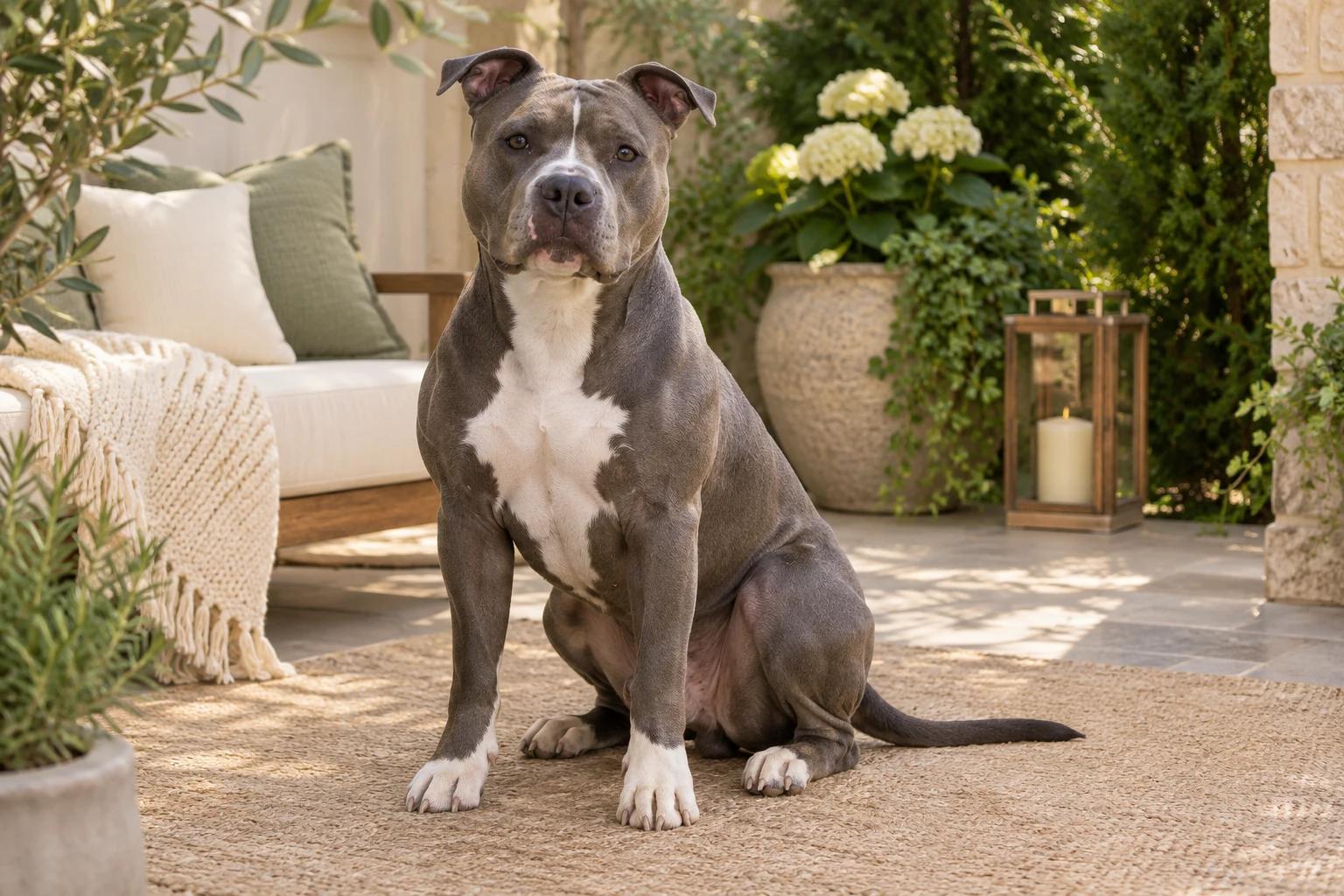
Explore the
American Staffordshire Terrier
Background, care, and everyday considerations.
View breed profile →American Staffordshire Terrier vs Staffordshire Bull Terrier is not simply a choice between two sizes of the same dog. These are distinct breeds, and the practical comparison should consider their individual profiles as well as the obvious difference in typical adult size.
Read the American Staffordshire Terrier profile alongside the Staffordshire Bull Terrier profile. This guide focuses on daily ownership decisions: space, activity, coat care, and learning about an individual. The history of their names is a separate topic.
American Staffordshire Terrier vs Staffordshire Bull Terrier: size first
The site's AmStaff profile lists males at 18–19 inches and 55–70 pounds, and females at 17–18 inches and 40–55 pounds. The Staffordshire Bull Terrier profile lists 14–16 inches, with males at 28–38 pounds and females at 24–34 pounds.
The AmStaff standard and Staffordshire Bull Terrier standard support the height distinction. Both describe muscular dogs; the Staffy is generally the smaller of the two.
For your home, turn that comparison into actual decisions. Where will the dog rest? What travel arrangement will you use? Can you manage the equipment and handling involved? Those questions are more useful than deciding that one breed is “medium” and the other is “large.”
Smaller does not mean identical needs in a smaller package
A lower body weight may affect practical purchases, but it does not automatically mean less activity or less training. Compare the whole profile instead of shrinking every expectation in proportion to the dog's size.
If you meet two individual dogs, use their current measurements and known routines. Breed ranges help you prepare, but they do not tell you which bed, harness, or travel setup fits those particular dogs. Measure before making fitted purchases.
AmStaff vs Staffy: compare the site's activity profiles
An AmStaff vs Staffy decision deserves attention to the site's activity notes. The AmStaff profile describes around an hour of active time in a typical day, while the Staffy profile describes a more demanding daily activity pattern. Do not assume the smaller breed requires less engagement.
These descriptions are planning references rather than exercise prescriptions. Discuss an individual dog's appropriate routine with your veterinarian. The practical question for a prospective owner is whether your regular day can accommodate the profile, not whether you can reach a numerical target once.
Think about the activity you enjoy maintaining. Do you want familiar walks, regular learning sessions, or a structured hobby? Ask about the actual dog's experience with those activities. A broad label such as “energetic” can hide substantial differences in how an individual spends the day.
Compare weekdays, not ideal weekends
You may have plenty of time for a dog on a free afternoon but a much tighter routine during the week. Write down what you can deliver on the ordinary day. Include preparation and travel rather than counting only the enjoyable part of an outing.
Then ask the current caregiver how the dog's existing routine compares. This helps reveal which parts of the transition would be straightforward and which would need planning. It is a more useful conversation than asking which breed is easier in general.
Coat care is a shared practical consideration
Both breeds have short, smooth coats. The site's profiles describe a straightforward brushing routine and relatively light loose hair. Neither description means that ordinary care disappears, and a short coat is not a reason to skip checking equipment fit or arranging routine professional care.
Ask how the individual responds to brushing and other handling. A familiar task for one dog may still be new to another. If you are unsure how to carry out a care task, request a demonstration rather than relying on the coat's simple appearance.
When comparing costs, include the same categories for both breeds: supplies, routine care, training, transport, and unexpected needs. Avoid creating a precise budget from size alone. The services available where you live and the individual dog's requirements matter too.
Voice and company: small differences worth asking about
The site's AmStaff notes describe barking as occasional, while the Staffy notes allow for more barking through the day. Both profiles describe an interest in close company. Use these tendencies to shape questions, not to promise what a particular dog will do.
Ask when vocal behavior occurs and how the dog spends quiet periods. Does the current routine involve someone being home much of the day? How are changes introduced? Knowing the setting helps you interpret the answer.
If your home has shared walls or a busy common entrance, explain that arrangement when discussing an individual. A description of behavior in a detached house may not answer the questions raised by a shared hallway. Make the comparison specific to your surroundings.
The difference between AmStaff and Staffordshire Bull Terrier individuals
The difference between AmStaff and Staffordshire Bull Terrier individuals is not captured by a single temperament ranking. Experience, learning, and the current environment contribute to the dog you meet. Avoid treating either breed as an automatic solution for a particular household.
Use the same questions for both. What skills are familiar? Which situations need support? How does the dog travel? What does a normal introduction to someone new look like? Comparable information helps you make a fair decision.
Do not rely on broad assurances about compatibility with children, other dogs, or other animals. Ask about actual experience and discuss the arrangements you would need. A breed name cannot assess the fit between specific individuals.
Meeting a dog is information, not a verdict
One meeting may be exciting or unusually quiet. Ask how it compares with normal behavior and, where possible, arrange another appropriate opportunity to learn about the dog. You are trying to understand ordinary patterns, not catch a perfect performance.
Keep your observations concrete. “Settled beside the caregiver after the walk” is more useful than “calm breed.” The first describes something you saw; the second makes a much larger claim than the observation supports.
Make the choice around the life you can offer
A Staffordshire Bull Terrier vs American Staffordshire Terrier comparison should end with a clearer picture of your priorities. You may prefer the smaller typical size, have a particular activity routine in mind, or be considering a dog whose known experience fits your home especially well.
Use the dog match quiz to organize those preferences. Our article about historical AmStaff naming addresses the terminology separately. For this decision, concentrate on the actual dog, the site's care profile, and the daily arrangements you can maintain.
FAQ
Is an AmStaff bigger than a Staffy?
Typically, yes. The site's AmStaff range is 40–70 pounds overall, compared with 24–38 pounds for the Staffordshire Bull Terrier. AmStaffs are also typically taller. Use actual measurements when selecting equipment for an individual dog.
Does the smaller Staffy need less exercise?
Not necessarily. The site's Staffy activity profile is more demanding than the AmStaff profile, despite its smaller size. Discuss an individual dog's routine with your veterinarian and plan around daily activity rather than assuming size determines exercise needs.
Are their coats similar to maintain?
Both have short, smooth coats and straightforward brushing routines in the site's profiles. Ordinary care and comfortable handling still matter. Ask about the individual dog's existing routine and request professional guidance for unfamiliar care tasks.
Which breed is better for my household?
Neither is universally better. Compare typical size, activity, voice, and the actual dog's experience with your home and routine. Similar names or appearances do not establish individual compatibility, so ask concrete questions and learn about the dog before deciding.
Sources behind this article
Article source checked: November 14, 2026. Source checked 2026-11-14
Keep reading

Affenpinscher vs Brussels Griffon: Everyday Differences
Read article →