American Hairless Terrier vs Rat Terrier: Daily-Life Choices
Compare American Hairless Terriers and Rat Terriers by size, skin and coat care, activity, learning, and the routine you can provide.
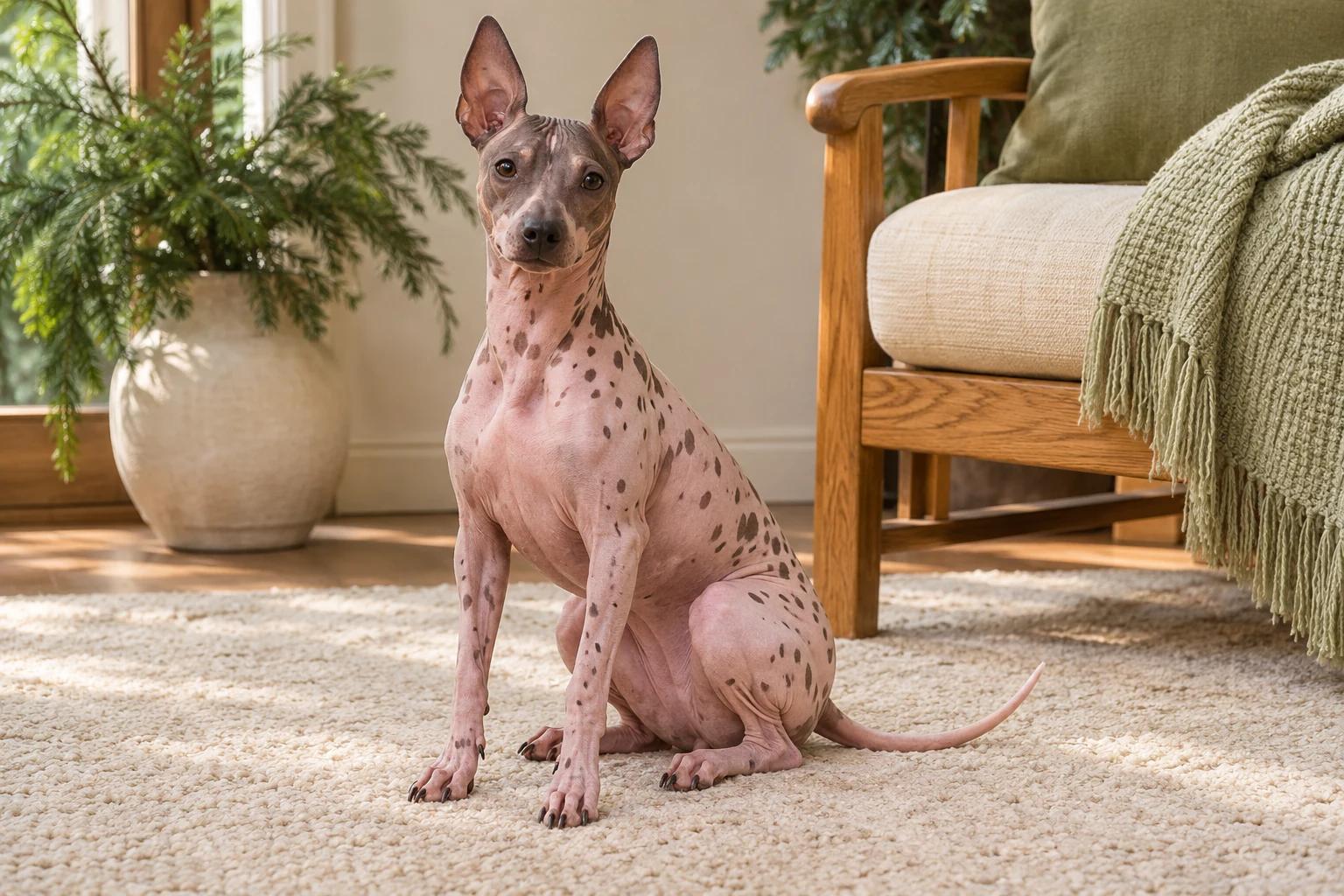
Explore the
American Hairless Terrier
Background, care, and everyday considerations.
View breed profile →American Hairless Terrier vs Rat Terrier is a comparison in which appearance can dominate the conversation too quickly. The difference in coat is important, but so are the individual dog's activity, handling experience, and the routines you can provide. Neither breed is simply a maintenance-free version of the other.
Start with the American Hairless Terrier profile and Rat Terrier profile. Both describe compact companions with an interest in learning, but the details of size and care should be considered separately. Breed tendencies guide questions; they do not answer every question about a particular dog.
American Hairless Terrier vs Rat Terrier: compare actual size
My Breed Atlas lists American Hairless Terriers at 12–16 inches and 12–28 pounds. Its Rat Terrier profile lists 10–25 pounds, with miniature dogs at 10–13 inches and standard dogs at 13–18 inches. There is substantial overlap, so neither breed name tells you which individual will be smaller.
The American Hairless Terrier standard gives a 12–16-inch ideal height. The Rat Terrier standard defines miniature as 10 through 13 inches and standard as over 13 through 18 inches, measured at the shoulder.
Ask which Rat Terrier variety is being discussed. Then use actual adult measurements where available, especially when choosing travel equipment. Comparing a miniature adult with a growing puppy of the other breed will not give you a meaningful adult-size conclusion.
Look beyond the number on the scale
A harness needs the dimensions specified by its manufacturer, not only a weight. A sleeping area needs usable room in your home, not simply a product labeled for a small dog. Measure the places and equipment that matter to your routine.
If you plan to travel, check the arrangement with your usual passengers and luggage. Small-to-medium dogs still need appropriate space and handling. A difference of a few pounds may be less important than the way a particular dog fits the actual setup.
The difference between American Hairless Terrier and Rat Terrier care
The most visible difference between American Hairless Terrier and Rat Terrier care concerns the skin and coat. Rat Terriers have a short coat. American Hairless Terriers include both hairless and coated varieties, so first establish which dog you are comparing.
A hairless dog's routine is not simply a Rat Terrier grooming routine minus the brush. Ask the veterinary team about appropriate bathing and outdoor protection, and learn how to carry out any recommended care comfortably. A coated dog needs a routine suited to its actual coat.
For either breed, ask what care the dog already accepts and what still needs teaching. Has equipment been introduced gradually? Does the caregiver use a particular setup? Familiarity with the routine can make a transition easier, while a new arrangement may need practice.
Compare the tasks, not the appearance
Make two short lists of actual responsibilities. For the hairless dog, note the care guidance and outdoor arrangements you will need to follow. For the coated dog, note the grooming and cleaning routine. Add ordinary handling and care tasks to both sides.
Do not reduce this to a claim that one dog requires no work. The work is different, and the better fit depends on which routine you are prepared to maintain. A striking appearance is only one part of the decision.
Activity and terrier interests
The American Hairless Terrier standard describes curiosity and retained hunting interests, while the Rat Terrier standard describes a farm and ratting background. These references provide context, not instructions to arrange hunting or a guarantee about the individual's behavior.
The site's American Hairless Terrier notes favor manageable outings and mental engagement rather than assuming a demanding run is required. Review the Rat Terrier's own profile and the individual dog's established routine instead of treating the two as interchangeable exercise plans.
Choose activities around what you can actually share: walking, short learning games, and suitable play. Ask about the settings in which the dog has experience, including ordinary streets, indoor classes, or travel. Similar-looking dogs may have very different histories with those environments.
Think through outdoor settings
A route suitable for one dog may need adjustment for another because of skin exposure, conditions, equipment, or experience. Consider where you can pause comfortably and whether the outing can be shortened or changed when needed.
If you are unsure about an activity or the dog's physical needs, talk with your veterinarian. There is no need to prove terrier identity through a demanding outing. A practical routine is more useful than a performance chosen from a photograph.
Rat Terrier vs American Hairless Terrier learning
For Rat Terrier vs American Hairless Terrier learning, compare what the individual already knows. Ask about household routines, walking, handling, and the kind of rewards that hold its interest. A broad intelligence label does not tell you whether a dog has practiced the skills your home requires.
If you are choosing a puppy, plan to teach those skills rather than expecting them to arrive with the breed. If you are choosing an adult, ask which cues and routines are familiar so you can avoid unnecessary confusion during the transition.
A suitable class can help you develop shared activities, but choose the instruction for the dog in front of you. Ask how the instructor adapts exercises and how you should practice between sessions. Learning should connect to daily life rather than exist only as a polished class demonstration.
American Hairless Terrier or Rat Terrier: compare the whole arrangement
An American Hairless Terrier or Rat Terrier decision should include the people who will help with care. Explain the different routines clearly and check whether they can provide them. An arrangement that works only when one person is always available may need more preparation.
Ask about the individual dog's experience with visitors and other animals without requesting blanket assurances. Any new household arrangement needs its own introductions and support. Neither a breed name nor a familiar coat pattern can promise compatibility.
Our article about coated American Hairless Terriers handles the genetics question separately. The dog match quiz can help organize your preferences before a meeting, but the final comparison should use the actual dog's dimensions, experience, and care needs.
FAQ
Is an American Hairless Terrier just a Rat Terrier without hair?
They are distinct breeds, and the American Hairless Terrier also includes a coated variety. The comparison involves more than appearance. Use each breed's profile and the individual dog's records, measurements, and care routine rather than treating the names as interchangeable.
Which breed is smaller?
Their typical sizes overlap. My Breed Atlas lists American Hairless Terriers at 12–28 pounds and Rat Terriers at 10–25 pounds. Rat Terriers also have miniature and standard height divisions. Compare individual adults when size is important to equipment or travel plans.
Does the hairless breed need less care?
It needs a different routine, not no routine. A hairless dog requires attention to skin care and outdoor arrangements, while a coated dog needs coat care. Ask your veterinary team about the individual and compare the practical tasks you are prepared to maintain.
Which breed is easier to train?
There is no dependable breed-wide winner for an individual household. Previous experience, clear teaching, and suitable motivation all matter. Ask what the dog has already practiced and choose useful daily skills rather than relying on an intelligence label to predict results.
Sources behind this article
Article source checked: November 14, 2026. Source checked 2026-11-14
Keep reading

Affenpinscher vs Brussels Griffon: Everyday Differences
Read article →