American Eskimo Dog vs Samoyed: More Than a White Coat
Compare American Eskimo Dogs and Samoyeds by size, coat care, activity, voice, and the practical routines behind their similar appearance.
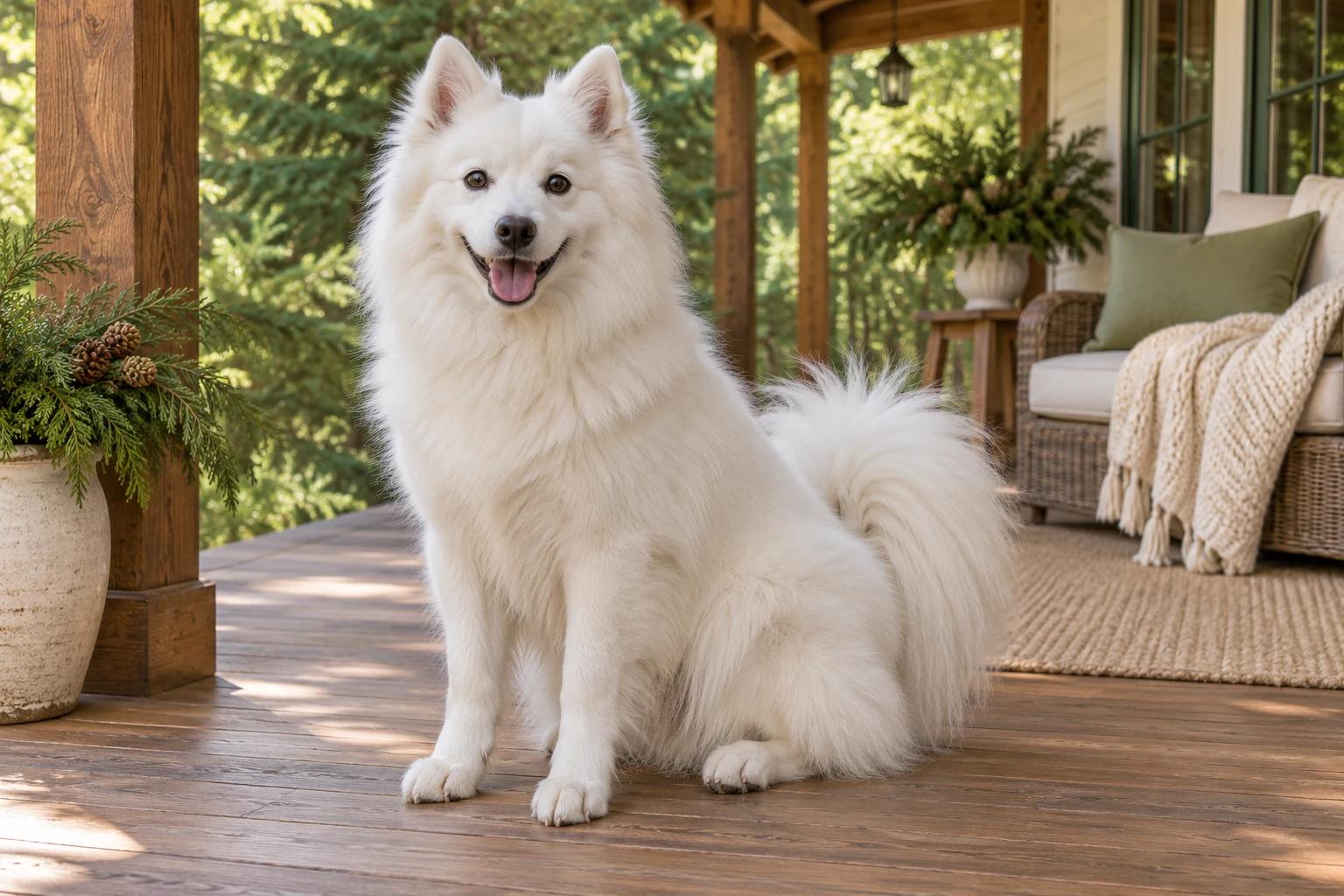
American Eskimo Dog vs Samoyed often begins with a visual question: are these similar-looking dogs simply different sizes of the same breed? They are not. Both have substantial double coats, but the American Eskimo Dog comes in three size varieties, while the Samoyed is a separate, generally larger breed with its own care profile.
Compare the American Eskimo Dog page with the Samoyed page, then think about the routine behind the photographs. Size, grooming time, voice, and shared activity are more useful decision points than choosing the fluffier-looking portrait.
American Eskimo Dog vs Samoyed: compare the correct size
An American Eskimo Dog comparison needs a variety name. The site's typical weights are 6–10 pounds for toy, 10–20 for miniature, and 25–35 for standard. A toy Eskie and a standard Eskie create very different size comparisons with a Samoyed.
The site's Samoyed figures are 45–65 pounds for males and 35–50 pounds for females. Shoulder heights are 21–23.5 inches for males and 19–21 inches for females. The AKC Samoyed overview likewise presents a substantial dog rather than a small companion hidden beneath a large coat.
The AKC American Eskimo Dog overview identifies the three varieties. Even the standard Eskie is typically the smaller option here. Use the site's variety-specific dimensions and an individual adult's measurements when planning your space rather than treating every Eskie as one size.
Consider handling as well as floor space
A bed may fit your room while the rest of the arrangement remains awkward. Think about vehicle access, the space for grooming, and who will provide care when you are unavailable. A smaller dog can simplify some equipment choices without removing the need for suitable handling and teaching.
Ask a caregiver for the actual adult's dimensions if available. For a puppy, separate current measurements from adult estimates. Comparing one breed's typical maximum with another dog's current puppy weight produces a dramatic number, not a useful decision.
Difference between American Eskimo and Samoyed coat care
The most visible difference between American Eskimo and Samoyed care is not simply white hair versus more white hair. Both have layered coats. AKC's breed comparison describes the Eskie's dense undercoat and longer straight outer hair, alongside the Samoyed's woolly undercoat and harsher outer coat.
The site's current guidance calls for regular Eskie brushing and more frequent Samoyed coat attention, including daily brushing in its newer care notes. Both profiles describe substantial loose hair. Choose with a realistic grooming plan rather than expecting one to be a low-work alternative because it is smaller.
Imagine the task in your own home. Where would the dog stand or rest while you work? Is there enough light to check the coat? Can you store tools and clean up easily? A practical grooming space makes a recurring commitment easier to maintain.
Arrange help before the coat becomes a project
Ask a groomer familiar with the relevant coat to explain what home care involves and what their service covers. If you will depend on professional appointments, learn the scheduling and transport arrangements before assuming they will fit conveniently around everything else.
Do not decide by a photograph of a freshly groomed dog alone. Ask what happened between appointments and which parts of the routine the owner found demanding. That is the everyday commitment behind the finished appearance.
Activity and learning belong on both sides
Both site profiles describe active dogs that benefit from engagement. The Samoyed's larger frame does not mean the Eskie is an inactive substitute, and an Eskie's smaller size does not mean its day can consist solely of brief household movement.
Think about the activities you would like to share: outings, short learning sessions, exploration, and quiet time together. Ask how the individual dog has responded to those experiences. A breed's reputation for intelligence is not evidence that the dog already knows your routines.
Choose manageable introductions to new activities. If you are interested in a class or sport, observe a session and ask what beginners do. There is no need to reproduce a demanding activity seen online to demonstrate that you chose the breed correctly.
For activity questions involving age, condition, or health, talk with your veterinarian. The goal is an appropriate routine for the individual, not a contest between breeds.
Company and voice: listen before deciding
The site's Eskie notes describe close company and alert barking. Its Samoyed profile also emphasizes family interaction and a relatively frequent voice. Neither should be chosen on the assumption that a friendly expression predicts silence or effortless time alone.
Ask about ordinary sound and company patterns. What happens when someone arrives? Where does the dog rest when people are working? What arrangements are currently used for departures? Concrete descriptions let you compare routines without turning tendencies into guarantees.
A quieter meeting does not prove a quieter life. You may be seeing a dog after exercise or in an unfamiliar setting. Likewise, one excited greeting does not describe every hour of the day. Seek context and repeated observations rather than a verdict from a single moment.
American Eskimo Dog or Samoyed: decide what you can provide
An American Eskimo Dog or Samoyed decision becomes clearer when you separate the appealing appearance from the practical commitment. Write down the space, grooming help, activity opportunities, and company you can reliably provide. Then compare those with the actual dogs you are considering.
For an Eskie, specify the variety before making equipment or travel plans. For a Samoyed, check that your arrangements accommodate the larger dimensions and coat-care work. For either, ask what is known about handling, introductions, and previous experience.
Avoid choosing by a blanket claim about children, other animals, or easy ownership. The relevant question is how the individual would enter your household and what support would be needed. If important details are unknown, keep them visible rather than filling them in from a breed stereotype.
Our American Eskimo Dog history article covers the breed's background separately. The dog match quiz can help organize preferences before a meeting. Use it as a starting point for questions, not a replacement for learning about the individual.
FAQ
Is an American Eskimo Dog a small Samoyed?
No. The American Eskimo Dog and Samoyed are distinct breeds. American Eskimo Dogs come in toy, miniature, and standard varieties, all generally smaller than a Samoyed. Their similar pale double coats do not make them varieties of the same breed.
In a Samoyed vs American Eskimo Dog comparison, which is bigger?
In a Samoyed vs American Eskimo Dog comparison, the Samoyed is generally bigger. My Breed Atlas lists standard Eskies at 25–35 pounds and Samoyeds at 35–65 pounds across females and males. Toy and miniature Eskies are smaller still.
Which breed sheds less?
Both breeds can leave substantial loose hair, including heavier shedding periods. Do not choose either expecting a low-shedding household. Compare the individual coat-care routine and the time you can provide, including any professional grooming support you plan to use.
Which breed is easier to live with?
There is no universal easier choice. Size variety, grooming commitment, activity, voice, and the individual dog's experience all matter. An Eskie may simplify some space requirements, but both breeds still need an appropriate routine, company, and ongoing learning.
Sources behind this article
Article source checked: November 14, 2026. Source checked 2026-11-14
Keep reading

Affenpinscher vs Brussels Griffon: Everyday Differences
Read article →