American Eskimo Dog Sizes: Toy, Miniature, and Standard
Compare toy, miniature, and standard American Eskimo Dog sizes, height boundaries, typical weights, and practical equipment planning.
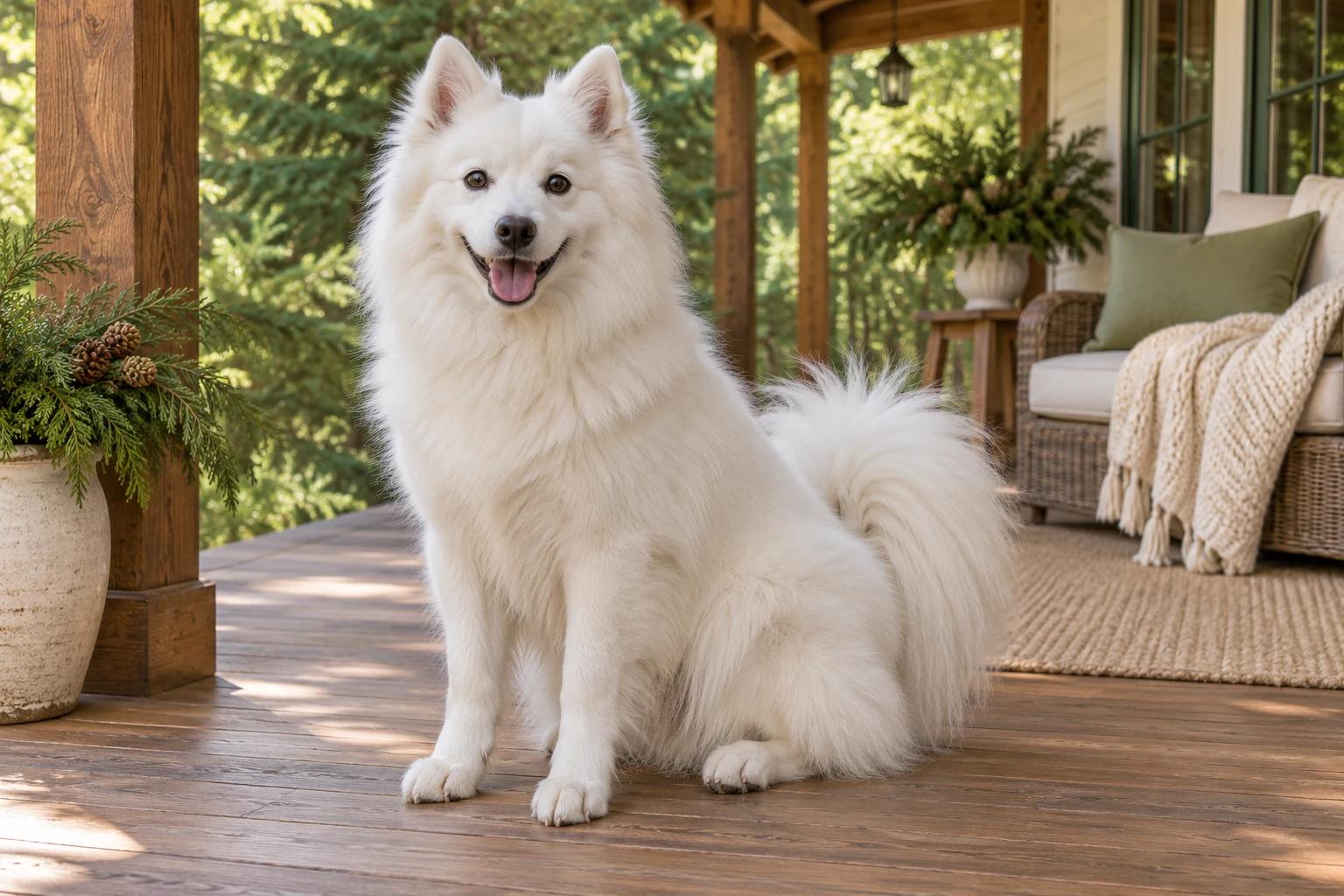
American Eskimo Dog sizes cover three varieties: toy, miniature, and standard. That makes the breed's overall range unusually broad for someone comparing photographs. Before deciding whether an Eskie fits your home or travel plans, find out which variety is being discussed and whether the measurements refer to an adult or a growing puppy.
The American Eskimo Dog profile lists typical weights from 6 to 35 pounds across the varieties. That combined figure is useful as an overview, but the individual size categories provide a much clearer starting point for planning.
American Eskimo Dog sizes are defined by shoulder height
The American Eskimo Dog Club of America standard defines the three divisions by height at the withers. Toy is 9 through 12 inches, miniature is over 12 through 15 inches, and standard is over 15 through 19 inches.
Those boundary words matter. A dog measuring exactly 12 inches falls within toy in that standard; exactly 15 inches falls within miniature. The rounded ranges often shown in summaries can appear to overlap, but the complete definitions distinguish the boundaries.
The AKC breed overview also identifies three sizes. These are varieties within the American Eskimo Dog breed, not a reason to assume three completely different personalities or care requirements.
American Eskimo Dog size chart
| Variety | Adult shoulder height | Typical weight on My Breed Atlas |
|---|---|---|
| Toy | 9–12 inches | 6–10 pounds |
| Miniature | Over 12–15 inches | 10–20 pounds |
| Standard | Over 15–19 inches | 25–35 pounds |
The height divisions and typical weight ranges serve different purposes. Height defines the variety in the cited standard. Weight helps with everyday planning but does not independently assign a dog to a variety.
How big do American Eskimo Dogs get?
“How big do American Eskimo Dogs get?” needs a more specific answer than “small” or “medium.” A toy and a standard can require noticeably different equipment, travel arrangements, and resting space even though both are American Eskimo Dogs.
When reading a listing, look for the variety, age, current measurements, and the basis of any adult estimate. A puppy's current weight is not an adult-size description. Ask for clarity if a heading says one thing while the measurements suggest something else.
If you are considering an adult, actual measurements reduce the guesswork. Ask when they were taken and which units were used. If you are considering a puppy, keep an estimate clearly labeled as an estimate instead of repeating it as a guaranteed final size.
Do not fill gaps with invented categories
The site's typical weight ranges are not a rule that every possible weight must belong neatly to one category. A number between listed ranges does not create a new variety. Use the height definition and the individual dog's information rather than inventing labels to make a chart look continuous.
If a dog's weight raises a care question, talk with your veterinarian. Do not try to move the dog into a preferred variety by changing its weight. The size label is not a feeding goal.
Compare toy, miniature, and standard Eskies in your home
A search for “toy miniature standard American Eskimo Dog” may begin with pictures, but a practical comparison should use the spaces and equipment you will actually provide. Sketch the sleeping area and the place where the dog will travel. Measure them rather than relying on whether a product photograph looks roomy.
For a carrier, check the usable interior dimensions and the instructions for the intended purpose. A product's outer width may include material that does not provide room inside. If transport rules apply, verify them separately rather than assuming a variety name settles eligibility.
For a bed, mark the footprint on the floor. Check whether it blocks a door or a frequently used passage. Even the smaller varieties need a resting place that is not continually disturbed by people moving through the room.
Choose equipment from the dog, not the label
Harness size names are not consistent between manufacturers. Measure the areas specified for the particular product and compare them with its adjustment range. A “small” harness in one range may not correspond to a “small” in another.
The same applies to other equipment. Keep a note of useful measurements, the date, and the product that currently fits. When replacing something, this record is more reliable than trying to remember whether you bought the miniature-dog version or the medium size.
The coat can change your impression of size
An Eskie's full outline can make visual comparisons misleading. A photograph may show the coat at a different angle, a different stage of grooming, or beside objects that give little sense of scale. Use shoulder height and actual dimensions when size matters.
If comparing two photographs, look for information rather than trying to measure from the image. Ask for an adult's recorded measurements or arrange to meet the dog. A picture can show appearance, but it is a poor substitute for the dimensions needed to buy equipment.
When taking your own records, keep the method consistent. Measure height at the shoulder with the dog standing naturally on a level surface, not to the ears or the top of a fluffy head. Ask for help if the dog is not comfortable with the process.
Size does not replace the rest of the decision
All three varieties still need the care, activity, and learning appropriate to an American Eskimo Dog and the individual animal. Choosing toy does not automatically remove grooming work or create a quiet, inactive companion. Choosing standard does not tell you everything about temperament.
Think about what you enjoy doing with a dog, how you will provide company, and whether you want a regular double-coat care routine. Those questions belong beside the size chart rather than after it.
Our breed history article explains a different part of the Eskie's story. The dog match quiz can help organize your preferences, while the variety and individual measurements help you make the practical arrangements.
FAQ
What are the three American Eskimo Dog sizes?
The three American Eskimo Dog sizes are toy, miniature, and standard. The breed standard defines them by shoulder height: 9–12 inches, over 12–15 inches, and over 15–19 inches respectively. Typical weight ranges help with planning but do not define the divisions.
How much does a standard American Eskimo Dog weigh?
My Breed Atlas lists a typical standard American Eskimo Dog weight of 25–35 pounds. Use the individual adult's measurements for equipment and transport. For questions about whether a particular weight is appropriate for your dog, talk with your veterinarian.
Is a 12-inch American Eskimo Dog toy or miniature?
Under the cited breed standard, a dog exactly 12 inches at the withers is in the toy division. Miniature begins above 12 inches and continues through 15 inches. Height is measured at the shoulder, not the head or ears.
Does the smallest Eskie need less grooming?
A smaller body does not remove the double-coat care requirement. All varieties need a routine suited to their coat and comfort with handling. Ask a groomer to demonstrate the tools and technique for the individual dog rather than choosing care solely by size.
Sources behind this article
Article source checked: November 14, 2026. Source checked 2026-11-14
Keep reading

Airedale Terrier Temperament: What Everyday Life Can Feel Like
Read article →