Yorkshire Terrier temperament
Understand Yorkshire Terrier temperament through companionship, learning, body language and practical responses to a vocal small dog.
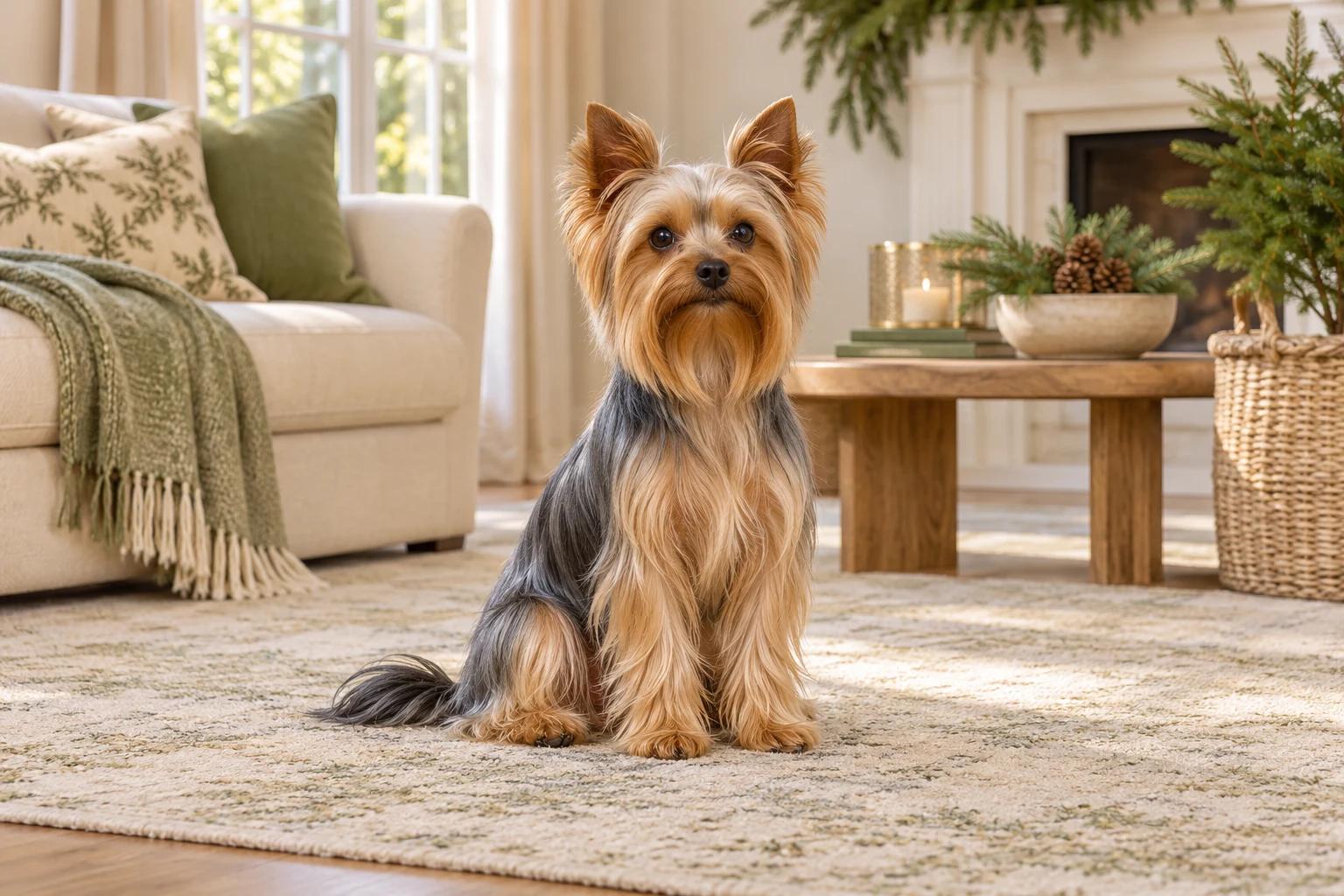
Yorkshire Terrier temperament combines an appealing companion role with a lively presence in everyday life. The current Yorkshire Terrier profile describes affection, sprightliness and an interest in family interaction. Those tendencies help explain the breed's appeal, but they are not a complete description of the individual who will share your home.
Yorkshire Terrier temperament: companionship is an active relationship
The AKC's Yorkshire Terrier ownership account describes an affectionate dog that enjoys its family. It also presents a feisty character rather than a decorative companion whose only role is to look attractive. The combination matters: warmth toward people and a definite personality are not opposites.
For an owner, companionship can include participation in ordinary activities rather than only being held or sitting on a lap. A Yorkie may be interested in what its person is doing, and shared time can have different forms. The useful question is what kind of relationship this particular dog seeks and enjoys.
Avoid turning affection into a requirement for constant physical contact. Being close, engaging in a game and choosing to rest nearby are different ways of sharing space. A dog does not need to accept every proposed interaction to be affectionate. Look at the broader pattern of comfortable engagement rather than using one greeting or one quiet moment as the verdict on whether an individual fits the breed description.
Work with independence through understandable teaching
PDSA's breed guidance discusses a Yorkshire Terrier's independent streak and emphasizes patience and reward-based training. That is more useful than treating “stubborn” as a fixed explanation for every unsuccessful lesson. The description points toward how to teach, not a reason to abandon teaching.
A small companion still benefits from learning what works in everyday situations. Keep the desired action clear and make successful cooperation worthwhile. If an exercise is not progressing, reconsider the difficulty and your communication instead of escalating into a contest with the dog.
For example, an owner who expects a finished skill immediately may interpret ordinary learning as defiance. The dog may instead need an easier version of the task and more experience with the reward arrangement. Patience does not mean leaving everything undefined; it means giving the learner a fair opportunity to understand. This approach makes Yorkshire Terrier personality relevant to the relationship without turning an appealing terrier label into permission for frustration, harshness or inconsistent expectations from the person.
Read the dog, not only the breed adjective
The RSPCA's body-language guide recommends looking at the whole dog. Comfortable behavior can include a relaxed body, soft expression and naturally held ears. A play bow, with the front lowered and the rear raised, can invite play. These details are more informative together than a single isolated movement.
For a Yorkshire Terrier meeting someone, watch whether its body remains loose and whether it chooses to approach. Turning the head away, lowering the body or avoiding contact can indicate that the dog is not comfortable with what is happening. Allow space rather than continuing an interaction because the breed is described as sociable.
The same individual can feel differently in different circumstances. A familiar person sitting quietly and an unfamiliar person reaching down are not equivalent experiences. Read the present interaction rather than assuming yesterday's enthusiastic greeting provides permission for today's handling. If you are uncertain about a dog's behavior, seek qualified help rather than trying to prove confidence by making the encounter more intense.
A vocal dog needs more than the instruction to be quiet
Dogs Trust's barking guidance treats barking as communication and recommends identifying what brings it about. A response to people passing a window is not necessarily the same problem as noise during an anticipated game. The circumstances help determine what to change.
For window barking, reducing the view with curtains or frosted film can prevent repeated rehearsal. Furniture placement also matters if it gives the dog an easy lookout. Reward calm, quiet behavior and arrange a suitable alternative activity before a predictable trigger, rather than waiting for the dog to become fully occupied with barking.
Do not shout at the dog or force it toward something it fears. Dogs Trust recommends expert support for fear-related barking. For a Yorkie household, the practical aim is to understand and manage the particular situation, not to eliminate all communication. A small dog's voice can still affect shared walls and close neighbors, so this deserves real attention rather than being dismissed as a charming part of the breed's personality.
Yorkshire Terrier characteristics extend beyond appearance
The current adult size reference is 4–7 pounds for both sexes and 7–8 inches in height. Those dimensions explain why the breed is physically small; they do not describe the amount of companionship, teaching or care involved. A dog can occupy little floor space while remaining a significant participant in daily life.
The silky coat is another conspicuous characteristic. The current profile calls for daily brushing and describes light loose hair. Appearance therefore comes with hands-on care rather than simply being a visual preference. Someone drawn to the breed's look should also want the ongoing relationship involved in caring for the individual.
Mental engagement belongs in that picture too. The profile includes training, games and purposeful challenges. Yorkshire Terrier behavior is easier to understand when you consider the opportunities available to the dog, not only the name attached to it. The breed description does not replace knowledge of its actual experience with people, places and ordinary routines.
When considering an adult, learn about the life it already knows. A dog accustomed to one person's company, a particular home and familiar outings is not a blank example of a breed. Its history matters alongside the general tendencies. That does not require predicting everything about the future; it means taking the actual companion seriously.
The dog quiz can help you consider the overall match. Our separate Yorkshire Terrier dental-care guide covers a practical care routine, not a personality test.
FAQ
What does the current profile say about Yorkshire Terrier personality?
It describes an affectionate, sprightly dog with a strong interest in family interaction. Use that as a starting point, then learn how the individual actually spends time with familiar people.
Does a small adult weight mean a small ownership commitment?
No. The current 4–7-pound range for both sexes describes body size. Daily coat care, companionship and mental engagement remain separate commitments that cannot be measured in pounds.
Can the breed name establish compatibility with another dog?
No. The current profile explicitly treats other-dog compatibility as individual. Previous experience and the particular animals involved matter; a general breed description cannot establish the outcome for a pair.
Sources behind this article
- AKC Yorkshire Terrier ownership ↗
- PDSA Yorkshire Terrier ↗
- RSPCA understanding dog body language ↗
- Dogs Trust understanding barking ↗
Article source checked: November 16, 2026. Source checked 2026-11-16
Keep reading

Airedale Terrier Temperament: What Everyday Life Can Feel Like
Read article →