Yorkshire Terrier exercise needs
Explore Yorkshire Terrier exercise needs with sniffing walks, simple searches and gentle games suited to the individual small companion.
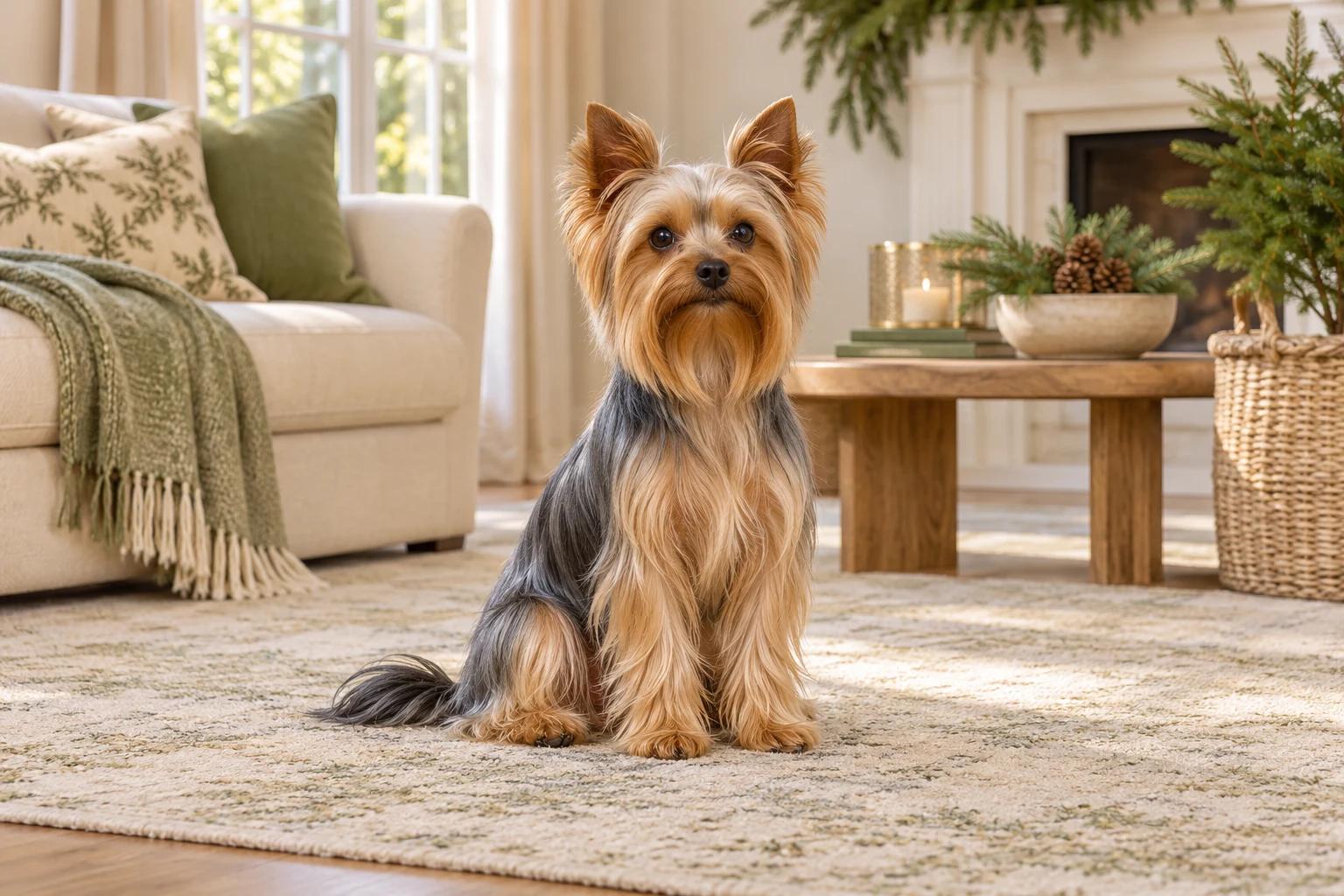
Yorkshire Terrier exercise needs include opportunities to move, explore and learn with a person. The current Yorkshire Terrier profile combines walks, play and short learning sessions rather than presenting physical exertion as the whole ownership commitment. A useful routine gives this small companion something interesting to do without turning every outing into a distance challenge.
Yorkshire Terrier exercise needs: leave room for curiosity
The Canadian Kennel Club's breed account describes the Yorkshire Terrier as inquisitive and playful. That is a useful starting point for choosing activities: a small dog can be interested in the world rather than content simply to be transported through it.
Look for what engages your own Yorkie. One may investigate a new object in the room, while another brings a toy into an interaction. These are different openings for shared activity. The common idea is participation, not a requirement to reproduce a particular kind of game.
Curiosity also changes what counts as an interesting outing. A route is not valuable only because it is long or unfamiliar to the person. There may be plenty for the dog to investigate within a modest area. Allow its actual interests to influence the experience rather than treating every pause as an interruption. A playful character is an invitation to find enjoyable activities together, not evidence that every Yorkie wants the same toy or pace.
Let a walk include investigation
VCA's play-and-exercise guidance distinguishes walking for exploration from exercising only to cover ground. It recommends opportunities to sniff and explore at the dog's pace. Preferences also matter: dogs differ in the kinds of play and interaction they enjoy.
For a Yorkshire Terrier daily walk, this might mean taking a quiet route where you can pause instead of maintaining a brisk human stride throughout. A dog investigating a small patch of verge is still participating in the outing. The experience need not resemble a continuous march to be worthwhile.
Keep the dog under appropriate lead control outside secure areas. Choose the route and activity for the individual rather than borrowing another dog's routine. A puppy, an older companion and an experienced adult may need different arrangements. Ask your veterinarian about an appropriate exercise plan when age or individual needs make that uncertain. Variety should come from suitable experiences, not from continually making the walk harder or assuming that a longer route is always an improvement.
Teach an easy search before hiding something difficult
The AKC's introductory scent-search guide begins with a food reward, toy or ball the dog already wants. Let the dog see the item close by and retrieve or find it. Add a search cue as the simple activity becomes familiar, then gradually increase the distance.
For a Yorkie, a quiet room offers a manageable first search area. Start with the item plainly visible. Only after the dog understands the game should you place it partly behind something, such as a chair, and eventually out of sight. Do not begin by hiding it in a difficult location elsewhere in the house.
The aim is successful searching rather than proving how clever the dog is. If the challenge becomes confusing, make the next hiding place easier. Choose an accessible location instead of requiring the dog to climb or squeeze into a gap. This is a practical way to offer a thinking activity alongside walking, with difficulty based on the dog's experience rather than the handler's enthusiasm for elaborate hiding places.
Make tug a cooperative game, not a strength test
The AKC's tug guidance emphasizes short, controlled play, an invitation to begin and a learned release. Choose a toy long enough to keep hands away from the dog's grip. Keep the dog on the ground rather than lifting it, twisting it or jerking the toy around.
With a small Yorkshire Terrier, the person should not overpower the game. Let the dog do the active pulling while you provide appropriate, gentle resistance. Build pauses and exchanges into the interaction. Letting the dog keep the toy sometimes can give it the opportunity to bring it back and request another round.
Do not chase the dog to retrieve a toy it has carried away. Shared play works better when returning to the person makes the game continue. Tug is optional: some dogs prefer another kind of reward or activity. If your Yorkie does not enjoy it, choose something else rather than trying to manufacture enthusiasm. Seek individual professional advice if you are unsure whether the game suits your dog.
Small scale changes the physical setting
The current adult reference is 4–7 pounds for both female and male Yorkshire Terriers, with a height of 7–8 inches. Those measurements make the actual activity space worth considering. An ordinary room can contain substantial furniture obstacles relative to this dog; a human-sized stride or step is not a useful measure of canine effort.
Think at the dog's level when choosing where an activity happens. A clear area of floor offers a different experience from a route between chair legs and storage boxes. Outside, access to a suitable walking area matters more than whether the address is described as urban or rural. A small body does not make outdoor access unnecessary.
Yorkshire Terrier activity level should also be considered alongside mental engagement. The current profile specifically includes training games and purposeful challenges. Someone who enjoys teaching and interacting may find that aspect of ownership especially appealing. The everyday commitment is not exhausted by opening a door or providing a collection of toys.
Coat care remains a separate part of that commitment: the profile describes daily brushing of a silky coat. Exercise time does not replace care time. Our Yorkshire Terrier dental-care article discusses another distinct routine, while the dog quiz helps you consider the broader fit.
FAQ
How much exercise does a Yorkshire Terrier need?
Combine walks, play and learning around the individual dog. Ask your veterinarian about suitable exercise rather than adopting a universal walking target.
Does the breed's small size make an apartment sufficient exercise space?
No. The current profile includes walks and shared activity. A 4–7-pound adult still needs opportunities beyond simply existing in a small home; the address does not describe the actual daily routine.
Is physical activity the only everyday commitment?
No. The profile also emphasizes mental engagement, companionship and daily coat care. Consider all of these together rather than selecting the breed solely because its adult dimensions are small.
Sources behind this article
- Canadian Kennel Club Yorkshire Terrier ↗
- VCA play and exercise ↗
- AKC introductory scent searches ↗
- AKC cooperative tug games ↗
Article source checked: November 16, 2026. Source checked 2026-11-16
Keep reading

Afghan Hound Exercise Needs: Build a Workable Active Day
Read article →