Yorkipoo grooming
Make Yorkipoo grooming practical with coat-specific brushing, gentle handling, sensible trims and a routine suited to the individual dog.
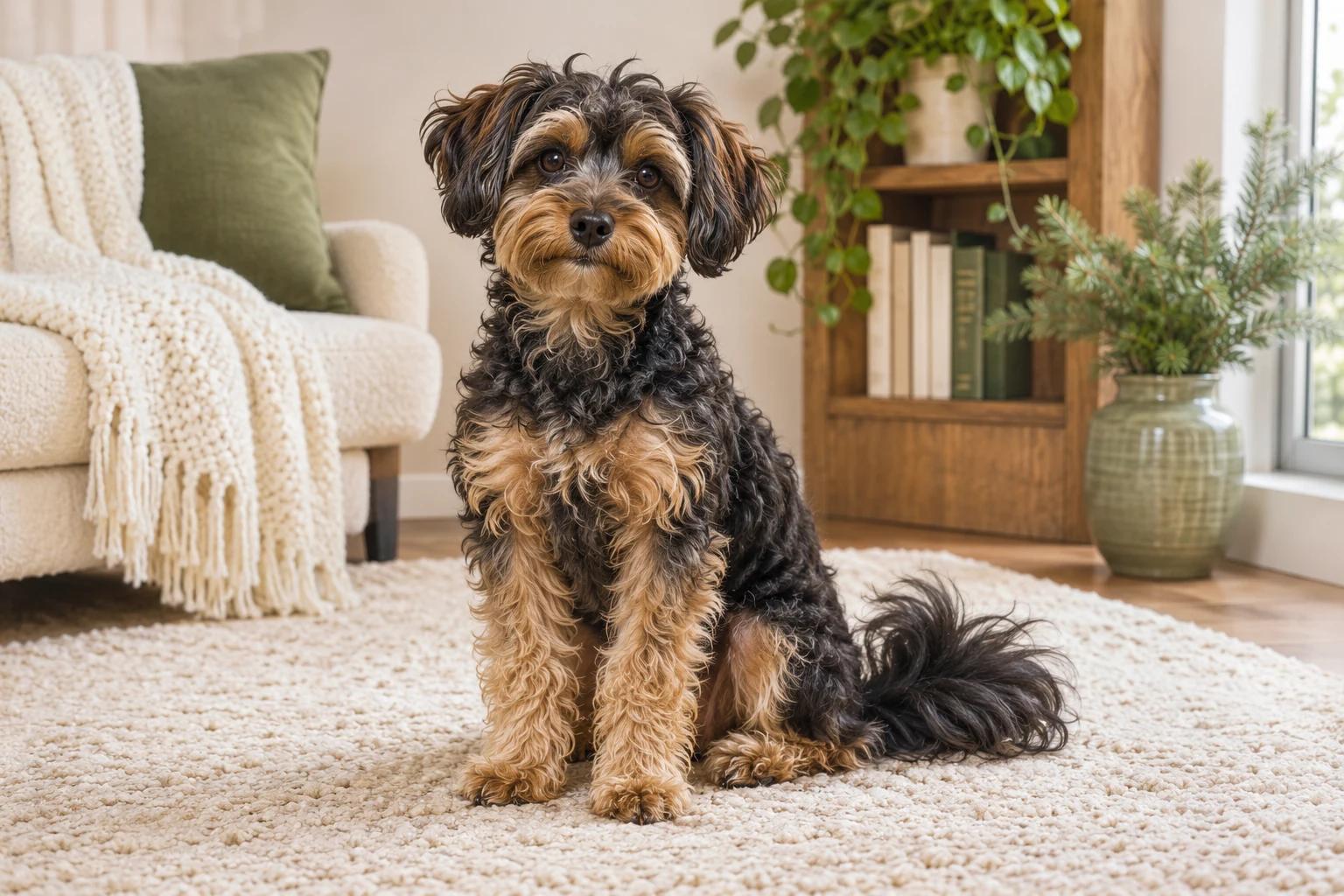
Yorkipoo grooming starts with the coat actually growing on your dog. The current Yorkipoo profile describes wavy or curly hair and a routine that includes daily brushing and regular professional grooming. This Yorkshire Terrier–Poodle cross does not have one universal finish, so a photograph of another Yorkipoo cannot tell you exactly how your own dog's hair will behave.
Yorkipoo grooming: work gently through the ends first
The Yorkshire Terrier Club of America's grooming guidance recommends dealing gently with tangles rather than pulling them out. Its method begins at the ends of the hair and works gradually toward the body, using fingers before a comb where needed. It also emphasizes removing tangles before bathing and rinsing thoroughly afterward.
For a Yorkipoo with longer, flowing sections, this is useful parent-coat guidance. A comb that stops at a knot is not an invitation to pull harder. Hold the task at a manageable scale and avoid turning one resistant patch into repeated tugging on the dog.
The club also explains that Yorkshire Terriers themselves can have different textures, including softer or woollier coats that are harder to maintain long. That variation makes it especially unhelpful to assume that all Yorkshire Terrier crosses will have identical hair. Choose the maintenance method and length around what is present, not around the most glamorous example of a parent breed. Ask a professional to handle a tangle you cannot work through comfortably.
Reach the deeper hair without scraping the skin
The AKC's Poodle grooming article recommends thorough brushing rather than treating only the surface. Its grooming expert specifically cautions against scratching or scraping the skin. A slicker brush can reach through hair, but the tool still needs a gentle hand.
For a curlier Yorkipoo, the practical distinction is between smoothing the visible outline and actually maintaining the coat underneath. A neat surface is not evidence that every layer has been worked through. Have a groomer show you the depth and pressure appropriate for your dog's hair rather than using increasingly forceful strokes when the brush seems ineffective.
The article distinguishes pet presentation from the special trims used in Poodle conformation showing. Your Yorkipoo does not need a show Poodle's outline to receive good care. A useful pet style is one you can maintain between appointments. Decide the length with the groomer while keeping the home routine realistic; choosing elaborate hair without doing the corresponding care does not make the result more appropriate for the dog.
Expect a youngster's coat to need fresh assessment
In the AKC's Yorkshire Terrier grooming guide, groomer Daron Newcomb describes the transition from a fluffy puppy covering to an adult coat. He highlights extra susceptibility to matting during that parent breed's adolescent transition and recommends consistent brushing.
This does not establish an identical timetable or final texture for a Yorkipoo. It does give owners a good reason not to assume that a routine chosen for a very young puppy will remain unchanged forever. As the covering develops, ask your groomer whether the tools and chosen length still suit it.
The article's practical kit includes a pin brush, a metal-toothed comb and a slicker, with products chosen for the relevant coat. Do not buy every tool simply because it appears on a parent-breed list. Ask which one performs which job on your dog. Understanding the purpose of the brush and the comb is more useful than collecting equipment that you cannot use comfortably. Keep professional help available for clipping and more complicated work rather than improvising near sensitive areas.
Teach the dog that the brush is predictable
Woodgreen's grooming advice begins with confidence, not a complete session. Show the brush, reward comfortable investigation, then build from a single stroke toward a short period of brushing. Stop while the dog remains comfortable rather than continuing until it struggles.
Woodgreen also describes working through long or curly hair in small sections, lifting hair with one hand and brushing the section below with the other. It identifies behind the ears, under the collar, the tummy and thighs as places that deserve attention because tangles develop easily there.
For a small Yorkipoo, the benefit of short practice is that the dog can learn each part without being held through a lengthy unfamiliar procedure. Separate learning to accept the brush from completing a large grooming job. If existing coat work cannot wait for that learning, ask a professional how to manage the necessary care. Comfortable participation is the goal; being physically small does not make prolonged restraint a substitute for introducing the equipment and handling thoughtfully.
Make daily care fit the Yorkipoo in front of you
The current profile's Yorkipoo coat care reference combines daily brushing with professional appointments around every four to six weeks. Treat that as a starting routine to discuss with your groomer, not as permission to ignore the individual coat until a date arrives. A wavy adult kept short and a curlier adult wearing longer hair are different practical grooming projects even though both are called Yorkipoos.
Yorkipoo shedding is described as relatively light in the current reference. That is not the same question as how much brushing the dog needs, and it is not a promise about allergies. The profile still describes a substantial grooming commitment. Little visible loose hair does not remove that commitment.
When deciding how to groom a Yorkipoo, keep the care objective concrete: maintain the actual texture and chosen length, using a routine the dog can participate in. Small size does not automatically make the work negligible. The current adult weight reference spans 4–15 pounds for both sexes, and the height range is 7–15 inches; individual dogs differ in physical scale as well as coat.
The dog quiz can help you decide whether regular hands-on coat care suits your preferences. Our Yorkipoo puppy dental-development article covers a separate topic to discuss with your veterinarian rather than treating a grooming appointment as a substitute for veterinary care.
FAQ
What coat types does the Yorkipoo profile describe?
It describes wavy and curly hair. Those labels provide context, but the actual dog's texture and chosen length should guide the practical grooming routine.
Does light shedding mean little coat care?
No. The current Yorkipoo reference describes relatively light shedding alongside daily brushing and regular professional grooming. Loose hair and maintenance workload are different questions.
Does every Yorkipoo need the same haircut?
No. This is a cross with variable appearance, not one universal finished outline. Choose a length that suits the individual coat and the care you can provide between appointments.
Sources behind this article
- Yorkshire Terrier Club of America grooming guidance ↗
- AKC Standard Poodle grooming ↗
- AKC Yorkshire Terrier grooming ↗
- Woodgreen dog grooming guidance ↗
Article source checked: November 16, 2026. Source checked 2026-11-16
Keep reading

Affenpinscher Grooming: A Practical Coat-Care Routine
Read article →