Yakutian Laika vs Siberian Husky
Compare Yakutian Laika vs Siberian Husky size, working build, learning and outdoor interests before choosing between these active companions.
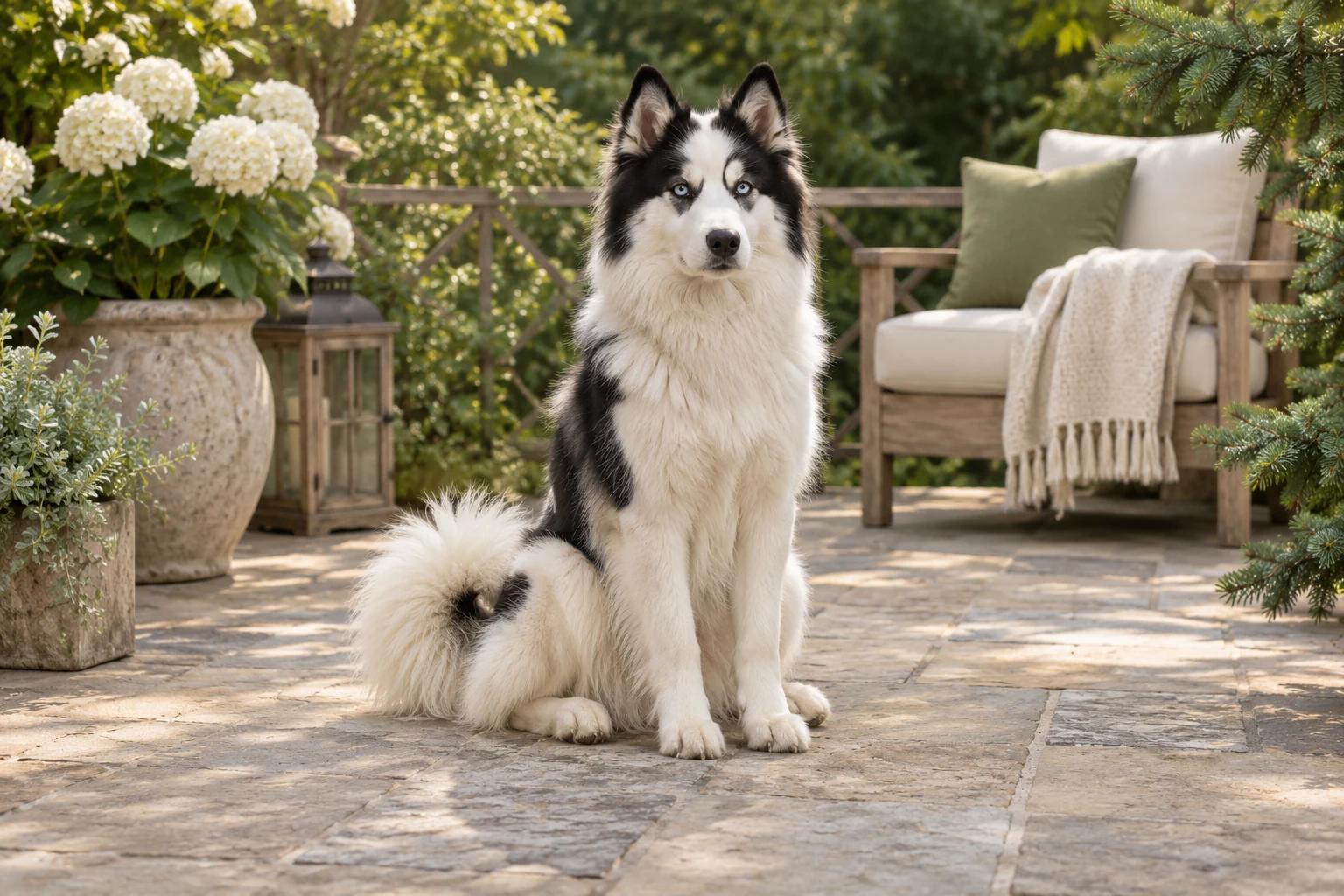
Yakutian Laika vs Siberian Husky is a comparison between two active companions, not a choice between a working-looking dog and an easy substitute. The current Yakutian Laika profile and Siberian Husky profile both describe substantial daily activity and mental engagement. Their adult measurements overlap, so appearance alone cannot tell you which individual will suit your household.
Yakutian Laika vs Siberian Husky: understand the Husky's outline
The AKC Siberian Husky standard describes a medium-sized dog built to carry a light load over considerable distance at a moderate speed. The intended outline combines power, speed and endurance rather than emphasizing maximum bulk. This is not a miniature heavyweight freight dog or an extremely light sprint specialist.
Its chest is deep without excessive breadth, its back is level and its bone is moderate. The skull and muzzle are equal in length, with upright triangular ears. The tail may rise in a sickle curve when the dog is attentive, but should not be tightly curled against the back.
Those details make a side view more informative than a close-up of the face. Look for the relationship between the legs, trunk and movement rather than deciding from fur or markings. The standard's emphasis on economical movement also explains why an impressive-looking dog need not be the biggest one. A Siberian's characteristic impression is balanced athleticism, not a competition to produce the broadest chest or heaviest frame.
A Husky's outdoor interests need real boundaries
The Siberian Husky Club of America's introduction explicitly warns about running and predatory interests. Small animals can attract serious attention, and the club advises secure confinement or appropriate control rather than trusting a dog's pleasant manner as protection against roaming.
That matters when comparing prospective companions. Affection toward a person and interest in chasing an animal describe different situations. A warm greeting does not establish what happens when a rabbit moves across the path. Nor does a dog returning once demonstrate that every future outdoor distraction will be equally manageable.
For a Husky household, picture the actual boundaries of an outing: leaving the property, walking beside traffic, passing wildlife and entering an enclosed exercise area. The club's warning is about preventing opportunities to disappear, not withholding enjoyable activity. A secure area gives a different kind of freedom from an open field beside an unfenced road. Treat those settings differently rather than using the word “exercise” as though every place offered the same protection or demanded the same level of control.
The Yakutian combines learning ability with independent interests
The Canadian Kennel Club's Yakutian Laika account describes quick learning alongside an independent spirit. It also identifies retained prey drive and calls for gradual, supervised introductions around smaller animals. These points should not be collapsed into a single promise that an intelligent dog will be uncomplicated to live with.
A Yakutian may understand a familiar activity while still finding something else interesting. Learning a task and choosing it in a distracting setting are different questions. When meeting an adult, watch something the dog already knows, then ask where that behavior has been practised. A response in a familiar room does not provide a complete account of outdoor experience.
Likewise, investigate the actual history of any small-animal household rather than treating previous exposure as a universal guarantee. Which animals were present, how were encounters managed, and what arrangements remain necessary? The useful comparison is between the individual dogs and the environments you can provide, not between broad labels such as clever, friendly or easy.
Husky lessons should be engaging rather than confrontational
The AKC's Siberian Husky ownership guide recommends fun, patient, consistent training using positive reinforcement. It also emphasizes the breed's interest in company. Teaching is therefore part of sharing life with a Husky, not a separate contest that the owner must win before companionship can begin.
A useful lesson gives the dog an understandable action and a worthwhile outcome. When considering an adult, ask to see a familiar exercise taught by its current person. Notice whether the handler can explain what the dog has learned rather than relying on a label about stubbornness.
The guide's emphasis on enjoyable teaching is particularly relevant to a household choosing its first northern breed. Consider whether you actually like working with a dog, including the ordinary repetitions through which a new behavior becomes familiar. Wanting an attractive walking companion is not quite the same as enjoying the process of educating one. Shared activity should be something you want to participate in, rather than a duty you hope another person will permanently take over.
Compare actual adult measurements and daily activity
The current Yakutian profile lists an adult reference of 40–55 pounds and 21–23 inches. It does not divide that range by sex. The Siberian profile gives females as 35–50 pounds and 20–22 inches, and males as 45–60 pounds and 21–23.5 inches. These are overlapping ranges: neither breed name guarantees that every individual is larger than every member of the other.
For a Siberian Husky vs Yakutian Laika decision, compare the adult you are actually considering. A 40-pound individual and a 55-pound individual belong to the same Yakutian reference range but represent different physical loads. The sex-specific Husky figures are equally important; combining them into one average would hide useful information.
Both current profiles describe an active lifestyle. Choosing a Yakutian Laika or Siberian Husky should therefore begin with whether substantial shared activity belongs in your real week, not which photograph appears calmer. The difference between Yakutian Laika and Siberian Husky ownership cannot be reduced to a size label. Use the dog quiz for the broader fit question, and explore the Yakutian's appearance separately in our eye-color article.
FAQ
Is the Yakutian Laika always bigger than the Siberian Husky?
No. The current adult weight and height ranges overlap. Compare the individual dogs and retain the Siberian profile's female and male distinctions rather than assuming a universal size hierarchy.
What adult size does the Yakutian profile list?
It lists 40–55 pounds and 21–23 inches without separate male and female ranges. Those figures describe the adult reference, not a puppy's present measurements or a promise about one future adult.
Is either breed a low-activity alternative to the other?
Neither current profile presents that choice. Both describe substantial activity and mental engagement. Consider whether that kind of daily life appeals to you before using appearance or adult weight to choose between them.
Sources behind this article
- AKC Siberian Husky standard ↗
- Siberian Husky Club of America breed introduction ↗
- CKC Yakutian Laika ↗
- AKC Siberian Husky ownership ↗
Article source checked: November 16, 2026. Source checked 2026-11-16
Keep reading

Affenpinscher vs Brussels Griffon: Everyday Differences
Read article →