Yakutian Laika size
Understand Yakutian Laika size through current adult weight and height, body proportions, coat development and the difference between growth and bulk.
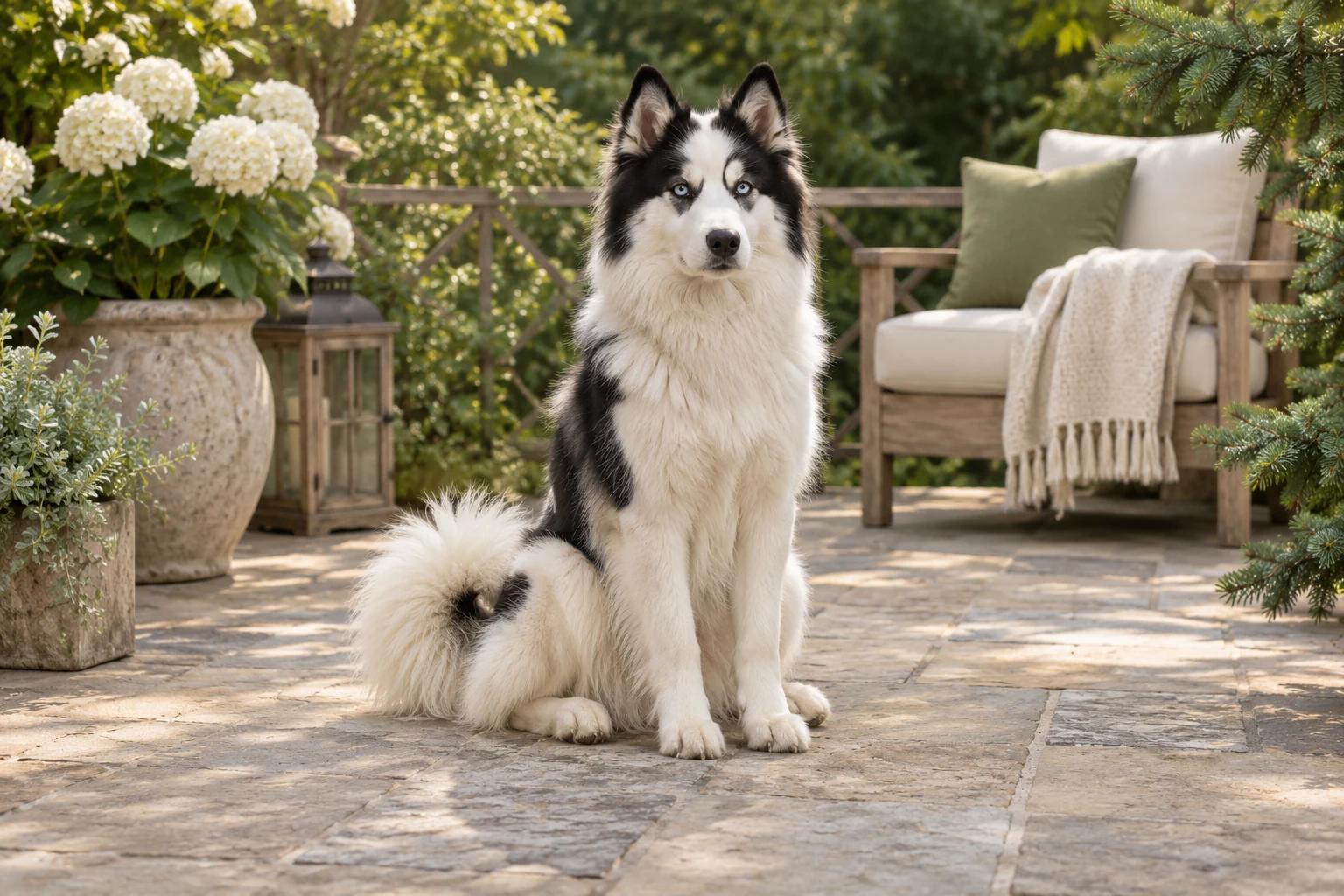
Yakutian Laika size is easier to understand when weight, height and appearance remain separate. The current Yakutian Laika profile lists an adult reference of 40–55 pounds and 21–23 inches. It gives an overall range rather than separate male and female figures. Start with those measurements, then look at the dog's structure and stage of development rather than judging scale from a fluffy photograph.
Yakutian Laika size includes a slightly elongated working body
The FCI breed standard describes a strong, compact, muscular dog with moderately long legs. Compact does not mean square: body length exceeds height by approximately 10–15 percent. That relationship helps explain the breed's outline more accurately than a weight label alone.
The back is firm and broad, the loin short and wide, and the chest broad, moderately deep and long. The feet have arched, closely fitting toes and very hard pads; the hind feet are a little larger than the front ones. These are distinct structural features, not simply different ways of saying that the dog is heavy.
When viewing a Yakutian from the side, look at the trunk and legs together. A long coat can distract the eye, but body proportion is about the underlying animal. The standard also distinguishes a stronger male appearance from the female outline. That does not supply an individual weight prediction. It describes breed type, while the dog's actual measurements tell you how much animal is standing in front of you.
Coat development can change the impression of bulk
Judge Stanislav Gorodilov's illustrated commentary adds a useful observation beyond the standard: excessive coat can make a Yakutian look heavier than it is. He also describes coat development as relatively late, with a softer juvenile covering persisting into young adulthood and the mature coat becoming established later.
This is a reason to avoid treating a puppy's silhouette as a miniature version of its final appearance. A youngster can change visibly without each change representing the same amount of skeletal growth or additional bodyweight. The commentary notes that females may develop their mature covering earlier, but that observation is not an exact timetable for every dog.
For an owner comparing photographs, separate two questions: has the animal physically grown, and has the covering changed the outline? A fuller-looking youngster is not automatically much taller. Similarly, a photograph of a mature dog should not become a visual target that a juvenile must match immediately. Assessing actual dimensions gives a firmer basis for comparison than trying to infer weight from how much space the coat occupies in an image.
Physical size belongs alongside an active way of life
In the Canadian Kennel Club's interview feature, experienced Yakutian owners describe substantial stamina and a need for mental engagement as well as outdoor activity. Their examples include long walks, hiking, skijoring and sledding, with participation in activities such as rally and agility also discussed.
Those examples explain why the breed's medium physical scale should not be mistaken for a modest commitment. A dog can fit comfortably beside you indoors and still need a much more involved daily life than its standing footprint suggests. The interview emphasizes participation with people rather than simply placing an energetic dog in a yard and leaving it to occupy itself.
These are examples of possible adult activities, not a prescription to begin strenuous work with a puppy. Suitability depends on the individual, preparation and appropriate guidance. If your interest is a particular sport, learn what foundation skills and physical readiness it requires before treating enthusiasm as readiness. Size helps describe the participant; it does not replace education, conditioning or an informed assessment of the dog you have.
Growth is a pattern rather than a single target weight
Salt and colleagues' canine growth study developed weight-growth charts using veterinary records. The work considered sex and expected adult size and plotted growth over time, rather than treating every puppy as though it should reach the same weight on the same birthday.
The study is not a Yakutian-specific prediction calculator. It also concerns bodyweight, not a chart of shoulder height or body length. That distinction matters when someone tries to infer a puppy's final dimensions from a single number on the scales. Weight and height are different measurements, and the research does not make them interchangeable.
For a growing Yakutian, discuss the individual growth pattern with your veterinarian rather than attempting to force progress toward the top of an adult breed range. A series of measurements has a different meaning from one isolated reading. The useful question is how this puppy is developing, not whether it currently resembles the largest adult photograph you have found. Do not use an adult reference as a feeding target or interpret a chart as a diagnosis without professional guidance.
Put the current weight and height figures in perspective
Yakutian Laika weight has a 15-pound spread within the current 40–55-pound adult reference. That is substantial enough to matter when considering the physical reality of lifting or handling a particular dog. It is not a rule that a dog at the lower end is immature, nor that one near the upper end is more representative of the breed.
Yakutian Laika height has a narrower numerical spread: 21–23 inches in the current profile. Height is a vertical dimension, while pounds describe mass. Two dogs within that height range need not weigh the same amount. Avoid converting either number into a ranking of quality or using a single “average” as a substitute for the adult range.
If you are asking how big do Yakutian Laikas get, the clearest initial answer is that current adult reference, followed by the individual animal's measurements. For an adult being rehomed, its present dimensions are more useful than trying to reconstruct a prediction from puppy pictures. For a puppy, keep the adult range as context rather than a guaranteed result.
The dog quiz can help place physical scale within a wider ownership decision. Our separate Yakutian eye-color article covers another appearance feature without using eye color as a measure of adult size.
FAQ
What is the current adult Yakutian Laika weight range?
The breed profile lists 40–55 pounds. It is an overall adult reference, not separate male and female ranges and not a target every individual should reach at the upper end.
How tall is a Yakutian Laika?
The current profile lists 21–23 inches. Keep that height reference separate from the 40–55-pound weight reference; the figures describe different dimensions of the dog.
Does a larger Yakutian automatically represent a better example?
No. The adult range is descriptive, not a competition. Use the actual dog's measurements to understand its physical scale rather than assuming that the heaviest individual is preferable.
Sources behind this article
- FCI Yakutian Laika standard ↗
- Stanislav Gorodilov breed commentary ↗
- CKC Meet the Yakutian Laika ↗
- Salt and colleagues canine growth research ↗
Article source checked: November 16, 2026. Source checked 2026-11-16
Keep reading

Airedale Terrier Temperament: What Everyday Life Can Feel Like
Read article →