Wire Fox Terrier vs Miniature Schnauzer
Compare Wire Fox Terrier vs Miniature Schnauzer size, learning, activity and grooming, with practical distinctions beyond their bearded faces.
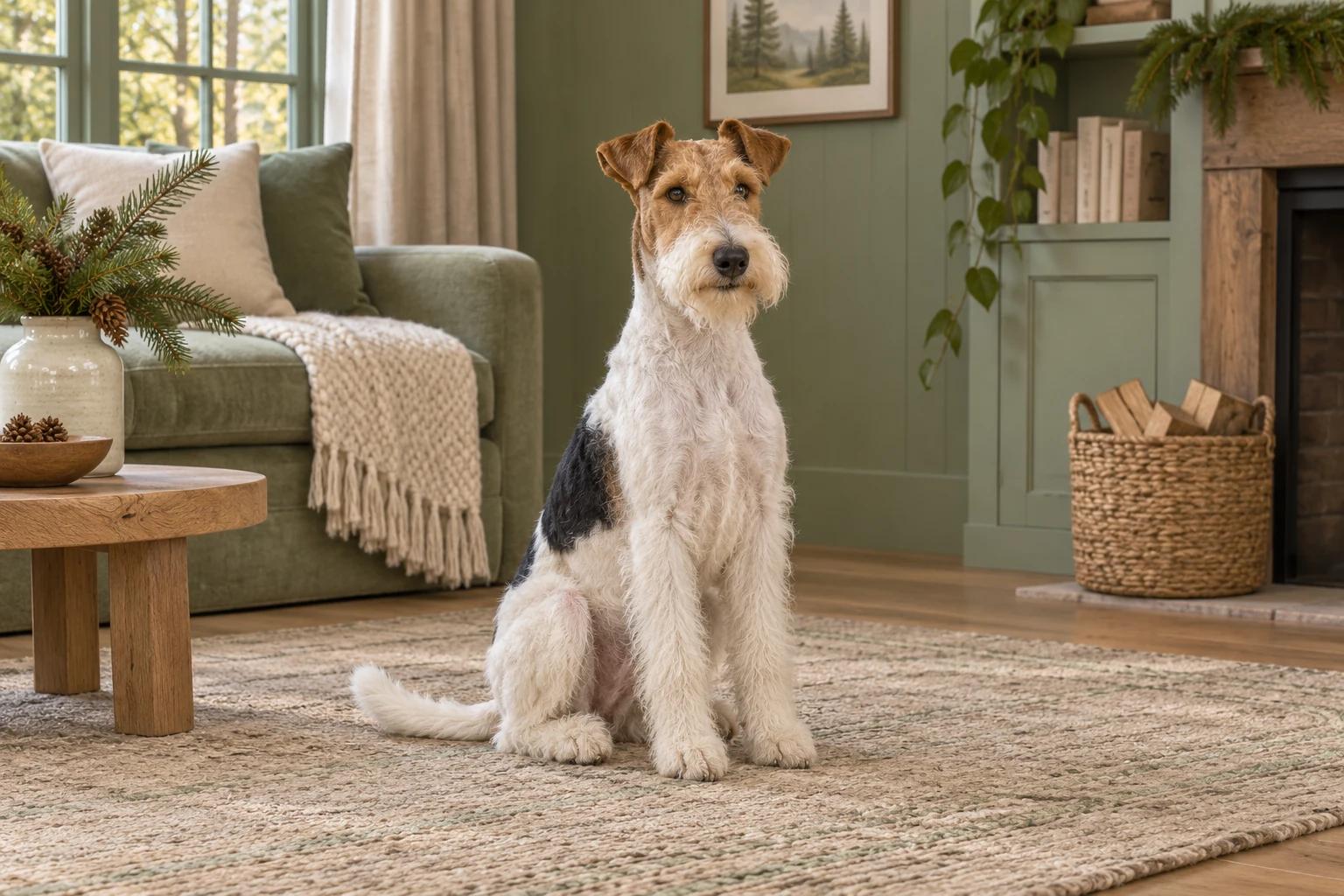
Wire Fox Terrier vs Miniature Schnauzer is not simply a choice between two bearded faces. Both current profiles describe dogs that need company, activity and learning, but the details of a useful comparison include their size ranges, daily interests and care. Start with the Wire Fox Terrier profile and Miniature Schnauzer profile, then consider which kind of participation you want in everyday life. Neither name describes a ready-trained household companion.
Wire Fox Terrier vs Miniature Schnauzer: independent participation
The American Fox Terrier Club's ownership account describes Fox Terriers as independent but capable of learning, including participation in obedience. It also presents a dog that enjoys active play and can share quieter time afterward. Independence should not be translated into an inability to work with people.
For someone considering a Wire Fox Terrier, the practical attraction is often an animated partner rather than a dog that waits passively for every instruction. That can be enjoyable when you like participating in games and teaching. It is less appealing if the desired companion is expected to entertain itself without much involvement.
The club cautions against broad temperament predictions based simply on sex or whether a Fox Terrier is Smooth or Wire. An individual dog's experience and family background matter. Do not turn a comparison into a rule that a female will automatically be easier or that one coat type guarantees a quieter household. Look at the dog being considered, not just a description of a category within the breed.
Keep the Miniature Schnauzer interested in learning
The AKC's Miniature Schnauzer account emphasizes an interest in novelty and recommends brief training sessions with a variety of activities. Its useful message is not a contest over which breed is cleverer. It is that maintaining engagement is part of the owner's work.
A Miniature Schnauzer lesson can therefore be more than a long series of identical requests. Practising one familiar skill and then moving to a different manageable task gives the dog something new to attend to. An owner who enjoys teaching can appreciate that variety without expecting every session to produce a dramatic new trick.
When choosing a Wire Fox Terrier or Miniature Schnauzer, consider your own enthusiasm for this kind of interaction. “Trainable” describes potential, not a finished result. A dog can be responsive and still require clear teaching, patience and practice. The important distinction is between liking the idea of an intelligent dog and actually enjoying the repeated, ordinary work of helping that dog learn.
Miniature Schnauzer grooming continues between appointments
The American Miniature Schnauzer Club's FAQ explains that professional grooming does not eliminate brushing and combing at home. Knots can develop between appointments, so an attractive salon finish is only one part of the care routine.
The club also distinguishes pet clipping from the preparation used for a show coat. Owners often choose professional help, while some learn suitable maintenance themselves. The practical decision is not whether the dog should look impressive on collection day, but what you can maintain comfortably afterward.
For this comparison, keep appearance and workload separate. A neat beard can make a dog look tidy without telling you how much combing it receives. Ask a groomer to explain the routine for the actual dog and the intended trim. Do not choose the Miniature Schnauzer on the assumption that a regular appointment replaces all hands-on care. Equally, do not turn show presentation into a mandatory home routine when your goal is a manageable pet coat rather than exhibition preparation.
Allow the Schnauzer to explore as well as exercise
VCA's Miniature Schnauzer guide describes walks, play and opportunities to sniff and explore safely. It also identifies games and tricks as mental activity. These are different experiences, not interchangeable ways of filling a fixed number of minutes.
A walk that allows investigation gives the dog something different from a brisk trip around the same circuit. A game with its person adds shared engagement, while a small learning task asks for attention in another way. An owner does not need to select only one of these as the dog's official form of activity.
For someone searching Miniature Schnauzer vs Wire Fox Terrier, this is a reason not to dismiss the Schnauzer as a decorative indoor alternative. Its everyday interests still need expression. Choose safe surroundings for exploration and an activity the individual can manage. The point is variety within an appropriate day, not a claim that one breed needs a precise amount more or less than the other.
The size overlap is more useful than a simple ranking
The current Wire Fox Terrier reference lists females at 15–17 pounds and males at 17–19 pounds, with a height of 15½ inches. The Miniature Schnauzer reference lists 9–18 pounds for both sexes and 12–14 inches in height. These are reference ranges, not guarantees about every adult.
The difference between Wire Fox Terrier and Miniature Schnauzer is therefore not “large dog versus small dog.” The weight ranges overlap, while their listed heights differ. A particular adult's measured size is more useful than treating the breed name as an equipment size.
Both profiles also describe family interaction without guaranteeing compatibility with children or another pet. Supervision and individual assessment remain necessary whichever dog you prefer. Use the dog quiz to compare your preferences. For a distinct aspect of the Wire's coat, the existing article on regional texture differences explains why one touch cannot describe the whole coat.
Frequently asked questions
Which breed has the higher listed height?
The Wire Fox Terrier reference lists 15½ inches. The Miniature Schnauzer reference lists 12–14 inches. These figures describe the breed references; they do not measure the individual adult you are considering.
Are their weight ranges completely separate?
No. The Wire's female 15–17-pound and male 17–19-pound ranges overlap the Miniature Schnauzer's 9–18-pound range for both sexes. Avoid assuming that every Wire will outweigh every Miniature Schnauzer.
Can either profile guarantee compatibility with my current dog?
No. Both references distinguish general tendencies from particular relationships. The other dog's history, the proposed companion and supervised introductions matter more than treating a comparative breed description as a matching guarantee.
Sources behind this article
- American Fox Terrier Club finding a Fox Terrier ↗
- AKC Miniature Schnauzer fit ↗
- American Miniature Schnauzer Club FAQs ↗
- VCA Miniature Schnauzer ↗
Article source checked: November 16, 2026. Source checked 2026-11-16
Keep reading

Affenpinscher vs Brussels Griffon: Everyday Differences
Read article →