Wire Fox Terrier size
Understand Wire Fox Terrier size using current sex-qualified weights, shoulder height, working proportions and careful interpretation of measurements.
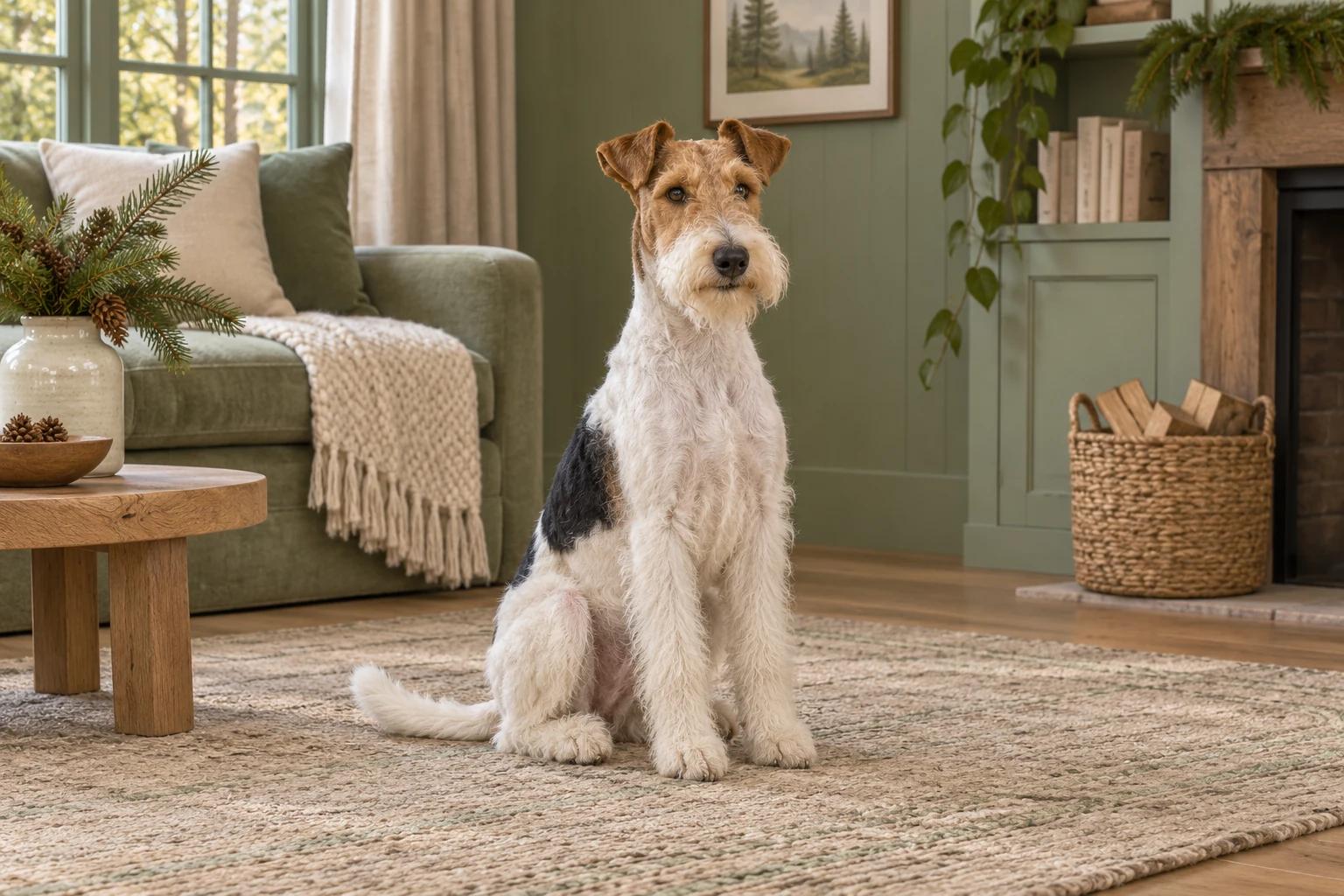
Wire Fox Terrier size is described by the current breed profile as 15–17 pounds for adult females and 17–19 pounds for adult males, with a listed height of 15½ inches. The combined 15–19-pound span is not a separate target that every dog should reach. Keep the sex-qualified ranges attached to the figures when comparing adults, and remember that a reference range is not an individual veterinary assessment.
Wire Fox Terrier size: a small hunter with two different jobs
The UKC's historical introduction explains a functional tension behind the breed's development. Hunters wanted a terrier able to go underground after quarry, but also wanted enough leg to keep up with foxhounds. Its account describes the move away from earlier terriers that were too low on the leg for that second task.
This helps explain why “small” should not automatically suggest a low, elongated dog. The Wire's working background involved both movement across ground and entering a confined space. Reducing the whole description to light body weight misses the different demands that shaped the dog.
For a present-day owner, the history is context rather than a job prescription. A pet does not need to hunt to be a Wire Fox Terrier. It does, however, make sense to view its size alongside its capacity for active movement, rather than imagining that a dog in this weight range was developed solely to sit on a lap. Compact scale and substantial participation in outdoor life are not opposites.
Shoulder height needs a consistent standing position
The AKC's explanation of measuring show dogs describes a dog standing naturally on a flat, level, nonslip surface, with its head in a normal position. The measuring point is at the shoulder, not the top of the ears or the highest visible hair.
That distinction is useful when interpreting Wire Fox Terrier height. A photograph of an alert dog looking upward is not equivalent to a properly taken measurement. Nor is a tape run over the curve of the dog's body the same as a vertical height reading. Position and method matter before two numbers can be compared meaningfully.
A professional measurement is preferable if an accurate figure is needed and the dog is unfamiliar with the process. Do not force a restless terrier into place or improvise an overhead frame that might knock it. A reliable measurement describes the dog without changing its stance to fit an expectation.
A visual estimate is not a measurement
In Changing Estimates: Judging Size and Weight, Gary Kane discusses the limitations of judging size by eye. He distinguishes a perceived size difference from an actual measured difference and examines why comments such as “too large” can be ambiguous.
That distinction is useful outside a show ring as well. One Wire Fox Terrier may look taller beside a shorter person, on a raised surface or in a differently framed image. An impression can prompt a question, but it cannot establish a precise height or weight. A dog that looks substantial in a photograph has not thereby been weighed.
When someone describes an adult as unusually big, clarify whether they mean height, body weight or simply visual presence. Those are different claims. Likewise, “smaller than the other dog” is a comparison, not a measurement. Use actual figures when a practical decision depends on them, while recognizing that a number alone is not a complete evaluation of the animal. Visual confidence and numerical accuracy are not the same thing.
The small companion still has an active background
The Canadian Kennel Club's breed account describes the Wire as playful and needing daily outdoor exercise. It also recalls the breed's public visibility through Asta in the Thin Man films. A recognizable companion image and an active terrier identity belong to the same dog, rather than two separate versions of the breed.
For someone asking how big do Wire Fox Terriers get, this is a useful second question: what does that size mean in motion? A manageable weight for an adult owner does not imply an equally small need for activity. The dog still needs opportunities to move and participate outside the home.
Avoid choosing solely from a familiar screen image or an appealing still photograph. Those can introduce a breed, but they do not show the whole day behind it. Consider whether an active small dog suits you, rather than treating a smaller body as a promise of a less involved relationship. The historical appeal is understandable; the daily commitment remains real.
Read the weight ranges without turning them into instructions
The female 15–17-pound and male 17–19-pound ranges meet at 17 pounds. That overlap is important: sex does not create two completely separate sizes. Nor does the upper male figure mean that a smaller adult should be encouraged to reach it. Questions about an individual's weight belong with its veterinarian.
The listed 15½-inch height is a reference figure rather than a separate height range for each sex. Do not manufacture male and female inch values by subtracting an assumed amount. Weight and height also use different units and describe different aspects of size; one cannot be substituted for the other.
The dog quiz can help you consider the wider ownership fit. The existing article on Wire Fox Terrier coat texture covers a separate physical feature. An appealing coat or trim should not be used as a substitute for understanding the dog beneath it.
Frequently asked questions
What Wire Fox Terrier weight should I expect from the reference?
The current reference lists adult females at 15–17 pounds and adult males at 17–19 pounds. These are breed-reference ranges, not feeding instructions or a diagnosis of whether an individual dog is at an appropriate weight.
Is 15½ inches the length of the dog?
No. The profile's 15½-inch figure is height. It does not give nose-to-tail length, sleeping length or the width of the dog, so it cannot answer every space or equipment question by itself.
Can I use the adult range as a monthly puppy chart?
No. The adult reference does not supply month-by-month measurements or a formula for predicting a particular puppy. Discuss the puppy's growth with its veterinarian rather than inventing intermediate targets from the adult endpoints.
Sources behind this article
- UKC Wire Fox Terrier historical introduction ↗
- AKC Measuring Show Dogs ↗
- AKC Changing Estimates: Judging Size and Weight ↗
- Canadian Kennel Club Wire Fox Terrier profile ↗
Article source checked: November 16, 2026. Source checked 2026-11-16
Keep reading

Airedale Terrier Temperament: What Everyday Life Can Feel Like
Read article →