West Highland White Terrier vs Bichon Frise
Compare West Highland White Terrier vs Bichon Frise size, outline, grooming and communication, with practical questions for meeting individuals.
Explore the
West Highland White Terrier
Background, care, and everyday considerations.
View breed profile →West Highland White Terrier vs Bichon Frise is not simply a choice between two small, pale-coated dogs. Their outlines, grooming commitments and everyday communication deserve separate attention. Start with the current Westie profile and Bichon Frise profile, then meet individuals rather than expecting a photograph to answer questions about daily life.
West Highland White Terrier vs Bichon Frise: identify the Westie outline
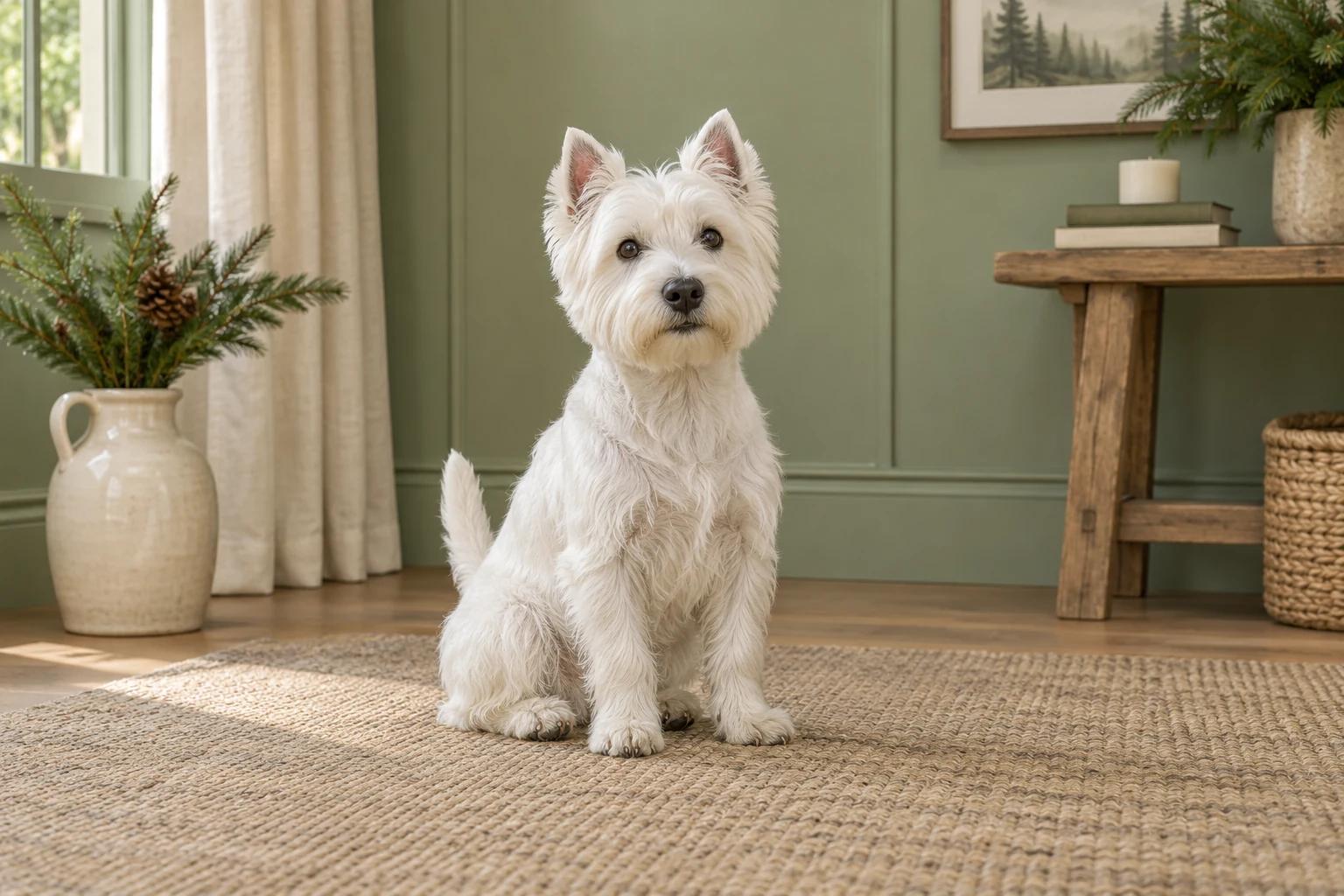
The AKC Westie standard describes a compact, well-boned dog. Its body between withers and tail root is slightly shorter than shoulder height. Small, erect ears and a relatively short, substantial tail carried upright or slightly forward help distinguish the silhouette.
The front feet are larger than the hind feet, and the chest is deep. The dog's outline is not created solely by shaping the hair around its head. Look at the whole animal rather than using a rounded face as the complete definition of a Westie.
The Bichon's rounded appearance has a different foundation
The AKC Bichon Frise standard describes drop ears covered in longer hair and a plumed tail curving over the back. Its coat combines a soft, dense undercoat with a coarser, curlier outercoat. That combination contributes to the substantial, springy appearance of a groomed Bichon.
The body's length from forechest to rump is greater than shoulder height, while the overall structure remains compact and balanced. The coat is shaped to reveal the outline with rounded rather than squared-off presentation. A very full haircut should not lead you to assume the dog underneath has the same dimensions as the visible cloud of hair.
These distinctions make a side-by-side comparison more informative than simply asking which dog looks whiter or fluffier. Ear carriage, tail carriage and the way coat sits around the body are different features. Consider them together rather than using a single cropped portrait to compare two complete animals.
A Westie's interests are not confined to its appearance
VCA's Westie profile describes interest in sniffing and exploring, with appropriate opportunities in a safe place or on lead. It notes that hunting interests can compete with a recall. A small dog is still an animal with reasons to investigate its surroundings, not a companion whose outdoor choices are automatically predictable.
The profile also identifies food and games as useful rewards and notes that repeated work can lose the dog's interest. For a prospective owner, this makes teaching part of the appeal rather than an obstacle to be completed once. Find out which games the individual already enjoys and how its familiar person keeps a lesson engaging.
That is different from assuming a Westie will always choose its owner over every distraction. Set up appropriate opportunities and learn the actual dog's responses. Interest in a game at home does not demonstrate readiness to perform the same task in every outdoor setting, especially where the environment offers competing attractions.
Compare current adult measurements
Current Westie weights are 15–20 pounds for females and 15–20 pounds for males. Bichon Frise females and males are each listed at 12–18 pounds. There is considerable overlap, so the lighter breed reference does not mean every Bichon weighs less than every Westie.
The Westie's current height is 11 inches for males and 10 inches for females. The Bichon reference is 9.5–11.5 inches without a separate sex-specific breakdown. These figures show that the dogs can be similar in height even when their overall appearance differs. Keep sex qualifiers where they are provided rather than inventing separate numbers elsewhere.
For an adult you are considering, its own measurements matter more than a hypothetical comparison between opposite ends of two ranges. A sixteen-pound dog could fit either weight reference. That number would not tell you its coat shape, existing skills or preferred interaction with people.
Grooming may be the most practical visible difference
The current Westie profile describes brushing a few times weekly; the Bichon profile describes brushing most days and a substantial grooming commitment. If both appearances appeal to you, think about the routine you are willing to learn and maintain rather than selecting from a freshly groomed photograph.
Ask the keeper to demonstrate the actual dog's familiar care routine. Find out which tasks are done at home and which are handled professionally. A finished appearance does not show the work between appointments, and two white dogs need not have identical care requirements.
In a Bichon Frise vs West Highland White Terrier decision, a lower grooming reference should not be read as no grooming. Both need an appropriate routine. The relevant question is whether the particular commitment fits your preferences, not whether one breed can be made to sound effortless.
Voice and learning are separate considerations
The current Westie reference places vocal tendency relatively high, while the Bichon's sits nearer the middle of the scale. This supports asking different questions about everyday communication, not promising that a Bichon will be silent or that every Westie will bark constantly.
Both profiles describe learning as part of everyday life. For a person choosing West Highland White Terrier or Bichon Frise, watch an individual doing a familiar task with its current handler. Distinguish the dog's prior education from assumptions about what it ought to know because of its breed.
Our Westie Earthdog article covers a separate organized activity and its context. The dog quiz can help you consider care, communication and companionship together rather than treating coat color as the deciding factor.
FAQ
What is the difference between West Highland White Terrier and Bichon Frise weight?
Current Westie references are 15–20 pounds for both sexes; Bichon Frise references are 12–18 pounds for both sexes. The ranges overlap, so ask for an adult's actual weight rather than assuming one breed must always be lighter.
Which current profile describes more frequent brushing?
The Bichon profile describes brushing most days, while the Westie profile describes a few times weekly. These are broad starting expectations. The actual dog's established routine and professional grooming needs remain important.
Does choosing a Bichon guarantee less barking at home?
No. Its current vocal reference is lower than the Westie's, but a breed tendency is not a prediction of one individual's behavior in your household. Ask about the actual dog's communication and circumstances rather than relying on a guarantee.
Sources behind this article
- AKC West Highland White Terrier standard ↗
- AKC Bichon Frise standard ↗
- VCA West Highland White Terrier profile ↗
Article source checked: November 16, 2026. Source checked 2026-11-16
Keep reading

Affenpinscher vs Brussels Griffon: Everyday Differences
Read article →