West Highland White Terrier grooming
Plan West Highland White Terrier grooming around coat texture, suitable tools, gentle handling and professional help without no-shedding promises.
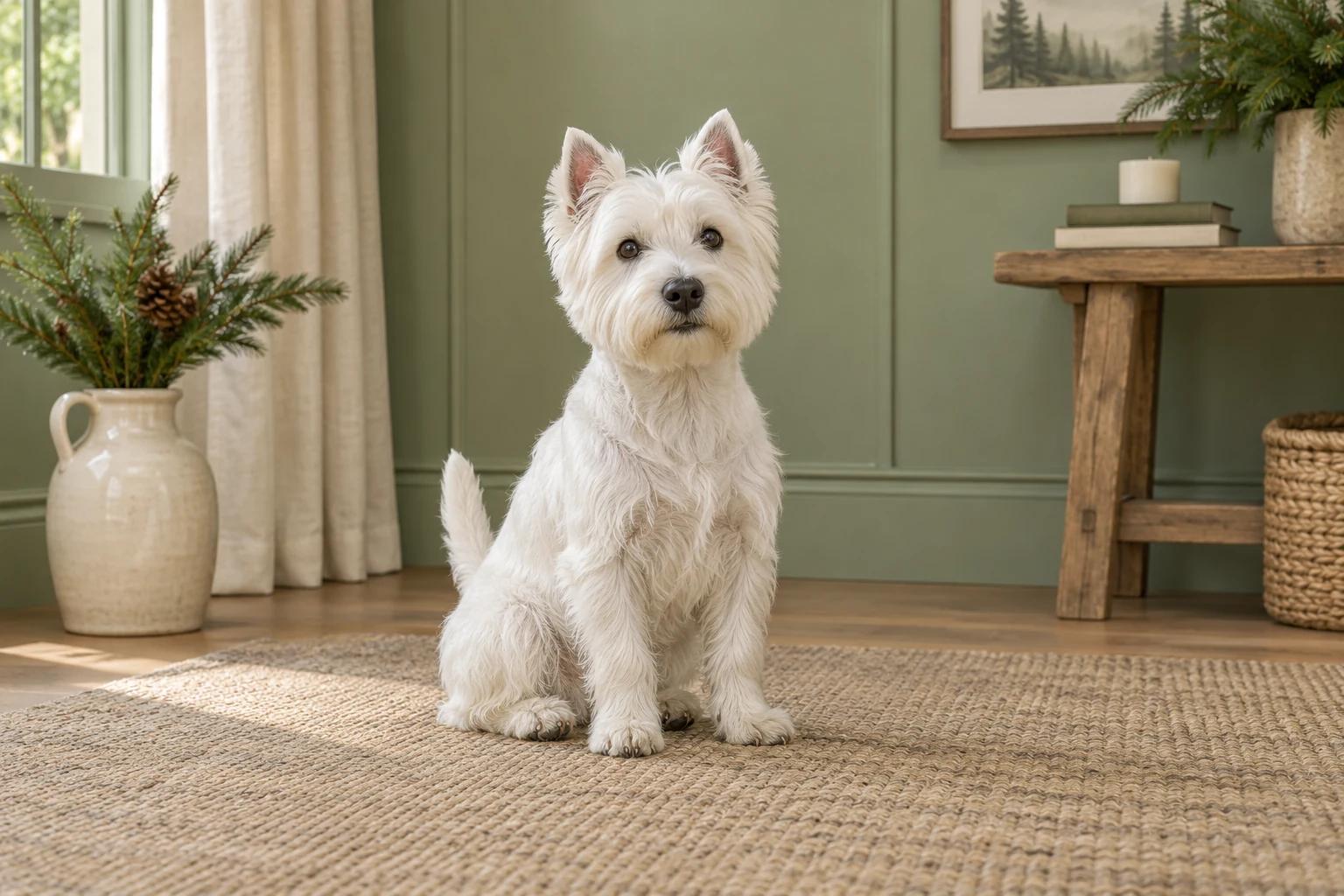
Explore the
West Highland White Terrier
Background, care, and everyday considerations.
View breed profile →West Highland White Terrier grooming is a regular part of living with this dog, not simply the finishing touch before a photograph. The current Westie profile describes brushing a few times weekly and regular coat care. Start with the individual dog's established routine, then learn the work you can comfortably and accurately do at home.
West Highland White Terrier grooming: know the coat
The AKC Westie standard describes straight, hard outer hair over a short, soft undercoat. Longer jacket hair blends into shorter areas and furnishings. These are distinctions in texture and presentation, not an instruction to turn every pet into a duplicate of a show photograph.
Learn tools and technique from someone experienced
The Westie club's grooming guide recommends positive, patient and gentle introductions, ideally beginning early. It identifies brushing, combing and coat trimming as parts of care and advises asking a breeder, veterinarian or grooming professional which tools are appropriate.
For a new owner, a demonstration is more useful than buying every implement on a shopping list. Ask the professional to show the task on the dog and explain what each tool is intended to accomplish. Different jobs should not be reduced to repeatedly brushing harder because the finished appearance is not yet what you imagined.
The guide also recommends visiting a prospective grooming shop before the appointment. Use that opportunity to explain the dog's experience and discuss the division between professional work and care at home. If bathing is part of the routine, the club recommends tepid water and a non-slip surface. A stable footing is a practical detail, not an optional extra chosen only for a particularly energetic dog.
Separate brushing from the amount of hair you find
The ASPCA's grooming guidance explains that brushing and combing remove dirt and help prevent tangles, with tools and frequency depending on coat type. It also notes that normal shedding cannot simply be stopped by grooming. The amount of loose hair is not a complete assessment of the care a coat needs.
Ask a groomer or veterinarian to recommend a suitable brush or comb for your dog's hair. A tool used successfully on a smooth-coated dog is not automatically the right tool for a Westie.
For bathing, the ASPCA advises avoiding water directed into the eyes, ears or nose and using a product formulated for the animal. Discuss product suitability with your veterinarian when needed. Keep this as ordinary care rather than experimenting with products intended to solve a health concern without professional advice.
Keep home care positive and know its limits
PDSA's grooming guide emphasizes matching tools to coat type and taking handling slowly. Some animals are unfamiliar with being touched in particular places. Use praise and rewards, and stop when the dog is worried rather than treating completion of the entire coat as more important than the experience.
PDSA advises against tackling mats at home. If a difficult area needs professional work, arrange that help rather than improvising with scissors or trying to pull through it. There is a meaningful difference between a routine you have been shown and a problem requiring a groomer's assessment.
The same guide recommends dog-specific shampoo when a wash is needed and notes that a muddy outing may call for a warm-water rinse rather than automatically another full shampoo. Ask for advice suited to the actual coat and its usual activities. How to groom a West Highland White Terrier should therefore include knowing which task is needed today, not repeating the largest possible version of every grooming job.
Fit West Highland White Terrier coat care to the actual dog
The current breed reference describes a medium-length double coat and a regular brushing commitment. That does not specify a single haircut or tell you the individual dog's familiarity with grooming. A recently acquired adult may already have an established routine; find out what it involves before assuming you need to replace it with a completely different one.
The profile also describes strong family interest, while learning depends on motivation and consistent practice. Enjoying company is not the same as understanding a grooming routine. Ask the keeper which parts are familiar and what words or positioning the dog already knows. This gives you useful information about the animal, rather than inferring cooperation from its affectionate description.
Current adult weights are 15–20 pounds for both females and males. That small physical scale does not make restraint a substitute for learning a routine, and it does not determine how much coat work is appropriate. The task is care of this particular dog, not completing a preset number of minutes because it falls within a weight band.
For a separate aspect of the breed's activities, see our Westie Earthdog article. The dog quiz can help you consider regular grooming alongside the other commitments of companionship.
FAQ
What brushing frequency does the current Westie profile describe?
It describes brushing a few times weekly. Treat that as a starting expectation rather than a promise that every individual needs identical work after every outing. Learn the established routine of the dog you are caring for.
Does West Highland White Terrier shedding tell me everything about grooming?
No. The current profile describes both some shedding and a regular coat-care commitment. Those are separate aspects of ownership. Do not assume that the amount of visible hair alone tells you how much care the particular dog needs.
Does a small adult weight make grooming cooperation automatic?
No. Current adults are listed at 15–20 pounds for both sexes, but weight does not describe training experience. Find out which parts of the routine are familiar instead of assuming that a physically manageable dog already understands what you want.
Sources behind this article
Article source checked: November 16, 2026. Source checked 2026-11-16
Keep reading

Affenpinscher Grooming: A Practical Coat-Care Routine
Read article →