Welsh Terrier vs Wire Fox Terrier
Compare Welsh Terrier vs Wire Fox Terrier adult size, coat, learning interests and daily commitments without unsupported temperament rankings.
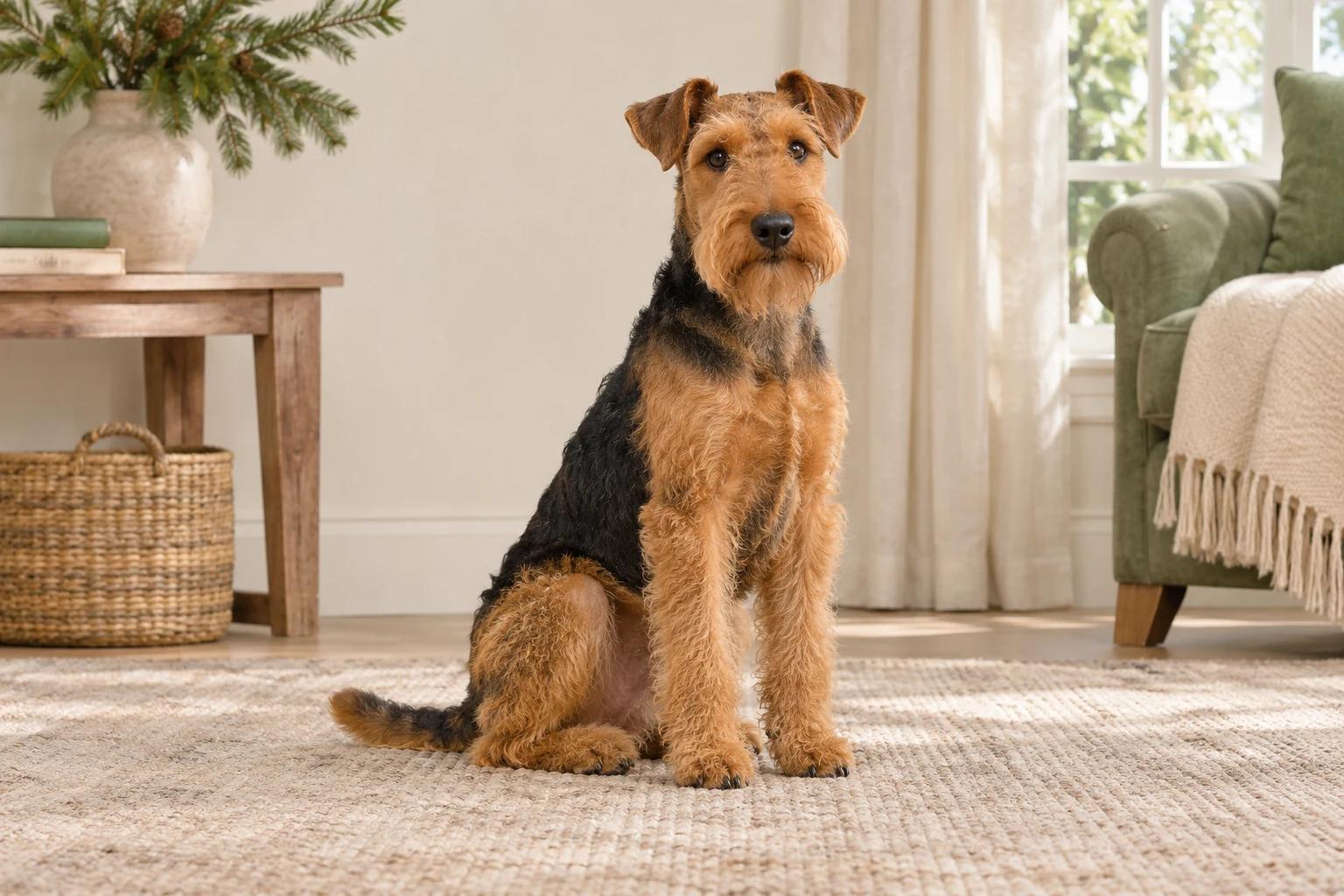
Welsh Terrier vs Wire Fox Terrier is an understandable comparison: both have wiry coats, lively expressions and an unmistakably terrier presence. The current Welsh Terrier profile and Wire Fox Terrier profile provide a useful starting point, but similar appearance should not become a claim that the two breeds are interchangeable. Look at physical scale, the coat you will maintain and the activities you want to share.
Welsh Terrier vs Wire Fox Terrier: the Wire's distinctive outline
The AKC Wire Fox Terrier standard describes strength in a compact frame, with a short back and enough freedom of movement for purposeful work. The chest is deep without being broad, and the muscular loin is slightly arched.
Its coat is dense and wiry over a shorter, softer undercoat. White predominates, making its overall color arrangement quite different from the familiar dark-jacketed Welsh Terrier. The standard also describes small, forward-folding ears and a head in which skull and foreface are closely balanced in length.
Welsh Terrier activities and boundaries
The Welsh Terrier Club of America's breed guide describes opportunities in earthdog, agility and other performance activities. It also emphasizes a lead or a securely fenced area and cautions against relying on electronic fencing because curiosity, speed and pursuit can be powerful interests.
For someone considering a Welsh Terrier, this means outdoor freedom needs an actual arrangement, not confidence based on the dog's small appearance. A garden boundary and a training cue serve different purposes. Decide where appropriate activity can take place before assuming that an attractive open space is a suitable place to release the dog.
The club also distinguishes everyday companionship from participation in organized activities. You can investigate a local introductory class without assuming that every Welsh Terrier must pursue the same sport. Ask what the instructor teaches first and how the individual dog is introduced to the task. The aim is a purposeful outlet appropriate to that animal, not selecting a demanding activity solely because it appears in a breed description.
Wire Fox learning rewards and attention
VCA's Wire Fox Terrier profile describes an independent dog that can be readily diverted from what its person wants to do. It recommends patience and appealing food rewards rather than assuming intelligence automatically produces obedience. Knowing how to perform something and finding it worthwhile in that moment are not the same issue.
When meeting an adult, ask its current handler to show a familiar lesson and explain the reward being used. If the dog responds enthusiastically to one person, find out what that person has taught rather than expecting the relationship to transfer instantly. Their timing and familiarity may be doing more work than is obvious to a visitor.
The profile also describes a playful dog. That is useful context for choosing a companion, but it is not a promise that every individual enjoys the same toys or style of interaction. Watch the actual game and the dog's participation. A playful description should invite learning about preferences, not prescribe an identical routine for every Wire Fox Terrier.
Compare current weights without mixing the sexes
The current Welsh Terrier profile lists 20–21 pounds for both females and males. The Wire Fox Terrier profile lists females at 15–17 pounds and males at 17–19 pounds. These references place the Welsh Terrier at a somewhat heavier adult scale, but they do not tell you the exact weight of any particular puppy or adult.
Welsh Terrier height is listed as 15 inches for males, with females proportionally smaller. The Wire Fox Terrier's current height reference is 15½ inches without a sex-specific breakdown. Keep that qualification rather than inventing a separate female number. The comparison is close enough that weight and height should remain separate measurements, not a single verdict about which dog looks bigger.
For an adult you are considering, ask for its actual measurements. A breed reference can orient you, while the individual measurement answers the practical question. Do not select the lightest possible dog from one range and the heaviest from the other simply to make the breeds sound farther apart.
Color and coat commitments
The Welsh profile records black and tan or grizzle and tan. The Wire Fox profile lists white and combinations of white with black and tan. Those broad color descriptions are useful when learning to distinguish the breeds, but neither color nor a photograph proves an individual dog's background.
Both current profiles describe double, wiry coats and put shedding toward the lower end of their reference scales. That does not mean no coat work. Ask an experienced groomer to explain the maintenance of the actual dog and the difference between the look you admire and the routine required to maintain it.
Do not choose Welsh Terrier or Wire Fox Terrier by assuming the less fluffy-looking dog must be effortless to care for. A neat finish shows the result of care, not its absence. Equally, a pet's everyday appearance need not duplicate a competition photograph to be an appropriate, comfortable routine for that individual.
Similar references do not settle the individual choice
In a Wire Fox Terrier vs Welsh Terrier decision, resist labels such as universally easier, quieter or calmer. Both current profiles identify substantial interest in learning and a relatively high vocal tendency. Those broad similarities leave important questions about the actual dogs unanswered.
Our Welsh Terrier historical article explores a separate origin question. For the present-day choice, use the dog quiz to weigh your preferences and then meet individuals with attention to their existing routines, skills and care needs.
FAQ
What is the difference between Welsh Terrier and Wire Fox Terrier weight?
Current Welsh Terrier references are 20–21 pounds for both sexes. Wire Fox Terrier females are listed at 15–17 pounds and males at 17–19. The actual adult's weight is more useful than assuming a breed range predicts one dog precisely.
Does either profile promise a quiet companion?
No. Both current profiles place vocal tendency relatively high. That is a reason to investigate the individual's actual behavior and circumstances, not a guarantee that every dog barks equally or that one breed will always be quieter.
Does a lower shedding reference mean no grooming?
No. Both profiles describe a regular coat-care commitment. Learn what the individual dog's established routine involves instead of using the amount of loose hair as a complete measure of grooming work.
Sources behind this article
- AKC Wire Fox Terrier standard ↗
- Welsh Terrier Club of America breed guide ↗
- VCA Wire Fox Terrier profile ↗
Article source checked: November 16, 2026. Source checked 2026-11-16
Keep reading

Affenpinscher vs Brussels Griffon: Everyday Differences
Read article →