Welsh Terrier size
Understand Welsh Terrier size with current adult weight and height, body proportions, puppy development and practical measurement guidance.
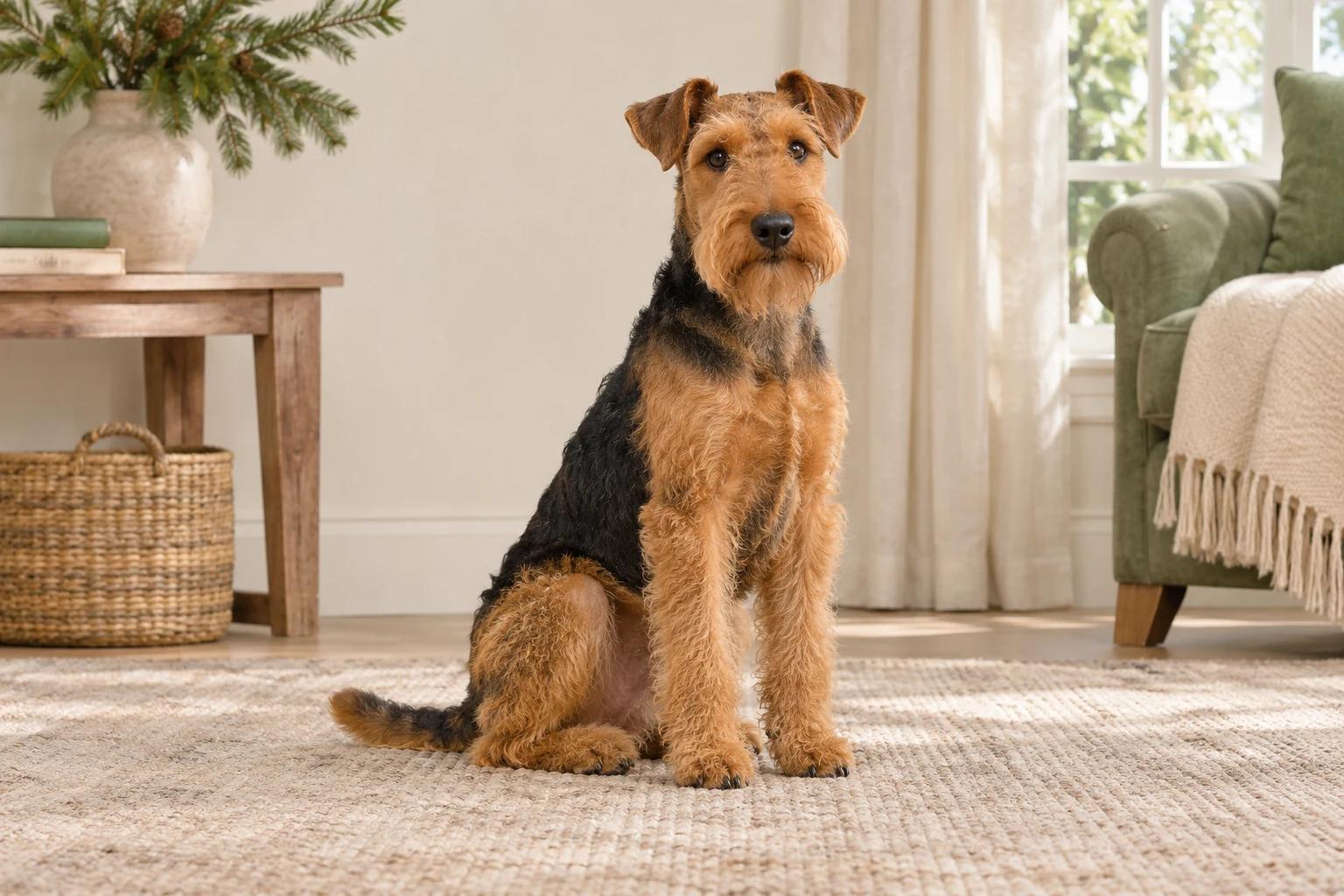
Welsh Terrier size is more informative when weight, height and proportions are considered separately. The current Welsh Terrier profile lists adult females and males at 20–21 pounds. That gives a useful starting scale, but it does not describe every dimension of the individual. A dog is not a single number with a coat around it.
Welsh Terrier size: understand the frame
The AKC Welsh Terrier standard describes a sturdy, compact dog with an approximately square outline. The level topline, well-ribbed body and strong, moderately short loin belong to that overall picture. The chest has depth and moderate width, while the legs are straight and muscular.
The head is rectangular, with the muzzle and backskull balanced in length. Furnishings complete that outline without exaggeration. Small, round feet and strong hindquarters add to the description of a substantial terrier rather than a delicate miniature. To understand its physical presence, look beyond shoulder height to the arrangement of the body and limbs. A beard or a dark jacket can draw the eye away from those underlying relationships.
Height is not head height
The AKC glossary defines height as the vertical distance from the withers to the ground, with the withers being the highest part of the shoulders. This matters when someone describes a Welsh Terrier as fifteen inches tall: the measurement is not taken to the top of its head or ears.
The glossary also separates several terms used in descriptions of structure. The coupling is the region between the ribs and hindquarters, while the topline is the upper outline behind the withers toward the tail attachment. These words describe locations and relationships, not additional weight categories.
When looking at a dog, keep the measurement landmarks consistent. A photograph taken from above and a side-on photograph are not equivalent views. Understanding where a dimension begins and ends makes a size description more useful than estimating from the apparent position of the head.
Growth does not follow one universal timetable
The AKC puppy-growth guide explains that smaller breeds generally complete growth sooner than larger breeds, while individuals and families still vary. It also distinguishes finishing skeletal growth from later changes in muscle and body composition. A puppy becoming less leggy-looking is not the same observation as an exact date on which all development ends.
For a Welsh Terrier puppy, ask the breeder about mature relatives and the growth patterns they have actually observed. That offers a more relevant context than applying a generic percentage chart as if it were a personalized prediction. Even within a breed, a reference cannot provide certainty about the final measurements of one puppy.
Avoid declaring an exact adult size from one early weigh-in. Discuss growth questions with your veterinarian, who can assess the individual. The purpose of following development is to understand that dog, not to force it toward the middle of a published range or treat a calendar milestone as proof that every aspect of maturity is complete.
Match equipment to dimensions rather than a breed label
The AKC measuring guide identifies back length, chest girth and neck girth as useful dimensions for clothing and equipment. For chest girth, measure around the widest part of the rib cage, usually behind the front legs, with the dog standing naturally. Back length is measured along the top from the neck's base to the tail's base.
Use a flexible tape without tightening it into the dog, and follow the product's instructions. Brand names and size labels are not interchangeable measurement systems. A harness marked small by one manufacturer may cover a different range from another manufacturer's small.
Check whether a chart describes the dog's body measurements or the item's actual dimensions. For a Welsh Terrier, a weight reference alone cannot supply chest or neck circumference. Choose adjustable equipment where appropriate and check the fit on the actual dog, rather than assuming that being within the advertised weight band settles every part of the fitting question.
Welsh Terrier weight and height in the current reference
The current adult weight range is 20–21 pounds for females and 20–21 pounds for males. The height reference is 15 inches for males, with females described as proportionally smaller. Keep that female qualification rather than turning it into a specific number that the reference does not provide.
The identical listed weight ranges do not mean that every male and female has identical dimensions. A range summarizes a reference, while the individual still has its own measured weight and outline. Nor does being at one end of that range automatically make a dog more suitable for a particular home.
For someone asking how big do Welsh Terriers get, the useful answer therefore includes both the numerical scale and the way the information is qualified. If you are meeting an adult, request its actual weight and height rather than substituting the breed midpoint. If you are meeting a puppy, keep the distinction between its present measurements and an adult expectation clear.
Do not confuse Welsh Terrier height with the amount of room the dog wants to participate in everyday life. The current profile describes a responsive learner with a strong interest in family interaction and a relatively high vocal tendency. Those commitments do not disappear because the adult is physically smaller than many other dogs.
Our Welsh Terrier history article addresses a separate origin question. The dog quiz can help you consider physical scale alongside the interaction and care you want from a companion.
FAQ
What adult weight does the current profile give?
The current Welsh Terrier profile lists 20–21 pounds for females and the same 20–21-pound range for males. These are reference figures, not an instruction that every individual must weigh precisely within that interval. Discuss individual weight questions with your veterinarian.
Does the same weight range mean males and females are identical in size?
No. The reference gives a shared weight interval, not identical dimensions for every dog. An individual adult's measured weight and outline are more informative than assuming two animals must match because they share a listed range.
Does a physically small Welsh Terrier necessarily make a low-commitment companion?
No. The current profile describes strong family interest, responsiveness to training and a relatively high vocal tendency. Physical scale is one consideration, not a replacement for understanding the dog's daily interaction, learning and care needs.
Sources behind this article
- AKC Welsh Terrier standard ↗
- AKC anatomical glossary ↗
- AKC puppy growth guide ↗
- AKC measuring clothes and gear ↗
Article source checked: November 16, 2026. Source checked 2026-11-16
Keep reading

Airedale Terrier Temperament: What Everyday Life Can Feel Like
Read article →