Volpino Italiano vs Japanese Spitz
Compare Volpino Italiano and Japanese Spitz adult size, physical features, activities and companionship without relying on appearance alone.
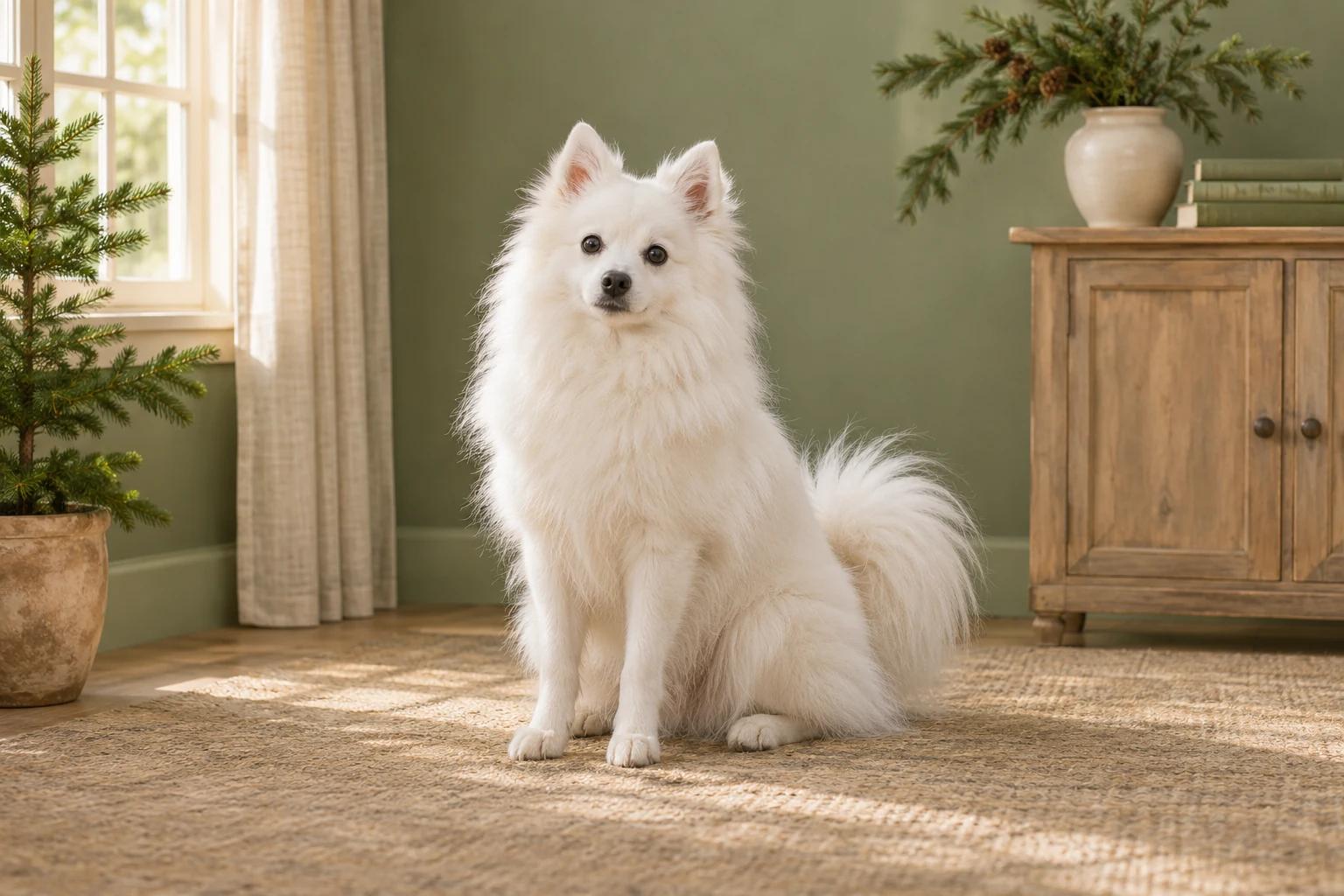
Volpino Italiano vs Japanese Spitz can look like a choice between similar small companions until you examine adult measurements and everyday expectations. The Volpino Italiano profile and Japanese Spitz profile describe different breeds, not two names for the same dog. Both deserve an individual assessment. Their size ranges and physical features provide a starting point; their appearance alone cannot decide which relationship will suit your household.
Volpino Italiano vs Japanese Spitz: facial details
The FCI Volpino standard describes a pointed muzzle shorter than the skull, roundish dark eyes and triangular upright ears set high and close together. Its feet are oval, with close, arched toes. These details distinguish the intended type beyond an impression of fluffiness. Look at the head and feet separately rather than assuming that every similar-looking small dog has identical structure. The familiar expression comes from several features together, not from a single conspicuous ear or eye shape.
Reading the Japanese Spitz's outline
The FCI Japanese Spitz standard describes a body slightly longer than tall, with a height-to-length relationship of ten to eleven. Its moderately broad head carries a pointed muzzle with a slightly rounded tip. The dark eyes are almond-shaped and set a little obliquely, while the small triangular ears stand upright and face forward.
The tail is carried over the back, and the feet are compact and cat-like. These details help distinguish an intended breed outline from the broad category of a small spitz-looking dog. They should not become a test that claims ancestry from a photograph.
The coat combines a straight, standing outer layer with a shorter, dense, soft undercoat. Hair is shorter on the face, ears and parts of the legs, with greater abundance around the neck, shoulders, chest and tail. That variation means the coat is not one uniform covering. When looking at an adult dog, pay attention to the underlying shape as well as the areas where the coat creates extra volume.
A Volpino can want both activity and contact
The AKC's Volpino introduction places running and agility alongside close, lap-level companionship. The useful point is that enjoyment of physical activity and enjoyment of resting with a person are compatible. A small companion need not be defined entirely by one or the other.
For someone choosing between these breeds, that makes the question more specific than “Do I want a lap dog?” You may enjoy sharing active time and then having a dog nearby afterward. Alternatively, you may prefer a companion that takes a more separate position while the family is occupied. Meet the individual rather than turning a brief breed description into a guaranteed daily sequence.
An owner should not expect a particular dog to perform agility or spend a prescribed number of hours on a lap. Those examples illustrate possibilities, not obligations. What matters is whether the dog's actual mixture of participation and contact is welcome, including after the novelty of meeting a small, attractive companion has passed.
Japanese Spitz learning and outdoor interests
Purina's Japanese Spitz account describes an active companion that can enjoy puzzle solving, training and dog sports. It emphasizes motivation through rewards and games rather than assuming that intelligence removes the need for teaching. A dog can understand a task and still need a reason to participate in it.
The practical implication is to judge this breed as a dog with interests, not as an ornament whose principal requirement is keeping a white coat pristine. An owner who enjoys teaching small skills may find plenty to do together. Someone who wants every outing to remain perfectly clean may find the real experience less appealing than the photograph.
Purina also emphasizes recall because an interesting outdoor distraction can draw a dog's attention away. That is a reason to consider management and education, not to assume a small dog will remain conveniently nearby. The size of the companion does not determine the size of its curiosity. Look for an individual whose existing experience and interests fit the activities you actually enjoy.
Adult size: the ranges overlap
Current reference weights for the Volpino are 8–12 pounds for females and 10–16 pounds for males, with an overall adult height of 10.5–12 inches. Japanese Spitz are listed at 10–25 pounds for either sex and 12–15 inches tall. The Japanese Spitz range therefore extends higher, but an individual near its lower end may overlap a Volpino in weight.
Do not convert those ranges into a rigid rule that every Japanese Spitz is dramatically bigger. For example, a 12-pound adult falls within both references. That number alone would tell you little about which breed it resembles or how its body fits a particular space. Height and the individual's actual proportions add information that weight cannot supply.
Likewise, a puppy's current size is not a reliable comparison with the upper end of an adult range. The reference describes adult dogs, not a timetable for how quickly a youngster should reach a particular measurement. When comparing actual candidates, distinguish measured adult size from an estimate of future size.
Choosing between the two companions
Both current profiles describe a moderate activity commitment rather than an inactive lifestyle. The Volpino reference also emphasizes strong family involvement and substantial mental engagement. That combination can suit someone who enjoys interacting with a small dog throughout ordinary life, rather than reserving all engagement for one walk.
When deciding on a Volpino Italiano or Japanese Spitz, avoid declaring a universal winner for friendliness or ease of ownership. A greeting in one room does not reveal every aspect of a dog. Consider what you know about the actual candidate's familiar home, outings and response to new situations. The dog quiz can help frame the wider commitment. For the Volpino's separate body-proportion topic, read square proportions beneath the coat.
FAQ
Is Japanese Spitz vs Volpino Italiano mainly about adult weight?
Weight is one useful distinction, but the ranges overlap. Current references list female Volpinos at 8–12 pounds, males at 10–16, and Japanese Spitz of either sex at 10–25. The individual dog's actual measurements remain important.
What is the difference between Volpino Italiano and Japanese Spitz ownership?
Both need an ordinary life that includes activity and interaction. Compare the actual dog's preferences and experience rather than assuming similar appearance means identical needs, or that a breed label settles every question about compatibility.
Can either breed be chosen as a maintenance-free small dog?
No. Small adult size does not remove the need for teaching, companionship or coat care. Choose a dog whose everyday commitment you welcome rather than treating its smaller physical footprint as evidence that little involvement will be needed.
Sources behind this article
- FCI Volpino Italiano standard ↗
- FCI Japanese Spitz standard ↗
- AKC Volpino Italiano introduction ↗
- Purina Japanese Spitz ↗
Article source checked: November 16, 2026. Source checked 2026-11-16
Keep reading

Affenpinscher vs Brussels Griffon: Everyday Differences
Read article →