Turkish Angora vs Turkish Van: Distinct Builds and Everyday Care
Compare Turkish Angora vs Turkish Van body, coat and contact descriptions, then assess each animal and the daily responsibilities you can maintain.
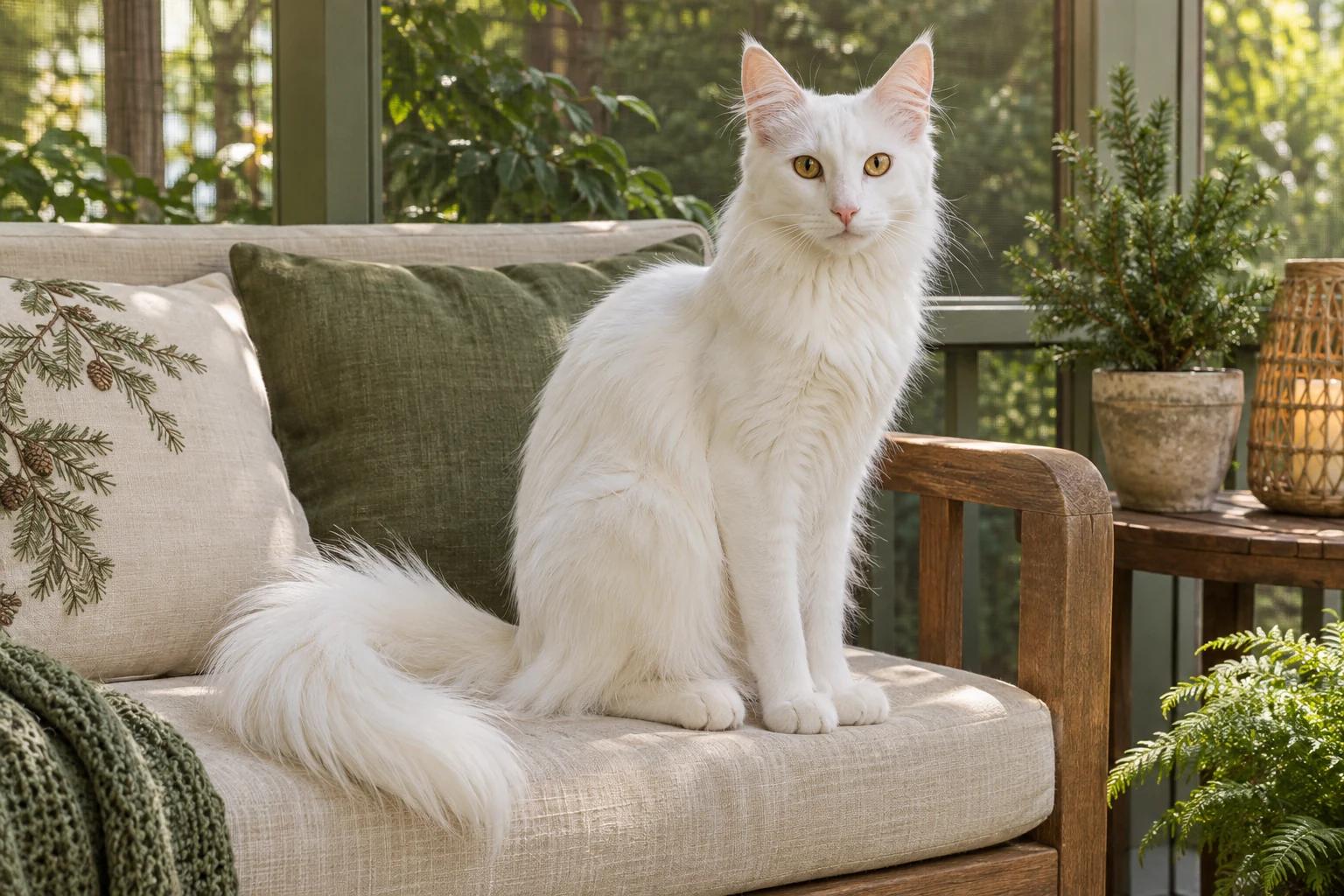
Turkish angora vs turkish van is a comparison between separate breeds, even though their names share a country. CFA contrasts the Angora's refined, long-bodied appearance with the Van's more robust, muscular build. Their coat and marking descriptions also differ. A white coat or a familiar name cannot make the identities interchangeable.
If you are considering a turkish angora or turkish van, compare the actual animals and their routines. Appearance can explain your interest while leaving room for different contact preferences, seasonal care and the equipment each individual uses comfortably.
Turkish Angora vs Turkish Van: start with the documented features
CFA describes the Angora's silky coat, long body and prominent ears, with several colors and patterns. Its Van account emphasizes a substantial body and characteristic color concentrated around the head and tail. That pattern can occur outside the breed, so markings alone do not authenticate identity.
Read the Turkish Angora profile and Turkish Van profile. Ask what records support each description rather than deciding from a photograph of two pale cats.
A difference between turkish angora and turkish van should lead to practical questions instead of a simple larger-versus-smaller verdict. Fur, posture and camera angle can change the visible outline, while an actual animal's measurements answer a separate equipment question.
Learn how each cat prefers company
The Angora profile describes curiosity and involvement. The Van profile specifically keeps attachment separate from enjoyment of restraint or carrying. Those accounts are useful prompts, not a guarantee that every Angora enjoys lifting or every Van declines all close contact.
Ask what the individual does when a familiar person rests or moves between rooms. Does it approach for touch, settle beside them, join a game or choose a viewpoint? Comparable examples help a turkish van vs turkish angora decision more than unrelated affectionate photographs.
During a meeting, let the cat choose its distance. Adults should guide children and visitors before they reach for the animal. The ability to leave an interaction matters even when a registry describes companionship warmly.
Give climbing a practical review
Both profiles include active investigation and elevated places. Ask which furniture the cat already uses and how it gets down. Do not request the highest possible jump to establish athletic ability during a visit.
Check installation, stability, usable surfaces and load instructions for equipment. A substantial Van may raise different fit questions from a more refined-looking Angora, but neither silhouette certifies a product. Observe ordinary comfortable use rather than relying on a breed category alone.
FelineVMA's indoor-cat guidance joins activity with retreat and resources. Keep essentials accessible without a difficult challenge, and consider whether another pet can block the only route to a useful place. Height should add options, not remove them.
Compare the actual coat task
The current Angora profile starts with weekly combing of the silky coat, adjusted for shedding and tangles. The Van profile also uses weekly combing while retaining seasonal changes that may need more attention. Similar starting words do not establish identical textures or accepted handling.
Ask each caregiver to explain the routine at its busiest point. Which tool is used, what areas need checking and when should a professional help? A source describing easy care cannot guarantee that an individual never tangles or enjoys every technique.
Do not select a bathing schedule from an assumption about water interest. Necessary cleaning and a cat choosing to investigate a water source are different situations. This comparison supplies no product recipe, restraint method or cosmetic procedure.
Keep activity and rest together
Ask about familiar games and the animal's way of ending them. A fetching reputation does not require a demonstration, and a puzzle result cannot rank intelligence or establish that the cat will stay occupied during absences.
Explain the household's real schedule, including work and backup care. Learn how company and activity are currently maintained. Another animal should not be introduced as an automatic answer to an unexamined support need.
If a familiar movement or interest changes, seek veterinary advice rather than explaining it entirely through age, size or personality. Do not make the cat repeat a difficult action to strengthen an observation.
Introductions require individual arrangements
A social breed description cannot guarantee acceptance of your resident animals. Ask about relevant history and obtain suitable guidance for the actual introduction. Prepare separation, retreat and independent resources before arranging contact.
A quiet first meeting is not permission to remove every management arrangement. Each cat needs usable access to essentials while the relationship is assessed. Visitors should also know that observation without touch can be a thoughtful encounter.
Review veterinary records with the appropriate professional rather than choosing from a universal health ranking. Registration, coat color and an outgoing visit cannot establish general health or replace assessment of the individual.
Keep the existing practical guides in scope
The Angora renovation-plan article concerns a specific disruption, while the Van water-safety article addresses a different hazard. Neither task is resolved by selecting a breed or watching an appealing video.
Use the cat quiz to organize broader expectations, then write a comparable care note for each candidate: a coat responsibility, a familiar activity, accepted contact, backup support and an unresolved question.
An honest shortlist may include inconvenient information or a need for further advice. Keep that visible alongside the appearance you prefer. The useful choice concerns a companion whose needs you understand and can maintain, rather than a promise that a shared geographic name predicts one kind of relationship.
Frequently asked questions
Are Turkish Angora and Turkish Van interchangeable names?
No. CFA describes distinct breeds with different body and coat context. Ask about the individual's documentation rather than deciding from a white coat alone.
Does a Van pattern prove breed identity?
No. CFA notes that the pattern occurs in other breeds too. Markings are one feature, not a complete ancestry record.
Does attachment mean the cat enjoys carrying?
Not automatically. The Van profile explicitly separates the ideas, and every individual needs its own contact preferences respected.
Does water interest determine bathing needs?
No. Voluntary investigation and necessary coat care are different questions. Learn an appropriate individual routine rather than borrowing a bathing schedule from a reputation.
Sources behind this article
Article source checked: November 20, 2026. Source checked 2026-11-20
Keep reading

Abyssinian vs Somali: Coat, Size and Everyday Company
Read article →