Turkish Angora Training: Discover a Familiar Toy
Plan Turkish Angora training with a familiar toy, an obvious reachable placement and voluntary discovery, without retrieval or obedience guarantees.
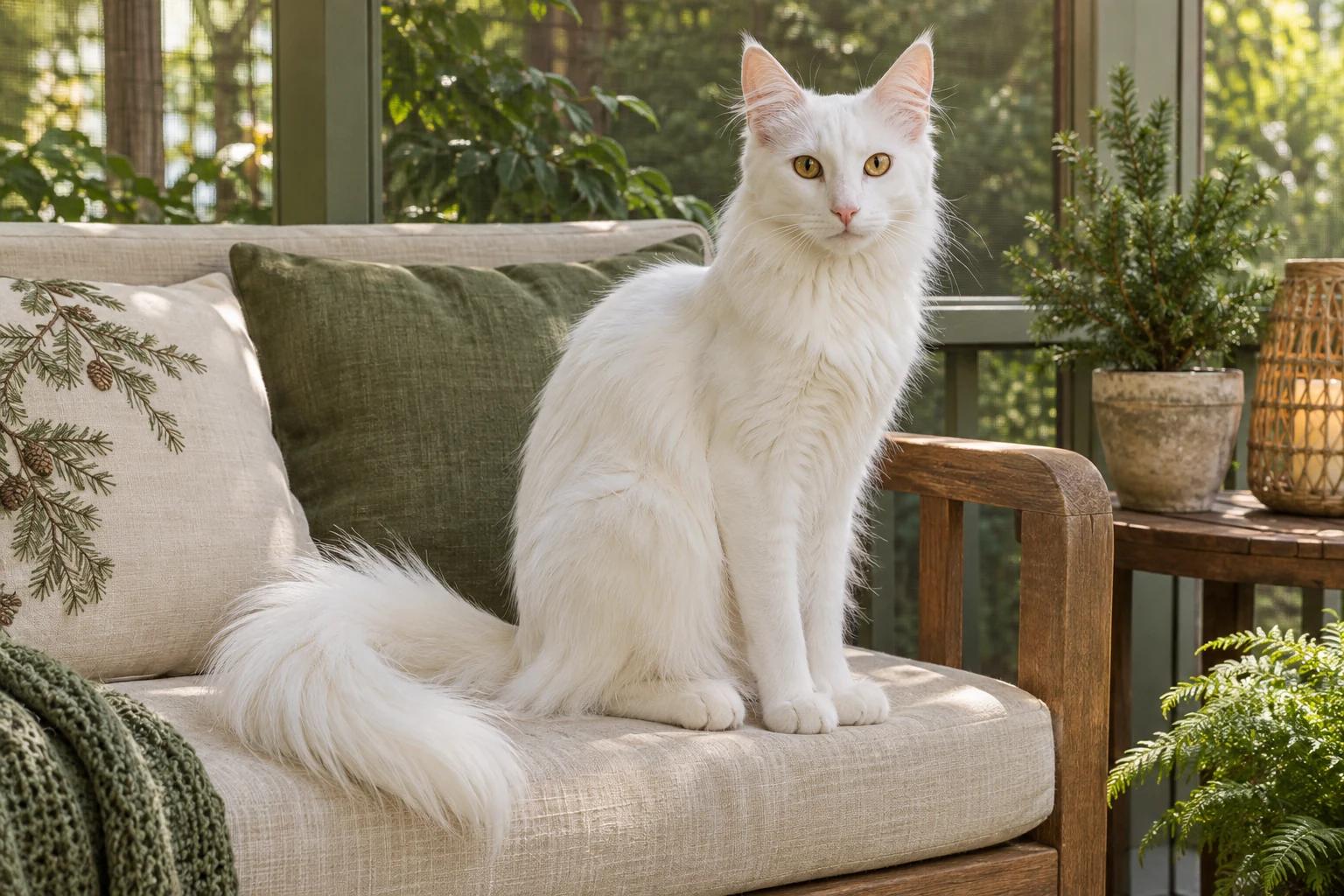
Turkish angora training can turn ordinary curiosity into a small shared discovery game. Place a familiar intact toy in an obvious, comfortably reachable spot, then let the cat choose whether to investigate. The purpose is to make that voluntary discovery rewarding, with an easy placement the animal can investigate comfortably and a clear moment for the caregiver to acknowledge.
TICA describes an inquisitive, playful breed with an interest in toys and learning. Those observations suggest a possible activity, not a promise about every animal. This guide considers how to train a turkish angora through a simple game whose difficulty stays modest and whose outcome can remain unfinished.
Turkish angora training: begin with an obvious discovery
Choose a toy the cat already uses comfortably. Inspect it first and set aside anything damaged, uncertain or carrying loose parts. The game should not involve strings, ribbons, packaging, household fragments or an object selected just because it fits behind furniture.
Put the toy on a clear, accessible surface where the cat can see it without searching underneath or climbing. An ordinary floor location may be suitable for the individual; check the actual space and any movement limitations. The first placement should be easier than the animal's usual independent exploration.
The Turkish Angora profile supports manageable reward-based learning. TICA's description of playful investigation gives this game its breed context. The visible placement and individual choice are practical ways to keep that interest understandable, without assuming that a breed reputation establishes readiness.
Let the learner discover what earns a response
Stay nearby without waving the toy in front of the cat's nose. Watch for voluntary investigation of the placed toy and acknowledge it promptly. There is no need to manufacture a touching pose or guide the animal's body to the object.
Select a response you can recognize in this setting. Approaching and inspecting the toy may be enough. Picking it up, carrying it to you or returning it to a container are different tasks that this game does not require.
FelineVMA's training guidance explains using rewards and manageable steps. Keep the connection simple: the cat chose to investigate an available toy, and the caregiver responded in a way the individual values. If the animal walks past, the setup may simply not be interesting at that moment.
Choose a reward that belongs to this cat
Ask the current caregiver about preferred interactions and familiar rewards. Quiet praise may accompany another suitable response, but a human's enthusiasm does not establish that the cat enjoyed being touched or lifted after investigating.
A food reward must fit the existing care plan. Seek veterinary advice about dietary restrictions or concerns instead of changing meals to increase interest in a lesson. Food, water, litter and comfortable rest remain available separately from the game.
Have the response ready before setting up repeated opportunities. If the person leaves to search for supplies after each discovery, the learner receives a less clear connection. Often a smaller, better prepared interaction is easier for both participants than adding more toys or instructions.
Change just one easy placement
When the familiar arrangement is comfortable, move the same toy to another obvious nearby spot during a fresh opportunity. Keep the route straightforward. Do not simultaneously introduce a new toy, a concealed location and a different person directing the game.
For example, a toy beside an ordinary resting area might later be placed in another clear part of the same familiar room. Let the cat see the available space. Success does not depend on making the animal lose track of the object or searching every corner before finding it.
If the new placement is ignored, return to the simpler arrangement another time or let the game finish. Avoid repeating progressively harder placements to determine the animal's limit. An appealing discovery activity does not need to become a puzzle contest.
An invitation is optional
After the game is familiar, a consistent brief invitation may help introduce it. Use a signal the household understands, without making it mean that the cat must fetch, stay or tolerate handling. The toy remains available for a voluntary choice.
Keep a note of the useful details: which toy, which easy placement and what response the cat enjoyed. Another caregiver can then offer the same understandable activity instead of assuming that trained describes a general skill across rooms and distractions.
Avoid several people calling and pointing at once. Turkish angora obedience is more helpful as shared communication than as a demonstration of which person the animal favors. If interest moves elsewhere, a quiet end is a valid outcome.
Keep the space suitable before play begins
A toy should not be placed near an exterior opening, appliance, unstable structure or awkward gap. Do not use enthusiasm for a game to test whether the cat can negotiate an uncertain space. Arrange the environment appropriately before inviting participation.
Supervise the activity and put the toy away when required by its design or condition. Follow the equipment instructions. Familiarity with an object does not certify every possible use or make an unattended setup appropriate.
FelineVMA advises against training a frightened, sick or painful cat. Seek veterinary advice about a new difficulty with ordinary movement or a concerning change in behavior. This article supplies no treatment, rehabilitation exercise or assessment of physical ability.
Leave room for other kinds of companionship
Turkish angora socialization need not revolve around the discovery game. A visitor can sit quietly and let the cat choose distance without presenting a toy or asking for a performance. Adults should guide children and protect the animal's resting space.
The existing Angora household-planning article considers a different practical responsibility. An enjoyable learning activity is only part of the relationship; ordinary arrangements and necessary care do not depend on a cue being completed.
Use the cat quiz to consider the wider involvement you can maintain. The valuable observation here is an individual choosing to investigate something familiar in a suitable setting. There is no need to claim a finished training program, an obedience guarantee or a special ability from that small success. Comfortable curiosity is enough to build the next appropriate opportunity around.
Frequently asked questions
Why is the toy visible instead of hidden?
An obvious placement gives a clear, modest first task. The cat can choose to investigate without being sent into gaps, enclosed spaces or difficult routes.
Must the cat bring the toy back?
No. Voluntary discovery and inspection are enough for this game. Carrying or retrieving would introduce a separate learning objective.
When can the placement change?
Once the familiar setup is comfortable, change only an easy location while keeping the toy and setting familiar. A harder search is not required.
What if the cat loses interest?
Let the activity finish. Review the toy, reward and setting before another opportunity, and seek appropriate advice about a new or concerning difficulty.
Sources behind this article
- TICA: Turkish Angora ↗
- FelineVMA: Cat training techniques ↗
- FelineVMA: Indoor cats position statement ↗
Article source checked: November 20, 2026. Source checked 2026-11-20
Keep reading

Abyssinian Cat Training: Useful Skills for an Active Cat
Read article →