Treeing Walker Coonhound Size: Height, Weight and Build
Understand Treeing Walker Coonhound size through current heights and weight, body structure, measurement terms and puppy development.
Explore the
Treeing Walker Coonhound
Background, care, and everyday considerations.
View breed profile →Treeing Walker Coonhound size combines a substantial adult weight with clearly sex-qualified height ranges. The current breed profile lists 50–70 pounds overall, males at 22–27 inches tall and females at 20–25 inches. Weight is not split by sex in that reference. Reading those figures correctly is the starting point; understanding the dog's body and stage of development makes them more useful.
Treeing Walker Coonhound size is about balanced structure
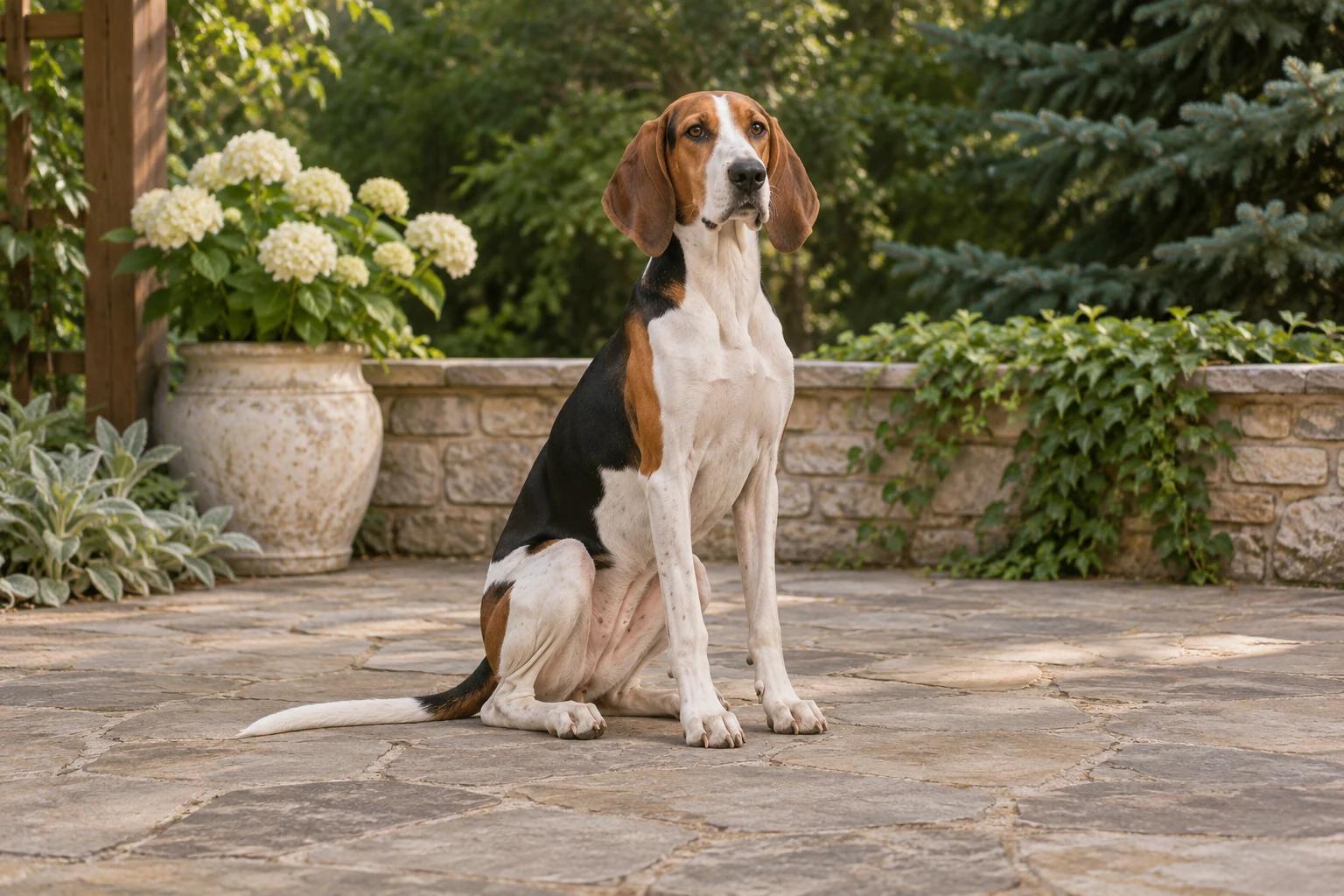
The AKC standard describes a strong, muscular back of moderate length and a chest whose depth matters more than width. The chest reaches approximately to the elbow, while the topline is nearly level or slopes slightly toward the rear. AKC Walker standard.
The head is proportionate to the body, with a broad skull, a medium-length, fairly square muzzle and moderately low-set ears reaching or nearly reaching the nose. These features give context to the hound outline without relying on markings.
The front legs are straight and parallel, with strong pasterns and compact, well-arched feet. Muscular thighs and a powerful rear assembly support the smooth, ground-covering movement described in the standard.
Taken together, this is a description of coordinated parts rather than a competition to produce the heaviest dog. A standing side view, a front view and a moving view reveal different aspects of that structure. Do not use one photograph or a scale reading to make a health judgment; the standard's outline and an individual veterinary assessment serve different purposes.
Separate height, chest depth and girth
The Royal Kennel Club glossary distinguishes height, measured vertically from the withers to the ground, from chest depth, measured from the withers to the lowest part of the chest. Girth is the circumference around the chest behind the withers. Royal Kennel Club glossary.
For a Treeing Walker Coonhound, these are three different dimensions, not alternate ways of saying large. A height figure does not supply the chest circumference, and a circumference does not tell you how far the body stands above the ground.
This distinction makes conversations about fit and proportions more precise. If someone describes a chest as deep, they are not necessarily describing a wide front. Likewise, an equipment measurement around the body should not be compared directly with the vertical height printed in a breed reference.
Use the named measurement rather than an ambiguous label such as chest size. The anatomy terms help identify what is being measured before two numbers are compared. That is especially useful when a dog has a substantial frame but its different dimensions are being discussed for different purposes.
A growing hound is not a finished adult athlete
VCA explains that puppy bones lengthen through growth plates made of cartilage. These areas change as development finishes, so a young dog's ability to run enthusiastically does not mean its skeleton has completed growth. VCA growth guidance.
For a Walker puppy, visible size and physical maturity should therefore remain separate questions. An adolescent can look impressively tall while still developing. Reaching an adult-looking outline is not by itself clearance for strenuous exercise.
VCA distinguishes ordinary puppy play and walking from imposed demanding activity such as long jogs or repeated hurdles. The practical implication is to discuss the individual dog's stage of development and suitable activity with the veterinary team rather than treating adult breed dimensions as an exercise prescription.
This does not mean suppressing every opportunity to explore. It means avoiding the assumption that an energetic young hound must already be ready for adult endurance work. If you notice limping or a change in how the puppy moves, seek veterinary advice instead of dismissing it as an inevitable part of growing taller.
Read the height ranges without inventing a weight split
Treeing Walker Coonhound height is listed at 22–27 inches for males and 20–25 inches for females. The ranges overlap from 22 to 25 inches. A 24-inch adult therefore lies within either height reference, depending on the individual.
The male range extends higher, but that does not mean every male is taller than every female. Nor does it justify assigning the lower end of the overall weight range to females and the upper end to males. The current profile does not make that weight distinction.
Treeing Walker Coonhound weight is given as 50–70 pounds overall. Keep the full range intact when introducing the breed, then use the actual adult's measurement when discussing that individual. A narrow estimate invented from sex alone would imply more precision than the reference supplies.
The adult figures also cannot be used as a month-by-month puppy chart. A young dog's current weight and height describe its present size; the adult reference describes a different stage. Those are useful pieces of information, but they are not interchangeable.
How big do Treeing Walker Coonhounds get in the home?
The current figures describe a substantial hound rather than a toy-sized companion. Its short, smooth coat does not add the visual volume of long furnishings, so a photograph can emphasize the outline without conveying the full adult weight.
When considering the breed, keep physical scale beside the rest of the current profile. It describes considerable activity, mental engagement and interest in family interaction. A dog at the lower end of the adult weight range does not automatically have a smaller need for participation or learning.
The profile also distinguishes relatively responsive learning from arriving already trained. Adult dimensions are not a substitute for manners, and a favorable training tendency is not a finished set of skills. Someone choosing this hound should want the interaction as well as have a realistic picture of the adult body.
Use the dog match quiz to consider those commitments together. The existing Walker coat-color article addresses a separate appearance topic, not an explanation of adult size.
FAQ
What is the current adult weight range?
The current breed profile lists 50–70 pounds overall. It does not divide that range into separate male and female figures.
Can male and female heights overlap?
Yes. Males are listed at 22–27 inches and females at 20–25 inches, so 22–25 inches falls within both reference ranges.
Does the smallest adult reference imply a low-involvement dog?
No. The current profile describes substantial activity and mental engagement across the breed. Body size and the desire for interaction are different parts of the ownership picture.
Sources behind this article
- AKC: Treeing Walker Coonhound standard ↗
- Royal Kennel Club: canine measurement terms ↗
- VCA: growth plates and exercise ↗
Article source checked: November 16, 2026. Source checked 2026-11-16
Keep reading

Airedale Terrier Temperament: What Everyday Life Can Feel Like
Read article →