Treeing Tennessee Brindle Size: Weight and Build
Explore Treeing Tennessee Brindle size with current male and female weights, adult height, athletic structure and sensible growth context.
Explore the
Treeing Tennessee Brindle
Background, care, and everyday considerations.
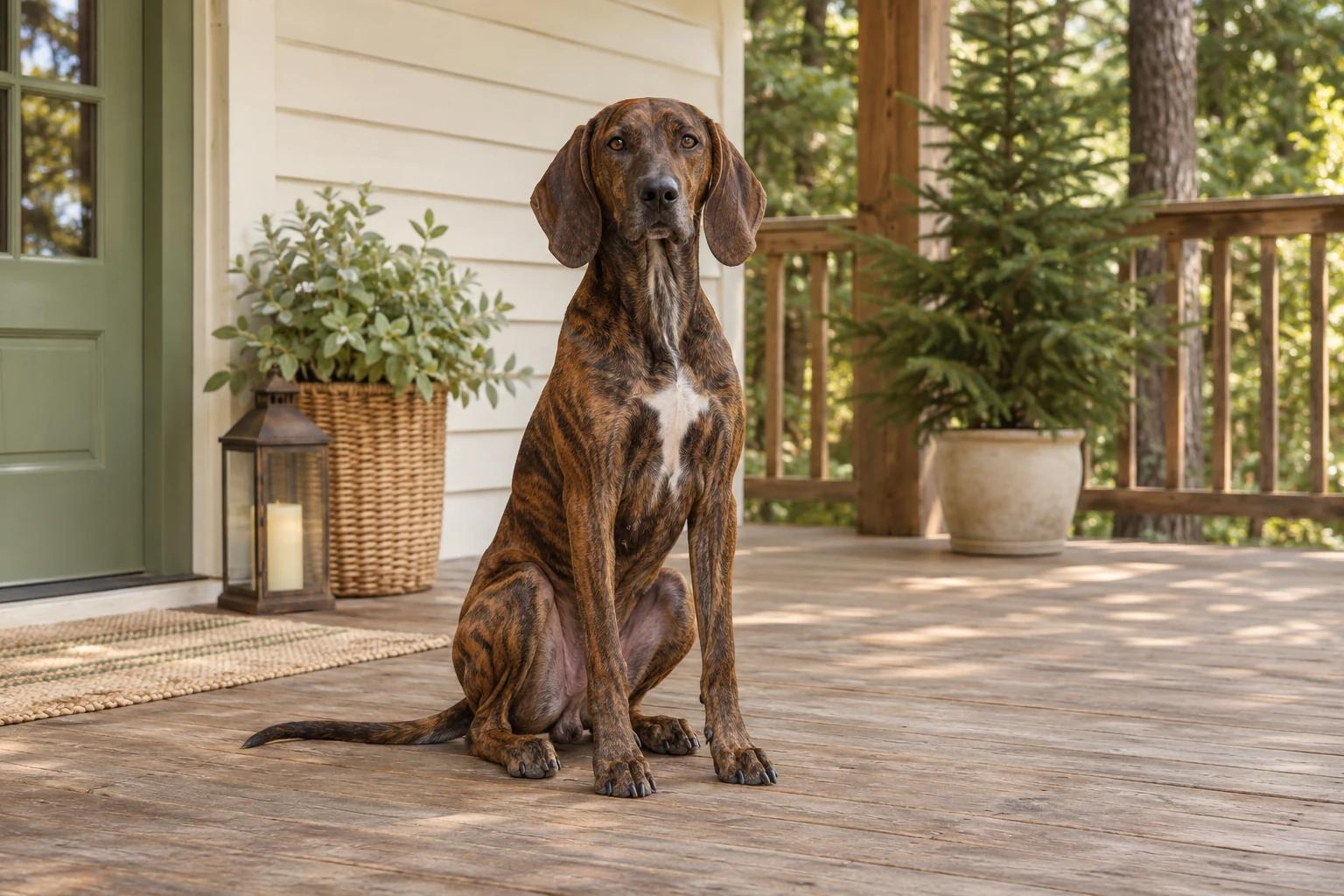
View breed profile →Treeing Tennessee Brindle size is best described with the current sex-qualified weight ranges: females at 31–40 pounds and males at 35–51 pounds. The breed profile gives an overall adult height range of 16–24 inches. Those figures describe a medium-sized adult reference, but they do not tell the entire story of the dog's shape or predict the finished dimensions of a particular puppy.
Treeing Tennessee Brindle size includes an athletic outline
UKC describes a powerful, agile dog whose appearance suggests speed and endurance. The body has a straight, strong back and a broad, deep chest, supported by straight, muscular legs. UKC breed standard.
The feet are round and compact, with well-arched toes. This is a useful detail when looking beyond overall height: the description concerns the supporting structure of the whole dog, not simply a tall or heavy outline.
The head has a flat upper skull, width between the eyes and a substantial muzzle. Short to medium ears sit high. These proportions help explain why a close-up portrait can give a different impression of scale from a full-body view.
Movement adds another dimension. UKC calls for smooth, effortless travel, with forward reach and drive behind. Observe the dog moving as well as standing, without turning a casual viewing into a diagnosis. A scale reading, a photograph and a moving view each reveal something different; none should be treated as a complete assessment of the animal's structure or health.
Understand what a height measurement describes
The UKC glossary defines height as the vertical distance from the withers to the ground, commonly called shoulder height. It distinguishes that measurement from body length, which runs from the breastbone to the buttocks. UKC anatomy glossary.
That distinction matters when asking about Treeing Tennessee Brindle height. A measurement to the top of the head is not the same figure. Head position can change the apparent height in a photograph, while the breed measurement uses a different anatomical reference.
The glossary also separates the front assembly from the rear assembly. Forequarters include shoulder, upper arm, forearm, pastern and foot; hindquarters include pelvis, thighs, hocks and paws. These terms help make a description of build more precise than saying a dog has long legs.
For example, a conversation about shoulder height is not a conversation about the entire length of a front limb, nor about how high the dog holds its head. Knowing which dimension is being discussed prevents a seemingly large discrepancy from being created merely by comparing two different measurements.
Growth is not a race toward the heaviest adult
VCA explains that puppy growth reflects an interaction between genetics, nutrition and environment. It distinguishes steady, appropriate development from maximizing the rate at which a puppy gains size. VCA growth guidance.
For a Treeing Tennessee Brindle puppy, the top of the adult reference range should not become a target to reach as quickly as possible. A heavier puppy is not automatically developing better, and increasing food to chase an adult number confuses growth with the accumulation of excess weight.
VCA recommends following weight together with body condition, with the veterinary team helping interpret progress. That is more informative than a single isolated weigh-in or comparison with a littermate whose development may differ.
Bring questions about the puppy's trajectory to that team rather than inventing a breed-specific monthly chart from the adult endpoints. The goal is to understand the individual animal's development, not to force every young dog onto an identical timetable. Nutrition decisions belong in that individual assessment, not in a generic formula based only on breed name.
Read the male and female ranges as overlapping references
Treeing Tennessee Brindle weight is not divided into two non-overlapping categories. Females are listed at 31–40 pounds and males at 35–51 pounds, so the interval from 35 to 40 pounds appears in both ranges. A 38-pound adult falls within either reference, depending on the individual.
The male range extends higher, but that does not mean every male is heavier than every female. A female near the upper end and a male near the lower end illustrate why the ranges should not be turned into an absolute rule about a particular pair.
Nor should the overall span of 31–51 pounds erase the sex labels when more specific information is available. The combined span is useful for a broad introduction to the breed; the separate ranges are more useful when discussing a known adult male or female.
These are adult references. A puppy weighing less than the adult lower endpoint is not being compared on equal terms. Likewise, an adult outside a reference range needs individual context rather than an automatic conclusion about breed identity or health from a number alone.
How big do Treeing Tennessee Brindles get in everyday terms?
The current dimensions describe a dog that is neither toy-sized nor giant. Its short, smooth coat also means the profile is not describing a large volume of long furnishing hair. When imagining the adult, keep the stated height and weight together rather than letting a close-up face photograph supply your sense of scale.
Size is only one part of the profile. Mental engagement is an important everyday commitment, while learning is described in terms of motivation and consistent practice. An adult in the lower part of the weight range does not consequently need less teaching or less involvement than a heavier one.
The dog match quiz considers those broader preferences. For a different aspect of the breed, the existing working-voice article explores why context matters when discussing vocal behavior.
FAQ
What is the current female weight range?
The current breed profile lists adult females at 31–40 pounds. It is a reference range rather than a guaranteed result for an individual puppy.
Can a male and female fall at the same adult weight?
Yes. The current ranges overlap from 35 to 40 pounds. Sex-qualified ranges describe tendencies without making every male heavier than every female.
Is the overall height range split by sex on the current profile?
No. Its adult height reference is 16–24 inches overall. The profile supplies separate male and female weight ranges, but not separate height ranges in that current summary.
Sources behind this article
- UKC: Treeing Tennessee Brindle standard ↗
- UKC: canine anatomy glossary ↗
- VCA: growth and development ↗
Article source checked: November 16, 2026. Source checked 2026-11-16
Keep reading

Airedale Terrier Temperament: What Everyday Life Can Feel Like
Read article →