Treeing Tennessee Brindle Shedding and Coat Care
Learn about Treeing Tennessee Brindle shedding, regular coat care, comfortable bath preparation and gentle rinsing and drying.
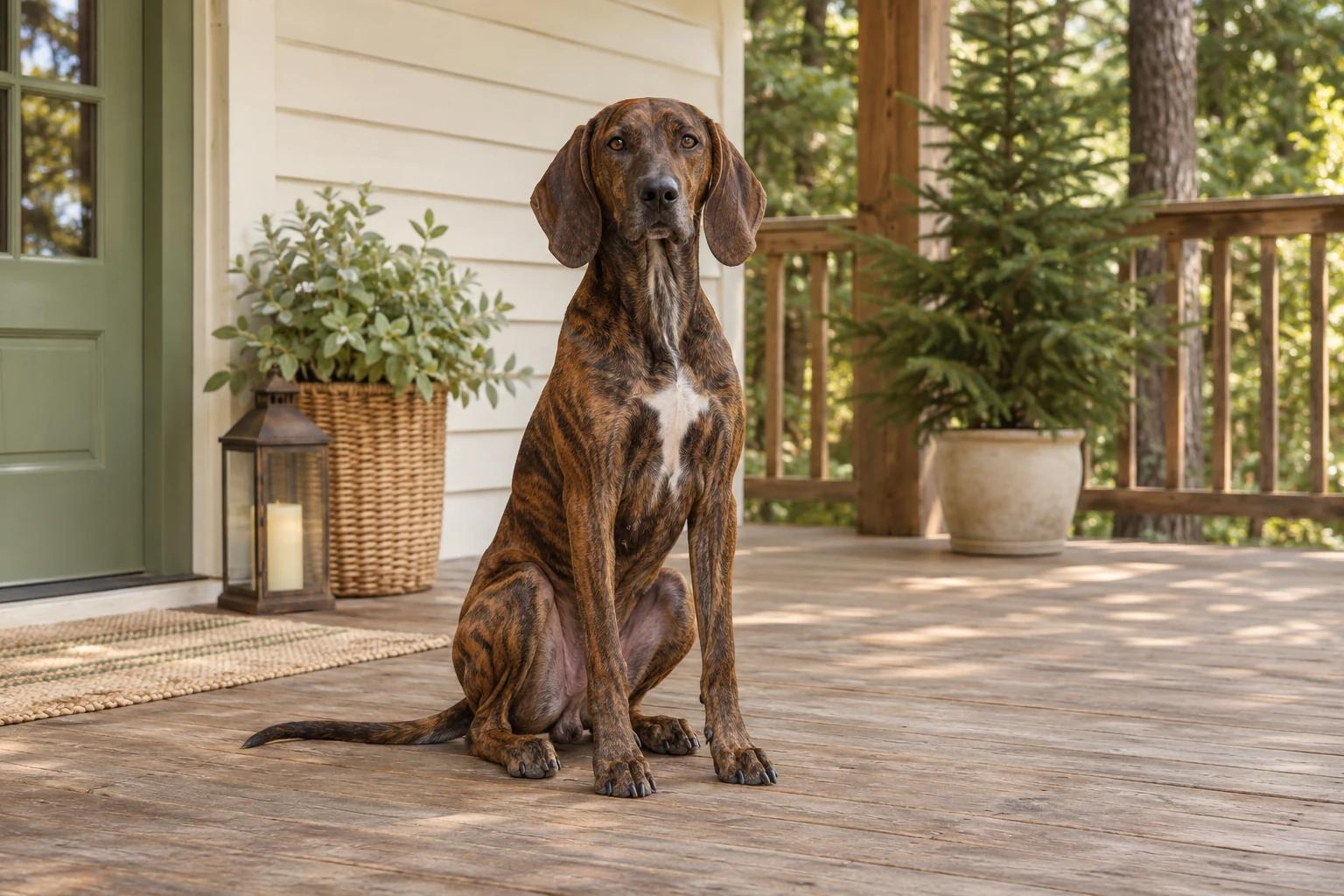
Explore the
Treeing Tennessee Brindle
Background, care, and everyday considerations.
View breed profile →Treeing Tennessee Brindle shedding is described as relatively light in the current breed profile, which lists a short, smooth coat and a modest grooming routine. Light does not mean absent. For an owner, the useful aim is an uncomplicated routine that suits the individual dog, rather than an expectation that a short coat leaves no hair behind or needs no attention.
Treeing Tennessee Brindle shedding needs regular coat attention
Purina's breed guidance recommends brushing to collect loose hair, with additional attention when seasonal shedding increases. It describes bathing when the dog is dirty rather than repeatedly washing an already clean coat. Purina coat guidance.
For a Brindle returning from outdoor activity, distinguish the loose hair you can brush away from dirt that actually calls for washing. Those are different reasons for grooming, even when they appear on the same afternoon. More shampoo is not automatically a better response to more hair.
The guidance also includes attention to paws and ears after time outdoors. A coat can look tidy while another area needs attention, so the short hair should not narrow your view to the dog's back alone.
Notice how the animal responds while you handle it. Questions about irritation or an unfamiliar change belong with the veterinarian rather than being explained away by the breed's straightforward coat description. The useful promise of a simple coat is a manageable routine, not immunity from ordinary care needs or a reason to overlook discomfort.
Learn the individual's moulting pattern
PDSA explains that moulting replaces old, damaged or dead hair. Its timing and amount vary with the individual, and changes in season, heat and light can affect what an owner notices. PDSA moulting guidance.
For this relatively light-shedding breed, that means the everyday reference should not be interpreted as a fixed quantity that never changes. Become familiar with the particular dog's normal coat rather than comparing every brushful with an imagined breed average.
PDSA distinguishes ordinary shedding from patches where hair is missing and not being replaced. A bald area warrants veterinary assessment; it is not simply proof that this year's seasonal change is unusually vigorous.
The charity also recommends choosing a relaxed time for brushing and making the experience rewarding. That puts the dog's comfort into the routine from the beginning. A brief cooperative session is a more useful foundation than waiting until loose hair has become frustrating and then attempting a prolonged grooming marathon. The aim is continued comfortable care, not eliminating a normal biological process.
Make bathing secure before adding water
Banfield's bathing guide recommends a stable, nonslip area without nearby clutter that could fall onto the dog. Have the shampoo, washcloth and towel within reach before starting; another capable person can help when needed. Banfield bathing preparation.
For a medium-sized Brindle, footing matters more than whether the setup looks like a professional salon. A smooth tub surface can make standing uncomfortable or insecure. Choose an arrangement that allows the dog to remain steady rather than expecting it to balance while you search for supplies.
Banfield advises lukewarm water and a gentle flow rather than blasting the coat from a showerhead. A cup or low-pressure nozzle brought close to the body can make wetting less startling. Keep water and shampoo away from the face and ears.
Use a product appropriate for the dog and follow its directions. If unsure which product fits the coat and skin, ask the veterinary team. This is ordinary cleaning preparation, not a reason to experiment with a medicated product or use a human shampoo because it is already nearby.
Rinsing and gentle drying deserve attention
Virginia Tech's dermatology guidance warns that rough scrubbing and incomplete rinsing can irritate skin. It recommends gentle application and checking the coat for remaining slippery areas or foam while rinsing. Virginia Tech bathing guidance.
For a short-coated Brindle, do not let the absence of long hair make the final rinse seem unimportant. Pay attention to less obvious areas such as behind the ears, under the tail and between the toes, rather than finishing as soon as the back looks clear.
The guidance recommends pressing towels against the coat instead of vigorous rubbing, and making sure the dog dries thoroughly. Drying is part of the bath, not a task to leave unfinished because the most visible water has disappeared.
It also cautions against keeping leftover diluted shampoo, which can become contaminated. If a product needs dilution, prepare what is needed for that bath and clean and dry reusable containers afterward. Skip routine bathing and seek veterinary advice if the skin is already inflamed, open or uncomfortable to touch. A bath should not substitute for assessment of a problem.
Keep a modest routine in perspective
The current profile's everyday reference is brushing once or twice a week. That belongs alongside its relatively low shedding and grooming ratings, not instead of them. The overall picture is a short-coated dog whose coat maintenance is usually manageable, while the exact routine still belongs to the individual.
Treeing Tennessee Brindle coat care is also only one part of living with the breed. Its profile emphasizes mental engagement and describes learning as something supported by motivation and consistent practice. Someone attracted mainly by a simple coat should also consider whether that ongoing interaction is appealing.
The current adult weights are 31–40 pounds for females and 35–51 pounds for males. These dimensions provide a more realistic picture than imagining every short-haired dog as a very small companion. The breed can have a straightforward coat while still being a substantial presence in the home.
If you are considering how to groom a Treeing Tennessee Brindle before choosing one, use the dog match quiz to place coat care beside the other daily commitments. The existing hunting-voice article addresses a separate characteristic rather than treating appearance as the whole story.
FAQ
Does light shedding mean a hair-free home?
No. The current profile describes relatively light shedding, not a complete absence of loose hair. Those are different expectations.
What brushing frequency does the current profile describe?
Its everyday reference is once or twice a week. That gives a starting picture of the ownership commitment rather than an exact schedule for every dog.
Is coat care the main daily commitment?
Not necessarily. The profile also emphasizes mental engagement and learning through motivation and practice. A manageable coat does not remove those other needs.
Sources behind this article
- Purina: Treeing Tennessee Brindle coat care ↗
- PDSA: why pets moult ↗
- Banfield: bathing preparation ↗
- Virginia Tech: safe bathing practices ↗
Article source checked: November 16, 2026. Source checked 2026-11-16
Keep reading

Affenpinscher Grooming: A Practical Coat-Care Routine
Read article →