Transylvanian Hound vs Black and Tan Coonhound
Compare Transylvanian Hound vs Black and Tan Coonhound size, structure, learning interests and companionship without oversimplifying either breed.
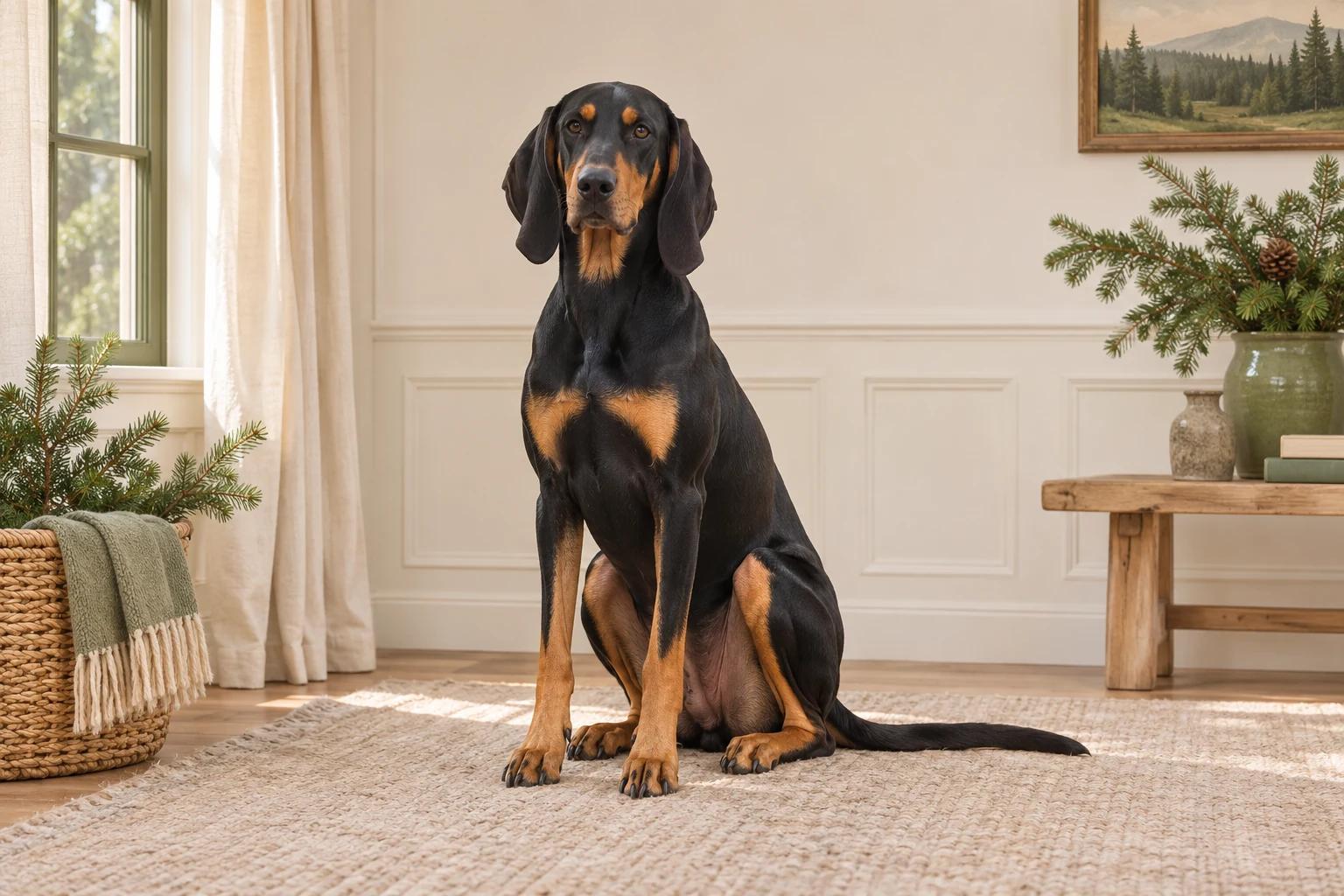
A Transylvanian Hound vs Black and Tan Coonhound comparison needs more than a glance at color. The current Transylvanian Hound profile and Black and Tan Coonhound profile describe substantial, smooth-coated dogs, but their dimensions and everyday learning profiles are not interchangeable. Compare the whole dog, including its structure, interests and response to people, rather than treating one as a differently named version of the other.
Transylvanian Hound vs Black and Tan Coonhound: body shape
The Transylvanian standard describes an athletic, slightly rectangular body, with neither a coarse nor excessively fine build. Its head is elongated without becoming pointed, and the ears lie close to the cheeks without folds. Drawn forward, they reach the eyes rather than extending beyond the muzzle. FCI standard.
These features offer useful identification details beyond markings. Look at the relationship between head, ears and body together. A side view and a front view reveal more than a cropped portrait emphasizing color alone.
The Coonhound has a different silhouette
The Black and Tan Coonhound standard describes a body approximately square or slightly longer than tall, with moderate bone and a level back. The chest reaches at least to the elbows, while the feet are compact with well-arched toes. AKC standard.
Its ears are especially distinctive: set low, hanging in graceful folds and extending well beyond the nose when drawn forward. The head also has developed flews, the loose portions of the upper lips. This creates a different facial outline from the closer-fitting features in the other standard.
Movement belongs in the comparison too. The Coonhound standard calls for reach in front and drive from behind, while the topline remains level. Seeing a dog walk across an open space gives a more complete impression of those proportions than a carefully posed head photograph.
These are descriptions of breed structure, not a way to diagnose soundness from an image. Nor does a dog need to reproduce a show pose to be a valued companion. Use the outline to understand what you are seeing, not to make unsupported health judgments.
What scent interest means for Coonhound lessons
VCA describes a dog strongly interested in following scent and exploring. That helps explain why an outing full of smells may hold more appeal than repeated retrieving. A person seeking a tireless fetch partner should not assume that all active-looking dogs enjoy the same game. VCA breed guidance.
The same interest matters when considering freedom outdoors. VCA recommends a leash or secure enclosure rather than relying on the dog to abandon a compelling trail. Training and physical security answer different questions: knowing a cue does not remove every competing attraction.
For teaching, VCA emphasizes rewards and short lessons, with clicker training among the options. The practical contrast is between inviting a response and repeating a demand while the dog's attention is elsewhere. A small successful lesson is more useful than a lengthy contest over compliance.
This is not a declaration that the breed cannot learn. It is a reason to choose teaching arrangements that account for its interests. An owner who enjoys that partnership may find the work engaging; someone expecting automatic obedience may find the same characteristics frustrating.
Companionship does not require identical responses
The American Black and Tan Coonhound Club describes a people-oriented dog that enjoys inclusion in family life and can take time to mature. Its introduction also distinguishes everyday manners, showing, hunting and formal obedience as different forms of learning. Club introduction.
That distinction is useful when evaluating an adult dog. Standing for an examination, moving beside a handler and responding during a familiar household routine are not the same exercise. Skill in one setting does not establish identical performance everywhere.
The club stresses individual differences in motivation and discourages heavy-handed teaching. Some dogs may complete an exercise with little visible enthusiasm, while others participate eagerly but add their own variations. Neither observation alone tells the whole story about the partnership.
For someone comparing breeds, this suggests looking beyond a single polished demonstration. Notice how the person and dog communicate when something does not go exactly as expected. The question is not whether the hound behaves like a machine, but whether the owner enjoys helping that particular learner understand and participate.
Compare current adult dimensions carefully
The difference between Transylvanian Hound and Black and Tan Coonhound size is less simple than naming one universally larger. The current Transylvanian reference gives 66–77 pounds and 22–26 inches without separate male and female ranges. The Coonhound reference gives females at 55–70 pounds and 23–25 inches, and males at 60–75 pounds and 25–27 inches.
Those ranges overlap. They also show why weight and height should not be collapsed into one ranking: a reference range can extend higher in one dimension without being higher in every dimension. Sex-qualified Coonhound figures should remain sex-qualified when discussing an individual prospect.
Both profiles list short, smooth coats. That shared description is useful, but it does not establish identical behavior. The Transylvanian profile emphasizes considerable physical activity, mental engagement and play, alongside a relatively responsive approach to learning. The Coonhound profile describes motivation as an important part of teaching. Choosing a Transylvanian Hound or Black and Tan Coonhound therefore involves the interaction you want, not simply the appearance you prefer.
The dog match quiz can help organize those preferences. For a separate appearance topic, the Transylvanian marking article covers the existing color discussion.
FAQ
Does reversing the comparison change the size answer?
No. Black and Tan Coonhound vs Transylvanian Hound comparisons still involve overlapping current ranges. Keep the Coonhound's male and female figures separate instead of combining them into a misleading single ranking.
Does a smooth coat describe temperament?
No. Both current profiles list a smooth coat, but physical covering does not answer how a dog learns, plays or responds to unfamiliar situations. Those need separate consideration.
Is the Transylvanian reference weight split by sex?
No. The current profile gives 66–77 pounds without separate male and female ranges. It should not be presented as a male-only or female-only figure.
Sources behind this article
- FCI: Transylvanian Hound standard ↗
- AKC: Black and Tan Coonhound standard ↗
- VCA: Black and Tan Coonhound ↗
- American Black and Tan Coonhound Club: breed introduction ↗
Article source checked: November 16, 2026. Source checked 2026-11-16
Keep reading

Affenpinscher vs Brussels Griffon: Everyday Differences
Read article →