Transylvanian Hound Temperament: Purpose and Play
Understand Transylvanian Hound temperament through working interests, reward choices, settling practice and scent games for an involved partnership.
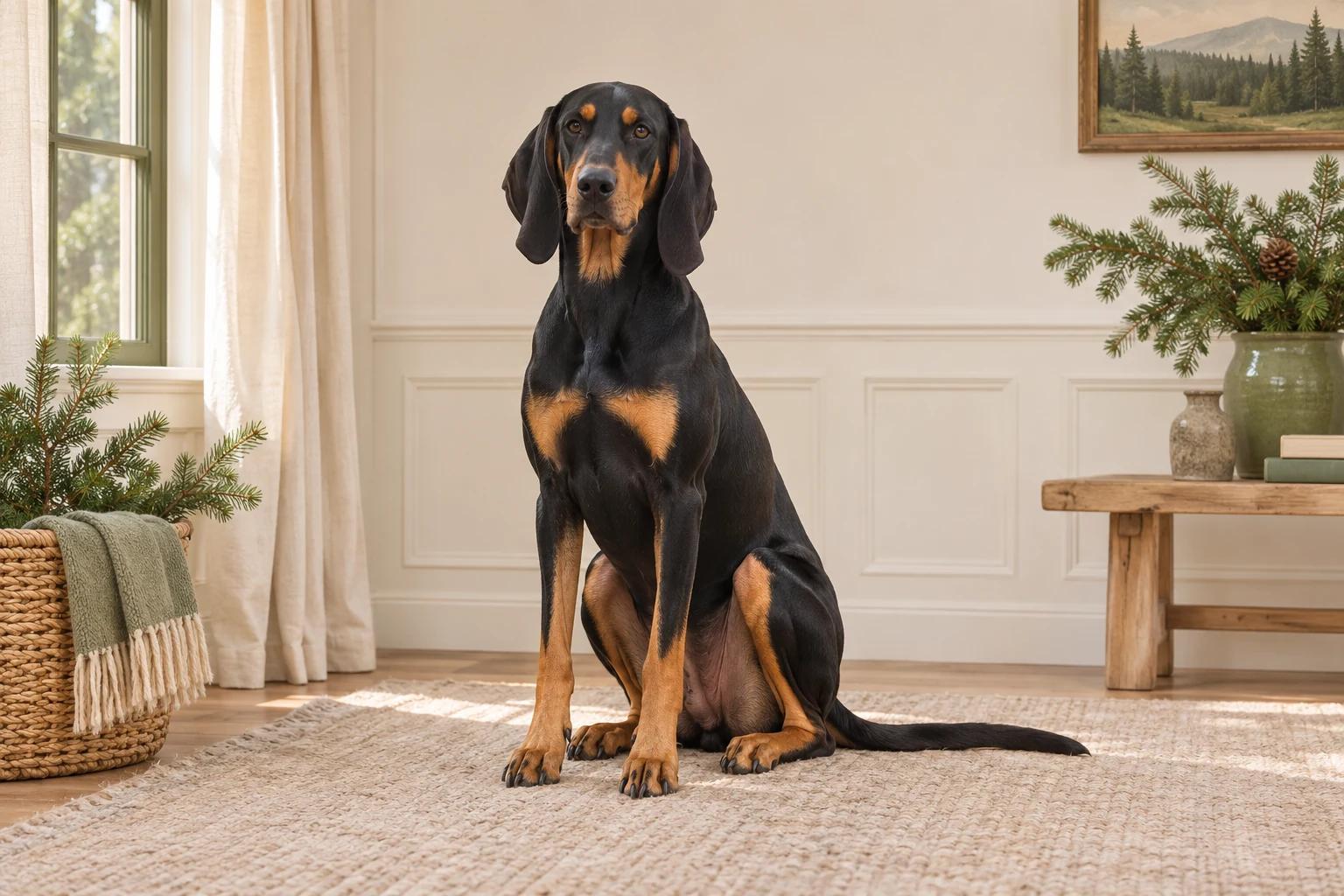
Transylvanian Hound temperament makes most sense when activity and thought are considered together. The current breed profile describes a playful dog with substantial physical and mental engagement needs and a relatively responsive approach to learning. That combination offers an appealing partnership for someone who wants to participate, but it is not a promise that the dog will entertain itself indefinitely or arrive knowing household expectations.
Transylvanian Hound temperament has a working context
The Swedish Kennel Club's owner guidance emphasizes that this remains a pronounced hunting breed, with considerable energy, endurance and desire to work. Its discussion of suitable ownership includes access to hunting ground rather than presenting the dog simply as a decorative companion. Swedish Kennel Club guidance.
That context deserves attention before choosing the breed for its looks. A dog selected for demanding work brings interests that cannot be understood solely through its behavior during a brief indoor visit. Ask what purposeful activity forms part of the particular dog's established life.
The club also emphasizes both physical and mental activity. Those are related but not identical: movement answers one part of the picture, while a task requiring decisions answers another. An owner considering this hound should be interested in what the dog is doing, not merely whether it has covered enough ground.
This working description is not a reason to improvise hunting or assume any unfamiliar activity is suitable. It is a reason to seek knowledgeable breed guidance about the individual and the outlets available in your circumstances before making the commitment.
Discover what makes a response worthwhile
Battersea's training guidance distinguishes food, toys, verbal praise and physical contact as possible rewards, with individual preferences and changing value. It specifically notes that scent hounds may enjoy sniffing out food. Battersea training motivations.
For a Transylvanian Hound, that gives you something concrete to explore rather than assuming that praise alone must be enough. Notice which consequence actually interests the dog in the setting where you are teaching. A reward that matters indoors may be less compelling amid outdoor distractions.
Battersea also connects reward choice to the response you want. An exciting toy game can raise energy, whereas a different reward may fit a quieter task. This is not about finding one universally best payment and using it for everything.
Think of motivation as part of the lesson's design. If the dog is not engaging, inspect what you are offering and what else is competing for its attention. That is a more useful starting point than treating the breed's responsiveness as a guarantee or interpreting every unsuccessful attempt as a deliberate refusal.
Teach a resting place as a separate skill
Battersea's settling exercise begins by rewarding interest in a mat, then building from partial contact to all four paws on it. If the dog already understands lying down, that familiar cue can help develop the next stage. Battersea settling guidance.
For this active hound, the important distinction is that resting in a chosen place can be taught rather than merely demanded. Rewarding progressively quieter positions, including resting the head, makes the goal more understandable than repeating a word without an established meaning.
Build duration before adding much distance from the mat. A single step away can be a meaningful new challenge. Later, practice around distractions and in other places instead of assuming that success in one room transfers automatically.
Choose a time when the dog is already more likely to be calm, and let progress follow its understanding. The mat should not become a test of how long you can hold an unfamiliar position against mounting frustration. The lesson is a gradual association between that place and relaxed behavior, not a competition in staying motionless.
Give the nose a clear, achievable search
AKC's indoor scent-game guidance includes searching open boxes for food. Begin with an easy arrangement in which the dog can discover the reward, then develop the search as it understands the activity. AKC indoor scent games.
The attraction for an owner of a working-minded hound is a visible task with a definite answer. The dog is not simply being asked to move around the room; it is locating something by using its nose. Let it investigate and find rather than continually pointing at the answer.
Keep the setup uncomplicated enough that success is available. An elaborate puzzle is not automatically a better exercise, particularly at the beginning. The purpose is to establish the search, not to make the food so inaccessible that the dog gives up.
The guide also provides a clear ending: use an additional treat to lead the dog away when the game is finished. That separates the completed search from continued checking of the boxes. A beginning, a discovery and an ending make the activity easier for both partners to understand.
Read the whole personality, not one attractive trait
Transylvanian Hound personality includes more than trainability. The current profile describes playfulness, watchfulness and openness to new people as separate tendencies. A dog can enjoy meeting someone while still noticing and responding to events around its home. Those characteristics are not mutually exclusive.
Likewise, Transylvanian Hound characteristics should not be reduced to a family label. The profile explicitly warns that a favorable child-interaction rating does not establish that a particular dog is safe with children. Supervision and individual assessment remain necessary. Other-dog compatibility also concerns the actual animals involved, not just a favorable breed description.
Transylvanian Hound behavior is therefore best considered across several ordinary situations: interaction with familiar people, response to a newcomer, participation in play and engagement in learning. The point is not to award the dog a single personality score, but to understand the combination you would be living with.
Use the dog match quiz to consider whether that active, involved companionship fits your preferences. The separate marking article addresses appearance rather than predicting personality from color.
FAQ
Does responsiveness mean the dog arrives trained?
No. The current profile describes a tendency to respond to learning, not a finished set of household skills. The individual dog's experience still matters.
Can watchfulness coexist with openness to people?
Yes. The current profile describes both tendencies. Noticing events around the home and being receptive to a new person are different aspects of behavior.
Does the family rating guarantee compatibility with children?
No. The profile expressly distinguishes a breed tendency from the safety of an individual interaction. Supervision and assessment of the particular dog remain essential.
Sources behind this article
- Swedish Kennel Club: Erdelyi Kopo owner guidance ↗
- Battersea: training motivations ↗
- Battersea: teaching calm and relaxation ↗
- AKC: indoor scent games ↗
Article source checked: November 16, 2026. Source checked 2026-11-16
Keep reading

Airedale Terrier Temperament: What Everyday Life Can Feel Like
Read article →