Toyger vs Savannah: Stripes, Spots and Different Breed Histories
Compare Toyger vs Savannah documented ancestry, markings and care while keeping individual behavior, housing questions and numerical limits clear.
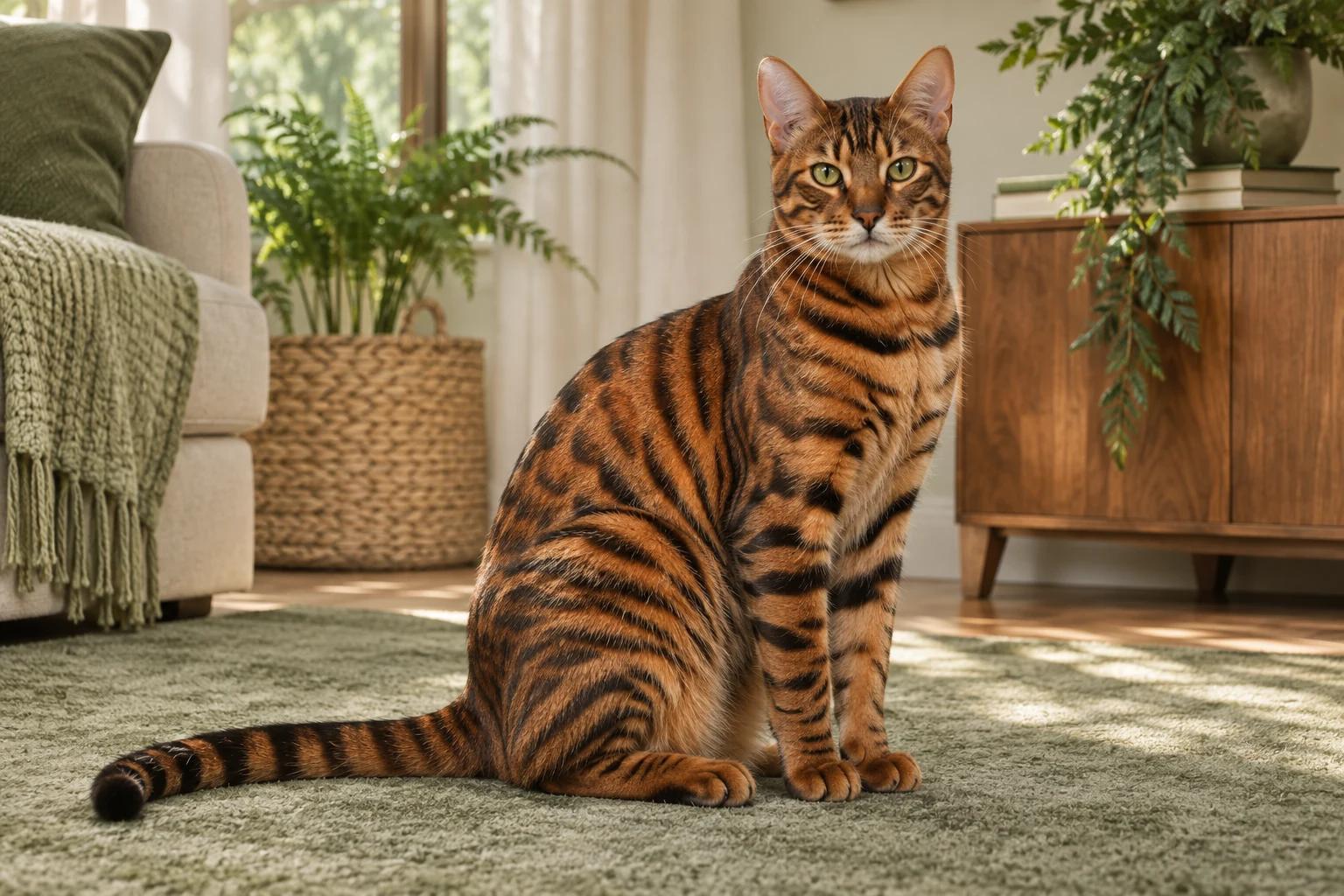
Toyger vs savannah comparisons should begin with documented breed development rather than a shared impression of wild-looking markings. TICA describes the Toyger as a domestic companion developed to resemble a tiger, explicitly without tiger ancestry; its development included Bengal cats. The Savannah's history includes serval ancestry. Those are different contexts, not two names for the same striking cat.
If you are considering a toyger or savannah, keep identity, individual care and any housing questions separate. This guide compares the accounts without predicting a cat's behavior from ancestry or treating appearance as proof of suitability.
Toyger vs Savannah: understand what the markings mean
TICA describes the Toyger's distinctive striped pattern and muscular, rectangular outline. Its Savannah account describes a tall, lean, spotted animal with prominent ears. Those descriptions explain the visual distinction without identifying an undocumented cat by eye.
Read the Toyger profile and Savannah profile alongside the actual records. A difference between toyger and savannah should not be reduced to which picture looks more dramatic. Ask which identity and background the documentation supports.
The Toyger's tiger resemblance does not mean tiger ancestry. Equally, its Bengal contribution should not be erased into a broader claim about every ancestor. Preserve the specific documented account instead of expanding a memorable slogan beyond its scope.
Ask comparable questions about activity
The Toyger profile describes an engaged companion suited to play, puzzles and optional reward-based learning. The Savannah profile also emphasizes active investigation. Neither description establishes a universal exercise duration or a result for every individual.
Ask each caregiver about a familiar working day: which activities are offered, which the animal chooses and how it settles afterward. Learn what happens during absences as well as during a demonstration when someone is available to entertain it.
A savannah vs toyger decision is more useful when examples describe comparable situations. One cat's energetic video and another's resting photograph cannot rank their care needs, intelligence or capacity for companionship.
Review the environment independently of the silhouette
FelineVMA's indoor-cat guidance connects play with retreat, resources and positive interaction. Apply those needs to either candidate. A room filled with impressive equipment can still leave little usable choice if access is blocked by another animal or a busy route.
Follow installation and load instructions for raised furniture and offer manageable ways to leave. An athletic reputation does not certify a shelf or establish that every jump is comfortable. Essentials should remain available without completing a difficult challenge.
Secure hazards and exterior access independently of learned cues. An animal investigating a cupboard is not necessarily asking for more difficult training; the household also needs appropriate physical boundaries and storage.
Compare care without inventing a size ranking
This guide does not use published weight accounts to declare a larger or easier individual. Ask for the actual animal's dated measurements and familiar equipment when planning transport or resting space. A breed label alone cannot establish fit.
The current Toyger profile retains occasional brushing or combing for much of the year, with more frequent attention during its short shedding seasons. Learn the actual Savannah's coat routine rather than applying the Toyger description to another breed because both are shorthaired.
Ask for a suitable demonstration and obtain advice about changed coat or handling. No coat here guarantees allergy suitability or freedom from care. An appearance comparison cannot choose a product or feeding plan for the individual.
Keep affection and handling distinct
Registry accounts describe social interest, but proximity does not automatically invite carrying. Ask what the particular cat seeks: touch, nearby rest, play or watching from a distance. Learn how it signals an ending as well as an approach.
Let the individual leave during a meeting. Adults should guide children and visitors before they reach for the animal. A striking pattern may attract attention without creating an obligation to accept repeated handling.
Ask about necessary care separately. A familiar relationship with one person cannot establish that every visitor can complete a grooming or transport task. The animal's history and appropriate professional guidance remain part of that plan.
Leave paperwork questions open until answered
The existing Savannah housing-rules guide addresses the need to check the actual animal, records and location with responsible bodies. This comparison establishes no ownership permission or generation-based ruling.
Do not relabel an animal to simplify a housing conversation, or assume the Toyger's different history automatically answers every private requirement. Ask the relevant organization what information is needed and retain the actual documents.
Those documentary questions are distinct from daily care. An answer about housing cannot certify compatibility or health, just as an appealing meeting cannot replace a required records check. Keep uncertainty visible rather than treating one positive answer as approval of everything else.
Make the choice from supportable responsibilities
For each candidate, write a practical account of familiar activity, accepted contact, a coat task, backup care and unresolved questions. Include how introductions to resident animals would be managed with appropriate separation, resources and guidance.
The existing Toyger scratching-resource article handles one specific environmental need. It is not a complete assessment of either breed's suitability. Use the cat quiz to organize broader expectations, then bring them back to the actual cat.
A useful comparison helps you understand an individual whose needs you can maintain. The markings may begin your interest, but the commitment should rest on documented context and everyday care rather than a promise of owning a particular wild-looking personality.
Frequently asked questions
Does a Toyger's appearance mean it has tiger ancestry?
No. TICA explicitly describes the tiger resemblance without tiger ancestry and documents domestic-breed development including Bengal cats. Keep that specific account in scope.
Do the two breeds have the same documented background?
No. Savannah history includes serval ancestry. Similar visual appeal does not make identity or care interchangeable.
Can markings or ancestry predict handling preference?
No. Ask about the actual animal and respect its chosen contact. Neither a picture nor a broad history supplies a personality guarantee.
Does this comparison establish housing permission?
No. Consult the responsible bodies about the actual animal, records and location. The linked guide addresses that separate task without a universal ruling.
Sources behind this article
Article source checked: November 20, 2026. Source checked 2026-11-20
Keep reading

Abyssinian vs Somali: Coat, Size and Everyday Company
Read article →