Tonkinese vs Balinese: Compare Body, Coat and Everyday Company
Compare Tonkinese vs Balinese body and coat descriptions, everyday interaction and care without promising a quieter or universally compatible cat.
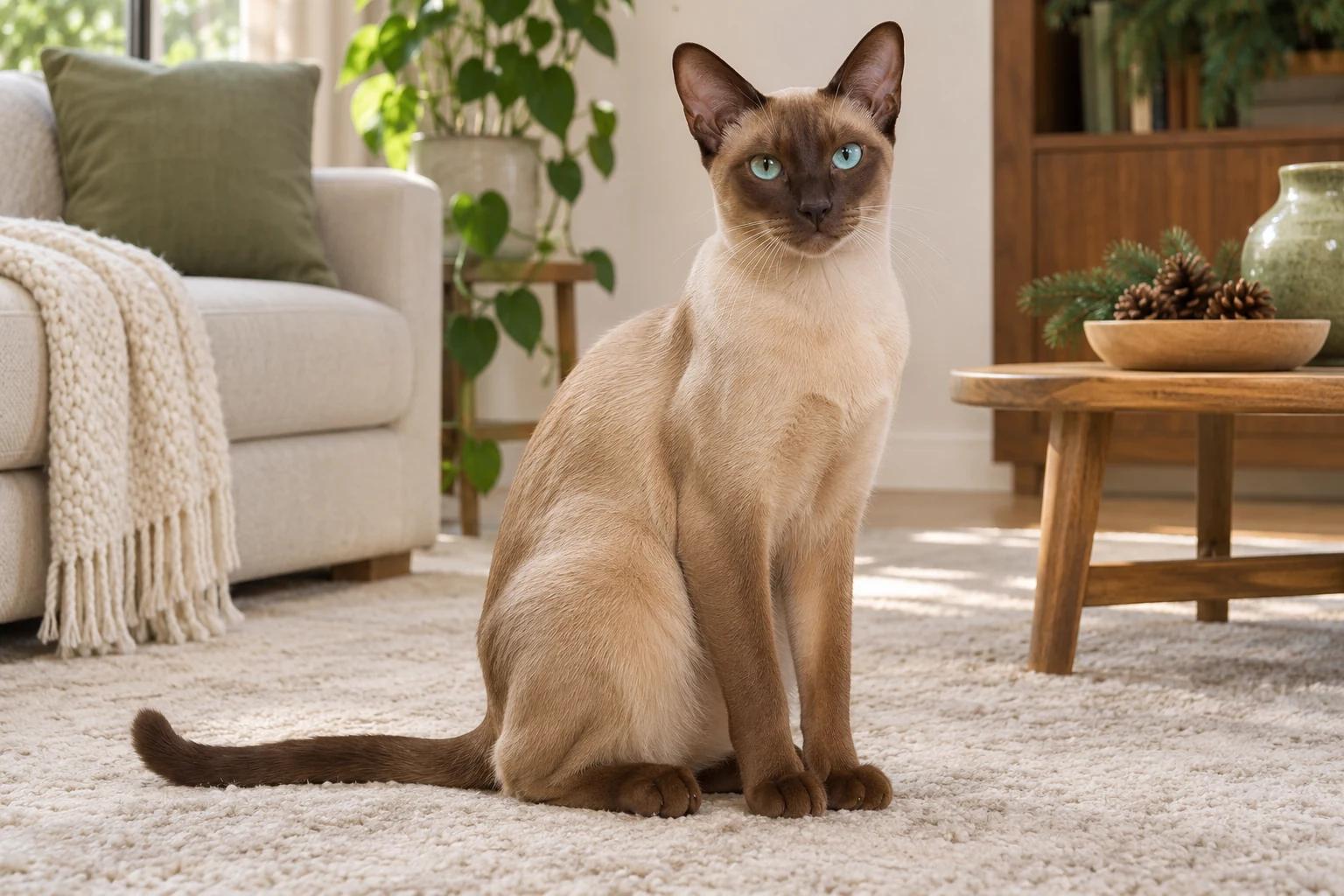
Tonkinese vs balinese comparisons bring together two people-oriented breeds with Siamese connections and different physical descriptions. CFA describes the Tonkinese as a muscular midpoint between Siamese and Burmese type, with short hair. The Balinese has a longer, flowing single coat over a more slender outline. Related background does not make their care or individual behavior interchangeable.
If you are considering a tonkinese or balinese, begin with those concrete distinctions and the actual cats available to meet. A preferred silhouette can explain your interest without deciding the relationship or the work involved.
Tonkinese vs Balinese: put the appearance in context
CFA describes Tonkinese mink, solid and pointed patterns, with eye color associated with the pattern category. Its Balinese account describes a pointed cat with blue eyes, a wedge-shaped head and a plumed tail. These are different breed descriptions, not a method for authenticating an undocumented cat by eye.
Read the Tonkinese profile and Balinese profile. Ask what records support the description when a seller or caregiver uses several related names. Similar coloring does not establish the same registry identity.
The difference between tonkinese and balinese becomes particularly useful when discussing coat maintenance. Short, close hair and a longer single coat can involve different tools and accepted handling even when neither animal appears difficult to maintain.
Compare coat work through a demonstration
The current Tonkinese profile starts with a gentle weekly rubber-brush session. The Balinese profile describes brushing or combing several times a month for a single coat with little undercoat. These are starting care references, not a promise that all individuals accept the same tool or remain free of tangles.
Ask the caregiver to show the actual routine appropriately. Which areas receive attention, how does the animal signal a break and when is professional help needed? A longer coat is not automatically an excessive task, while short hair is not a no-care guarantee.
Neither coat establishes allergy suitability. Personal medical concerns belong with the appropriate clinician rather than an informal ranking by hair length. This comparison recommends no special product, diet or bathing program.
Discuss company without comparing affection scores
Both CFA accounts describe involvement with familiar people. Ask what happens while someone reads, works or walks between rooms. The cat may choose touch, nearby rest or investigation; those preferences are more informative than deciding which breed is supposed to love people more.
During a meeting, let the animal approach and leave. A social description cannot establish that carrying is welcome or that a visitor should have a turn at touching the coat. Ask how the observed behavior compares with an ordinary day.
Adults should supervise children and explain undisturbed resting places. A companion can be affectionate while declining a particular interaction. The relationship should not depend on prolonged tolerance arranged to support a favorable breed description.
Make an honest conversation about sound
CFA describes vocal communication in both breeds. A balinese vs tonkinese choice should not rely on an unsupported promise about which individual will be silent during meetings or sleep. Ask about calling in familiar daily circumstances and explain the household's real noise expectations.
One quiet visit does not settle the question. Likewise, one excited moment cannot predict every setting. Keep the context attached instead of comparing unrelated recordings or the strongest adjectives in two descriptions.
If vocal behavior changes suddenly or raises concern, seek veterinary advice. An established breed tendency cannot diagnose the cause. This guide gives no method for suppressing sound and no guarantee that another pet or an extra game will resolve it.
Learn how play fits an ordinary schedule
The profiles support activity and interactive opportunities. Ask which games each individual understands and how they choose to finish. A fetching reputation does not require a demonstration, and a puzzle result cannot rank overall intelligence or suitability.
FelineVMA's indoor-cat guidance combines play with retreat, resources and positive contact. Review routes and resting choices alongside the toy selection. An animal should be able to reach essentials without being forced through a busy interaction.
Follow installation and load instructions for raised furniture. A muscular Tonkinese or an elegant-looking Balinese still needs equipment assessed for actual use. Appearance cannot certify a structure or establish comfortable movement.
Keep introductions and absences individual
Ask about relevant history with other animals and unfamiliar people, including the arrangements that supported contact. Neither social description guarantees compatibility with your residents. Seek guidance for the individuals and prepare separation, resources and retreat before meeting.
Explain ordinary absences before making a commitment. Ask how the cat is currently supported and what backup care is available. Another animal should not be introduced as an automatic solution to a companionship question.
A workable plan can include limits and uncertainty. Those details help you decide what can be maintained rather than relying on the appeal of an outgoing first encounter.
Finish the comparison with practical information
For each candidate, record a familiar coat task, a preferred activity, accepted contact and an unanswered question. Include veterinary records and who provides care when the usual person is unavailable. Comparable information is easier to assess than two perfect-sounding summaries.
The existing Tonkinese toy-safety guide addresses supervised equipment and storage as a separate task. It does not establish that either breed can be left with every toy it enjoys, and this comparison does not reproduce that routine.
Use the cat quiz to organize wider preferences before the caregiver conversation. Then choose from the needs you understand and can support. Related ancestry and attractive coats are useful context; the actual companion remains the subject of the decision.
Frequently asked questions
Are Tonkinese and Balinese just different coat lengths of one breed?
No. CFA describes distinct development and body types. Tonkinese has Siamese and Burmese background; Balinese developed from longhaired Siamese cats.
Does the longer Balinese coat guarantee more difficult care?
No. Learn the actual coat and routine. A single-coat description cannot promise effortless maintenance, and short hair does not remove grooming entirely.
Is one guaranteed to be quieter?
No individual noise ranking is established. Ask about familiar behavior and discuss the household's needs honestly.
Can a playful visit establish compatibility with another pet?
No. The actual residents and introduction arrangements require consideration, with appropriate guidance and choices for every animal.
Sources behind this article
Article source checked: November 20, 2026. Source checked 2026-11-20
Keep reading

Abyssinian vs Somali: Coat, Size and Everyday Company
Read article →